
Walnut anthracnose
Gnomonia leptostyla
Walnut anthracnose, caused by the fungus Gnomonia leptostyla (anamorph Marssonina juglandis), is a significant fungal disease affecting walnut trees globally.
What the section contains
Walnut anthracnose
The pathogen belongs to the Ascomycota phylum and is highly specialized, primarily colonizing species within the Juglans genus, especially Juglans regia.
The fungus survives the winter primarily as perithecia in fallen leaves, serving as the primary inoculum source for the following growing season.
Microscopic examination reveals that the fungus produces both ascospores and conidia, which are responsible for the primary and secondary infections, respectively.
Understanding the life cycle is crucial for effective orchard management, as the timing of spore release coincides with environmental conditions favoring fungal growth.
This pathogen impacts the entire aerial part of the walnut tree, including leaves, petioles, succulent shoots, and, most importantly, the developing fruits.
Early season infection can lead to extensive defoliation, which severely reduces the tree's photosynthetic capacity and overall vigor for the next year.
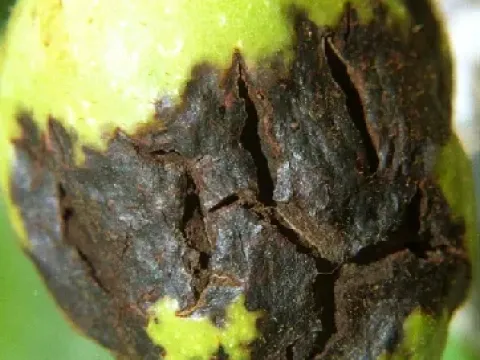
When the pathogen infects nuts, it causes necrotic lesions on the husk, often leading to internal rot, kernel shriveling, and significant yield loss.
The aesthetic and commercial value of the crop is severely compromised, making infected nuts unsalable or unsuitable for high-quality kernel processing.
Chronic infections weaken the tree, making it more susceptible to environmental stressors, such as winter cold and other secondary pests or pathogens.
The primary infection cycle initiates in late spring when rainfall triggers the release of ascospores from overwintering debris on the orchard floor.
Secondary infections occur throughout the summer, driven by the spread of conidia through splashing rain and high humidity, leading to rapid disease progress.
Warm, wet weather patterns, particularly periods of prolonged leaf wetness, create optimal conditions for the colonization and proliferation of the fungus.
As the season progresses toward autumn, the fungus prepares for survival by forming specialized structures on dead tissue, completing its annual cycle.
Orchards located in regions with high humidity or those experiencing frequent summer thunderstorms are at a much higher risk for severe anthracnose outbreaks.
Symptoms initially appear as small, circular, reddish-brown spots on leaves, which gradually enlarge and coalesce, eventually causing the entire leaf to turn brown.
On the husks of the fruit, the disease manifests as depressed black lesions, which may be irregular in shape and often result in fruit distortion.
Tiny, white-to-grayish acervuli (spore-bearing structures) become visible within the necrotic leaf spots during wet conditions, indicating active sporulation.
Lesions on young twigs can result in bark cracking and dieback, which may affect the overall structural integrity of smaller, more vulnerable branches.
- Circular brown leaf spots.
- Premature yellowing and leaf drop.
- Black, depressed spots on the walnut husk.
- Necrotic lesions on succulent stems and twigs.
Sanitation is the most critical cultural control measure: raking and destroying all fallen leaves removes the primary source of the fungus for the next season.
Pruning out dead branches and thinning the canopy improves air circulation, which significantly reduces the leaf wetness duration required for infection.
Chemical control involving copper-based fungicides or systemic options is highly effective if applied preventively, especially during the critical early-growth stages.
Strategic timing of fungicide sprays, starting at the time of leaf emergence, is essential to protect the developing tissue from primary ascospore infections.
Selecting resistant cultivars and maintaining overall tree health through proper fertilization and irrigation helps minimize the impact of anthracnose in the orchard.