
Walnut leaf spot (Phloeospora)
Phloeospora multimaculans
The disease is caused by the fungus Phloeospora multimaculans, also known as Septoria juglandis in earlier mycological classifications.
What the section contains
Walnut leaf spot (Phloeospora)
This pathogen belongs to the group of coelomycete fungi and is highly specialized, primarily affecting trees within the Juglans genus.
It propagates through the formation of pycnidia, which produce numerous conidia capable of spreading the infection throughout the tree canopy via rain splash.
The fungus survives the winter as dormant mycelium and pycnidia located on fallen leaf litter, which acts as the primary inoculum source for spring.
Understanding the biology of this pathogen is crucial, as it thrives in high humidity and moderate temperatures, often mimicking other leaf spotting fungi.
The main host for this pathogen is the English walnut (Juglans regia) and several related species, causing significant stress to the host plant.
The disease primarily impacts the foliage, causing necrotic spots that diminish the total photosynthetic surface area available to the tree.
Severe infestations lead to premature defoliation, which impairs the tree's ability to store energy reserves required for dormancy and future growth.
This weakening of the host plant directly results in reduced nut production and can compromise the structural integrity of new vegetative growth.
Chronically infected trees often show reduced vigor, making them more susceptible to other secondary pests and environmental stressors such as winter injury.
Symptoms typically appear during mid-summer when environmental conditions are optimal for fungal growth, particularly following rainy periods.
Secondary infections occur throughout the growing season as conidia are dispersed by wind and splashing water, causing the disease to spread rapidly.
High rainfall during the summer months dramatically increases the incidence of the disease, as leaf wetness duration is the limiting factor for spore germination.
As autumn approaches, the pathogen transitions to its overwintering stage, preparing to persist in the debris on the orchard floor.
The infection cycle is closely linked to the local climate, where irrigation management can also play a role in creating localized humid environments.
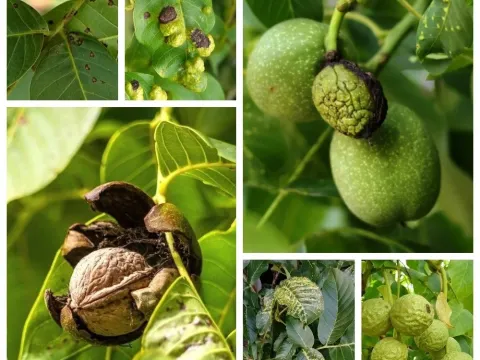
The disease manifests as small, brown, circular or irregular spots on the leaf blades, often highlighted by a distinct yellowish halo surrounding the necrotic tissue.
Over time, these spots expand in size and may coalesce, leading to significant portions of the leaf tissue becoming dead and brittle.
A closer inspection of the undersurface of the leaves reveals tiny black specks, which are the pycnidia of the fungus, confirming the identity of the pathogen.
In cases of heavy infection, the leaves may curl, turn brown, and drop prematurely, resulting in a sparse canopy by the end of the summer.
- Brown necrotic spots on foliage.
- Yellowing of surrounding leaf tissue.
- Presence of black pycnidia on the underside of leaves.
- Premature leaf abscission.
- General decline in canopy density.
Sanitation is the most effective management tool: gathering and burning or composting fallen leaves during autumn breaks the fungus's life cycle.
Pruning is essential to open up the canopy, which promotes faster leaf drying after rain and prevents the buildup of humidity around the foliage.
Fungicide applications, particularly those containing copper-based active ingredients, serve as effective protective treatments when applied early in the season.
Maintaining tree vigor through proper irrigation and balanced fertilization helps the tree better withstand the negative impacts of foliar diseases.
Always monitor the orchard regularly for early signs of leaf spot to determine the most effective timing for necessary protective spraying interventions.