
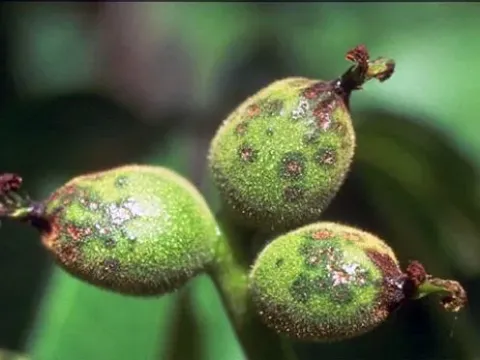
Walnut Anthracnose
Marssonina juglandis
The causal agent of this disease is the fungus Marssonina juglandis (with its sexual stage known as Gnomonia leptostyla). It belongs to the Ascomycota phylum and is a significant pathogen that targets Juglans species.
What the section contains
Walnut Anthracnose
This fungus primarily affects the common walnut (Juglans regia) and its relatives. It attacks leaves, petioles, shoots, and developing fruit, causing lesions that inhibit normal growth.
The damage is severe, leading to significant defoliation and reduction in nut quality. Infected nuts often develop shriveled or discolored kernels, which significantly reduces the market value and yield potential of the orchard.
The primary infection begins in the spring when ascospores are released from the overwintered fallen leaves. High humidity and spring rainfall are critical factors for the germination of spores on host tissue.
Throughout the growing season, the fungus spreads through conidia. Frequent rain events and warm temperatures promote rapid dispersal, allowing the disease to cycle multiple times during a single summer.
Early symptoms appear as small, circular, reddish-brown spots on leaves. As the disease progresses, these spots enlarge and may turn gray in the center, often surrounded by a dark brown margin.
- Dark, sunken necrotic spots on walnut husks, leading to premature fruit drop.
- Development of lesions on succulent young twigs which can cause dieback.
- Severe yellowing and premature leaf fall by mid-summer.
- Presence of small black acervuli on the necrotic tissue lesions.
Effective management begins with sanitation; raking and burning or burying infected leaves removes the primary inoculum source for the following season. Proper tree spacing and pruning to allow sunlight and airflow help reduce humidity.
Fungicidal applications, particularly those containing copper or systemic fungicides, are essential during high-risk periods. Applications should start at bud burst and continue through the season to protect developing fruit and foliage.