
Verticillium wilt
Verticllium albo-atrum
The causative agent belongs to the Kingdom Fungi, genus Verticillium, species Verticillium albo-atrum. It is a persistent soilborne pathogen that causes a serious systemic disease known as Verticillium wilt.
What the section contains
Verticillium wilt
The fungus produces mycelium, conidiophores with conidia, and specialized survival structures called microsclerotia or dark resting mycelium. These structures allow the pathogen to persist in the soil for many years, even in the absence of a host.
Infection begins when the fungus penetrates the plant's root system, usually through root hairs or minor mechanical injuries. Once inside, the fungus invades the xylem, the tissue responsible for water and nutrient transport.
The pathogen spreads rapidly through the vascular system, obstructing the flow of sap with its biomass and inducing the plant to produce gums and tyloses. This physiological response further blocks the vessels, leading to the characteristic wilting symptoms.
Although V. albo-atrum is similar to V. dahliae, it is important to understand that both species act as lethal vascular parasites that pose a significant threat to global agriculture and horticulture.
Verticillium wilt has a broad host range, infecting over 300 plant species. Major agricultural crops such as tomatoes, potatoes, peppers, strawberries, and sunflowers are particularly susceptible to this pathogen.
In industrial agriculture, the disease can lead to catastrophic yield losses. Infested fields often experience stunted growth and premature plant death, making production unprofitable for several consecutive seasons.
Greenhouse environments are highly vulnerable. The pathogen can easily spread through irrigation water, contaminated substrate, or infected tools, potentially destroying an entire season's crop within a few weeks.
Perennial crops like raspberries or orchard trees are severely impacted by the long-term nature of the infection. The fungus persists in the rootstock, leading to slow decline and significantly reduced fruit quality and shelf life.
Economic damage extends beyond yield reduction; infested soil requires expensive long-term management strategies, often making the land unsuitable for sensitive vegetable production for a decade or more.
Disease development is most active when soil temperatures reach +20°C to +25°C. This temperature range is critical for the pathogen to transition from its dormant microsclerotia state into an active, invasive growth phase.
Symptoms typically manifest during the flowering or fruiting stages. Environmental stress, such as fluctuating moisture levels or heat waves, accelerates the wilting process as the plant's demand for water exceeds the capacity of its blocked vascular system.
The survival structures, microsclerotia, remain dormant in the soil until triggered by specific root exudates from susceptible crops. Once germination occurs, the fungus rapidly colonizes the rhizosphere and penetrates the root cortex.
Dissemination occurs via contaminated soil transport, movement of infected planting materials, and irrigation water. Wind can also play a role in spreading conidia between adjacent fields during high-humidity events.
Early-season conditions play a major role in the initial colonization. If the soil is warm and moderately moist during the early development of the root system, the probability of severe vascular infection significantly increases.
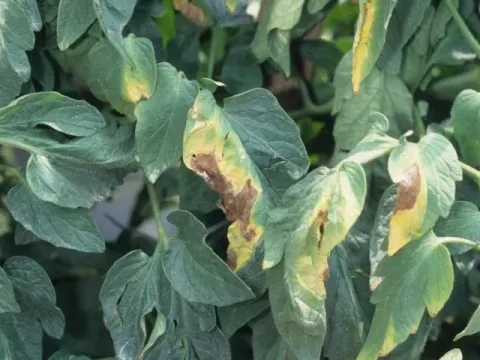
The initial symptoms often appear as leaf chlorosis on the lower parts of the plant. A hallmark sign is unilateral or sectorial chlorosis, where one part of the leaf turns yellow while the rest remains green, creating a mottled appearance.
- Interveinal chlorosis and yellowing of leaf margins.
- Temporary flagging or wilting of shoots during the hottest parts of the day.
- Discoloration (browning) of the vascular bundles visible in stem cross-sections.
- Premature leaf drop and necrosis of stems.
- Overall stunting and a general sickly appearance of the entire plant.
As the disease progresses, necrosis moves upward. The leaves dry out but remain attached to the stem. The plant appears drought-stressed, but irrigation fails to restore its turgor, confirming that the vascular system is fundamentally damaged.
In the final stages, the internal tissue of the stem darkens, and the plant becomes brittle. Severe root decay often accompanies the vascular symptoms, leading to the eventual collapse of the crop.
Crop rotation is the most effective management tool. Avoid planting susceptible species in the same field for at least 4 to 6 years. Non-host crops such as cereals and corn are excellent choices for breaking the disease cycle.
Always use certified, disease-free planting stock. Preventing the introduction of the pathogen into clean fields is crucial, as soilborne inoculum is extremely difficult to eradicate once it is established.
Deep plowing can help reduce the density of microsclerotia in the topsoil layer. Furthermore, meticulous removal and destruction of infected crop residues at the end of the season can lower the overall pathogen pressure.
Biological control using antagonistic fungi like Trichoderma species has shown promise in suppressing V. albo-atrum within the root zone and protecting the plant from initial infection.
Maintain balanced soil nutrition. Avoid over-application of nitrogen, which stimulates succulent growth and makes plant tissues more vulnerable to rapid colonization by the fungus.