
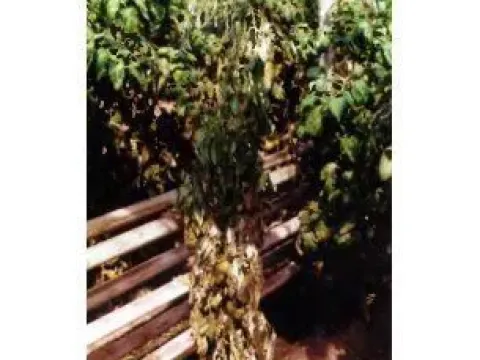
Verticillium wilt
Verticillium albo-atrum
The pathogen is a soil-borne fungus classified under the genus Verticillium, species Verticillium albo-atrum. It is a well-known systemic phytopathogen that colonizes the plant's vascular tissue.
What the section contains
Verticillium wilt
The fungus produces a mycelium that invades the xylem vessels, causing physical blockage and secreting toxic substances that interrupt water transport, leading to wilt symptoms.
Verticillium albo-atrum survives in the soil for extended periods by forming dark, resistant structures known as microsclerotia, which can tolerate adverse environmental conditions.
Infection spreads through contaminated soil, irrigation water, infected seeds, and infected plant debris. Farm equipment moving between fields is a major vector for the pathogen.
Identification is typically performed through cultural isolation from vascular tissue onto laboratory media or via microscopic examination of characteristic verticillate conidiophores.
This pathogen causes severe damage to a wide range of economically important crops, including potatoes, tomatoes, eggplant, cotton, and various fruit trees.
Infected plants exhibit stunted growth, leaf chlorosis, and premature wilting, which results in significant reductions in crop yield and marketability of produce.
In severe infections, the plant's vascular system is completely compromised, preventing the transport of essential nutrients and leading to the eventual death of the plant.
Economic losses are compounded by the persistence of the fungus in the soil, which necessitates long-term rotation strategies and restricts the use of specific field sites.
The pathogen is particularly problematic in greenhouse environments and intensive agricultural areas where soil temperature and humidity are optimized for fungal growth.
Verticillium wilt development is strongly favored by moderate temperatures in the soil, typically ranging between 20°C and 25°C, occurring during the active growing season.
Primary infection occurs through the roots, and the pathogen colonizes the vascular system early in the season, even if visible signs of wilt do not manifest until later.
Symptoms often peak during the flowering and fruit-setting stages when the plant's physiological demand for water and nutrients is at its highest point.
Environmental stress, such as high heat or water scarcity, significantly accelerates the progression of the disease and makes plants more vulnerable to systemic damage.
As the season ends, the fungus reverts to its survival state, producing microsclerotia within the dying plant tissues that will overwinter and await the next season.
The most recognizable symptom is the V-shaped chlorosis on leaf margins, which gradually turns into necrotic tissue while the leaf veins often remain green for a period.
- Interveinal chlorosis and yellowing of the lower leaves.
- Browning or darkening of the vascular bundles within the stems.
- Wilting and drooping of foliage during the heat of the day, followed by recovery at night.
- Stunted growth of the entire plant or specific affected branches.
- General plant decline and early senescence.
When cutting open a main stem, a brown discoloration in the vascular ring is a clear indicator of the presence of the fungal infection within the xylem.
In advanced cases, the entire plant may collapse, although some species may survive but remain chronically stunted and unproductive throughout the season.
Effective crop rotation is the primary management tool, as excluding susceptible crops for several years can significantly reduce the level of inoculum in the soil.
Planting resistant or tolerant cultivars is the most effective approach for managing the disease in fields where the pathogen is known to be present.
Sanitation practices, including the removal and destruction of infected plant material, help prevent the further buildup of microsclerotia in the field environment.
Integrated management includes proper fertilization and irrigation, which reduces plant stress and helps the plant withstand the colonization of the vascular system.
Chemical control options are limited due to the pathogen's soil-borne nature and its ability to survive deep within the root zone, making systemic fungicides only partially effective.