
Verticillium dahliae
Verticillium dahliae
Verticillium dahliae is a soil-borne fungus belonging to the phylum Ascomycota. It is a highly destructive plant pathogen responsible for verticillium wilt, a systemic disease that causes vascular blockage in numerous important crops.
What the section contains
Verticillium dahliae
The fungus is characterized by its ability to produce microsclerotia, which are microscopic, resilient resting structures. These structures allow the pathogen to survive in the soil for over a decade in the absence of a host plant.
Upon germination, the fungus infects plants through the root system, typically entering via natural openings or wounds. Once inside, the mycelium colonizes the xylem tissue, effectively disrupting the plant's vascular system.
The damage is caused both by the physical blockage of water transport vessels and by the production of fungal toxins. This leads to severe wilting, stunted growth, and eventually the death of the infected plant tissue.
Due to its broad host range and extreme soil persistence, Verticillium dahliae is considered a major challenge in modern agriculture, necessitating integrated management practices rather than relying on a single control method.
This pathogen is a polyphagous organism, meaning it can attack more than 300 plant species. Major agricultural crops affected include potatoes, tomatoes, cotton, strawberries, sunflowers, and various woody ornamental plants and trees.
In potato cultivation, the infection results in premature senescence of the foliage, drastically reducing tuber yields and overall crop quality. The loss of photosynthetic capacity early in the season prevents the proper filling of tubers.
Strawberries are particularly susceptible; infection often leads to severe crop failure, with symptoms manifesting as leaf necrosis, root system degradation, and death of the entire plant crown.
For trees, the disease is often referred to as "maple wilt" or "apoplexy." It causes branch dieback, which progresses slowly over several years, eventually leading to the death of the entire tree if the disease is not managed.
Beyond direct yield loss, the presence of Verticillium dahliae imposes significant constraints on land use, as farmers are often forced to avoid planting high-value susceptible crops in infested fields for extended periods.
Infection cycles are most active during the growing season when soil temperatures range between 20°C and 25°C. These temperatures favor the germination of microsclerotia and the infection of susceptible root tissues.
Visual symptoms frequently appear during the mid-to-late growth stages, such as flowering or fruit development, as the plant's demand for water reaches its peak and the vascular damage becomes limiting.
Environmental stress, particularly high temperatures and drought conditions, exacerbates the disease symptoms. When the soil is dry, the already restricted water flow through the colonized xylem cannot meet the plant's transpiration requirements.
As the season nears its end and the host tissue begins to senesce, the fungus produces a new generation of microsclerotia. These are returned to the soil as the plant debris decays, ensuring the persistence of the inoculum.
The pathogen remains dormant throughout the winter, surviving freezing temperatures within the soil or protected by the decaying plant organic matter until the next cycle of plant growth begins.
The primary symptom is chlorosis (yellowing) of the lower leaves, often displaying a V-shaped pattern. As the disease advances, the yellowed areas become necrotic, leading to browning and eventual leaf drop.
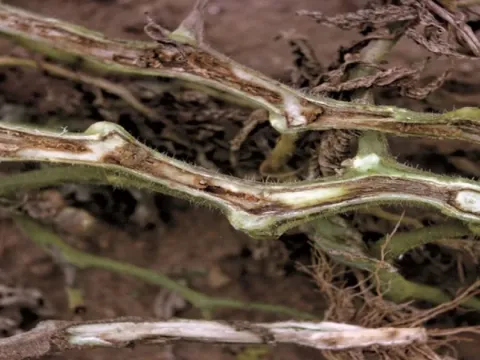
Vascular browning is the most reliable diagnostic sign. When stems or petioles of infected plants are sliced, dark brown to black streaks are visible within the vascular bundles, indicating internal colonization.
Early-stage wilting is transient, often seen during the heat of the day, while plants may recover overnight. As the disease progresses, wilting becomes permanent and no longer responds to irrigation.
- Yellowing and necrosis of lower leaves.
- Asymmetric development of leaf symptoms.
- Internal discoloration of the stem's vascular system.
- Stunting of growth and loss of overall vigor.
- Permanent wilting and rapid death of foliage.
The progression is usually systemic, moving from the roots up through the stem and into the leaves, which differentiates it from some localized root rots or leaf spot diseases.
Effective management of Verticillium dahliae relies on a combination of cultural practices, as chemical fungicides are rarely effective against soil-borne microsclerotia.
Crop rotation is critical; rotating away from susceptible hosts for at least 4-5 years is recommended. Using non-host crops, such as most cereals, can help lower the soil inoculum level over time.
Sanitation plays a major role in slowing the spread. Removing infected plants and thoroughly incorporating crop residues into the soil helps accelerate decomposition and reduce the survival rate of the pathogen.
Genetic resistance is the most sustainable solution. Farmers should prioritize the use of resistant or tolerant cultivars and hybrids developed specifically for fields with a known history of verticillium wilt.
Biological control agents, particularly beneficial fungi like Trichoderma species and certain Bacillus bacteria, can be integrated into the soil to promote root health and suppress the activity of the pathogen in the rhizosphere.