
Valsa canker of fir
Valsa abietis
The causative agent of this disease is the fungus Valsa abietis, which belongs to the class Ascomycetes. It is a parasitic fungus that primarily targets the bark and cambium layers of various Abies (fir) species.
What the section contains
Valsa canker of fir
The fungus acts as a necrotrophic pathogen, invading the plant tissue through natural openings, mechanical damage, sunscald, or frost cracks. Once established, it develops stromata that emerge through the periderm of the bark.
Valsa abietis is widely adapted to temperate climates where fir trees are commonly grown. Its life cycle involves the production of sexual spores (ascospores) and asexual spores (conidia), which spread the infection throughout the plantation.
Inside the host, the mycelium spreads within the inner bark, causing tissue death and interrupting the transport of nutrients. This process eventually leads to the formation of characteristic cankers that girdle stems or branches.
Effective identification relies on spotting both the physical manifestation of the bark damage and the characteristic reproductive structures of the fungus appearing as small bumps on the surface.
The fungus affects various fir species, being particularly detrimental to younger trees in nurseries where environmental stress is high. The damage is cumulative, starting from small localized infections and expanding over time.
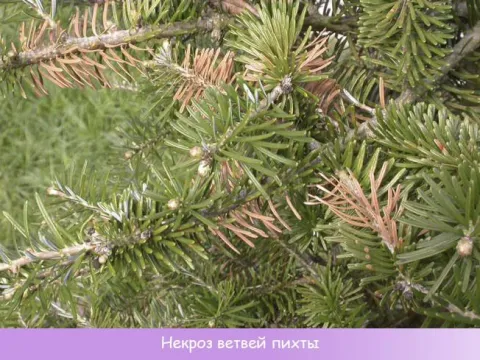
The primary symptom is the formation of cankers — sunken, discolored patches of bark. If a canker girdles a branch or the main stem, the portion of the tree above the infection will eventually die due to the disruption of water and nutrient flow.
Damage to the aesthetics of ornamental firs is significant, as the thinning canopy and brown needles make the trees look unhealthy and unattractive. This devaluation is a major concern in landscaping and Christmas tree farming.
In forest environments, Valsa canker increases the susceptibility of firs to secondary pests, including bark beetles, which can accelerate the mortality of the entire stand.
Economic losses in the nursery industry are driven by the need to cull infected saplings and the cost of maintaining intensive fungicide spray schedules to protect the remaining stock.
Spore dispersal is highly dependent on environmental conditions, particularly moisture. Rainfall and high humidity during the spring promote the release and spread of spores to healthy plant tissues.
During the summer months, the infection continues to colonize the tree tissues if the tree is experiencing stress from drought or high temperatures. During this phase, internal mycelial growth is most aggressive.
Autumn conditions may lead to the formation of new fruiting bodies on the surface of existing cankers. These structures serve as the primary inoculum source for the following season.
Winter dormancy limits the active growth of the fungus, but it remains fully viable within the necrotic bark tissues. The fungus is highly resilient to freezing temperatures, allowing it to survive throughout the year.
Frequent fog, dew, or poor air circulation within the tree canopy creates an ideal microenvironment for the pathogen to thrive, potentially leading to rapid disease spread in dense stands.
Initial signs include subtle discoloration of the bark, which turns brownish. As the infection progresses, the bark becomes dry, sunken, and often shows cracking along the edges of the canker.
A distinctive feature is the emergence of gray or blackish stromata, which look like small pimples or bumps puncturing the bark. Under wet conditions, these may exude small masses of spores.
Needle desiccation is a secondary sign. Needles on an infected branch turn from green to yellow, then brown, and eventually drop off, starting from the point closest to the canker and moving outward.
Removing a piece of dead bark often reveals the whitish or grayish mycelial mat beneath. In some cases, resin flow may occur as a defense mechanism, though it is usually insufficient to stop the pathogen.
- Sunken lesions or cankers on the bark of branches or stems.
- Presence of small, erumpent black fruiting bodies (stromata).
- Yellowing and browning of needles on affected branches.
- Bark cracking or sloughing off in the center of the canker.
- Dieback of terminal shoots or entire branches.
Sanitation is the most effective control strategy. All branches showing signs of infection or necrosis should be pruned and removed from the site to lower the overall inoculum level.
Maintaining tree vigor is crucial. Proper watering, fertilization, and site selection help minimize the stress that often predisposes fir trees to Valsa abietis infections.
Copper-based fungicides applied preventatively in early spring can help protect the bark from fungal spore colonization, especially on younger or recently pruned trees.
When pruning, ensure that all tools are sterilized to prevent cross-contamination. Any accidental wounds on the tree should be sealed with appropriate wound dressings if necessary.
In cases of severe infection where the main trunk is affected, it is often best to remove the tree entirely to prevent the pathogen from spreading to neighboring, healthy firs in the vicinity.