
Vararia
Vararia
Vararia is a genus of corticioid fungi within the Lachnocladiaceae family. These fungi are primarily known as saprotrophs, although some species can behave as opportunistic pathogens that decay the wood of weakened or stressed trees.
What the section contains
Vararia
The taxonomic identification of Vararia is supported by microscopic features, specifically the presence of dichotomously branched skeletal hyphae. These structures are frequently encrusted with calcium oxalate crystals, serving as a key diagnostic indicator for the genus.
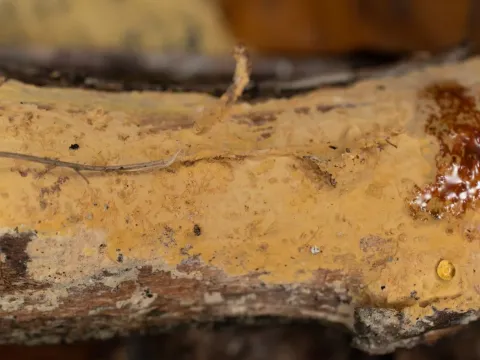
The basidiocarps (fruiting bodies) of Vararia are resupinate, meaning they grow flat against the surface of the wood. They usually appear as thin, leathery, or membrane-like crusts ranging from whitish to yellowish or ochre-brown in color.
As members of the wood-decaying fungal community, they play a vital role in forest ecosystems by decomposing lignocellulosic material. They release spores (basidiospores) that disperse via wind to colonize fresh wounds on trees.
They are categorized as white rot fungi. Through the secretion of specific enzymes, they effectively degrade both lignin and cellulose, leading to a profound loss of structural integrity in the timber.
Vararia affects a broad range of woody species, including various hardwoods and occasionally softwoods. It is most commonly found on deadwood, fallen logs, and stumps, where it accelerates the nutrient cycling process.
However, when the fungus transitions to a parasitic role on living trees, it causes significant damage. It typically exploits entry points such as frost cracks, sunburn lesions, pruning wounds, or damage caused by boring insects.
The internal colonization of the wood by the fungus causes a steady reduction in the tree's health. It impairs the vascular function, restricting the upward transport of water and nutrients, which results in canopy dieback.
In the timber industry, the presence of Vararia significantly lowers the market value of wood products. The degradation of wood tissue by this fungus renders the timber unsuitable for high-quality structural applications.
Trees severely affected by the decay process become hazardous. The softening of the wood increases the risk of windthrow or stem breakage, posing a safety threat in parks, orchards, and managed forest areas.
The initial signs of infection often include the appearance of thin, whitish to yellowish fungal films on the bark or exposed wood. These mats represent the early stages of mycelial growth on the surface.
As the infection progresses, distinct resupinate fruiting bodies form. These crusts adhere tightly to the wood substrate and may appear waxy or smooth, drying out and cracking in hot, arid conditions.
Internally, infected wood shows clear symptoms of white rot. The tissue loses its natural coloration, becomes fibrous or spongy, and can be easily disintegrated by hand when the decay is advanced.
Dark, pigmented lines, known as pseudosclerotial plates or zone lines, often appear within the wood tissue. These lines delineate the boundaries of the fungal growth and are characteristic of many wood-rotting species.
During peak moisture periods, the fruiting bodies may release clouds of spores. The sudden appearance of such growths on a living tree is an indication that the internal wood has already been substantially compromised.
The primary control strategy for Vararia is maintaining tree vigor. Healthy trees with intact bark are far more resistant to infection than trees stressed by environmental factors or pests.
Sanitation practices are essential. The removal of deadwood, storm-damaged branches, and diseased stumps from the vicinity of valuable trees reduces the overall spore load in the environment.
All mechanical wounds, whether from pruning or accidents, should be treated with appropriate sealants or wound paints to create a physical barrier against spore infiltration. Proper pruning techniques are critical to minimize the size of wounds.
In high-value ornamental or orchard settings, periodic inspection of trunks for cracks or fungal growth is recommended. If localized decay is found, surgery on the affected bark area followed by fungicide treatment may prevent further spread.
- Sanitary pruning of dead branches.
- Proper disposal of infested timber.
- Protection of trees from mechanical injuries.
- Use of systemic fungicides in high-risk areas.