
Flag smut of wheat
Urocystis agropyri
The causative agent of the disease is the fungus Urocystis agropyri, which belongs to the class Ustilaginomycetes. It is an obligate parasite that specifically infects grasses, including various species of the Triticum genus.
What the section contains
Flag smut of wheat
The fungus survives in the soil and on seed surfaces as teliospores, which are grouped into spore balls. These structures are highly resistant to environmental stress and can remain viable for several years.
Infection occurs at the seedling stage. Spores germinate in the soil and infect the wheat coleoptile before the plant emerges. Once the fungus enters the seedling, it grows systematically within the plant tissues.
The development of the disease is favored by cool and moist soil conditions during the planting season. Soil temperatures between 15°C and 20°C are generally considered optimal for the infection process.
The fungus colonizes the stem, leaf sheaths, and leaf blades of the plant. As the host grows, the mycelium spreads throughout the tissues, preparing to produce new spores for further dissemination.
The primary hosts of this pathogen are winter and spring wheat. The disease can also affect other grass species, such as couch grass (Elymus repens), which often serves as a reservoir for the pathogen.
The infection results in significant physiological stress to the plant. Infected wheat plants are usually stunted, have shortened internodes, and often fail to produce a healthy, grain-filled spike.
Yield loss is the most severe economic impact of flag smut. Because the pathogen colonizes the entire plant, grain production is drastically reduced, and the remaining kernels are often shriveled and low in quality.
The structural integrity of the plant is compromised, making it susceptible to lodging and breaking. This loss of biomass and yield directly affects the profitability of wheat production in infested areas.
Furthermore, because the pathogen can persist in the soil for years, it poses a long-term threat to agricultural sustainability, requiring continuous monitoring and careful management of fields.
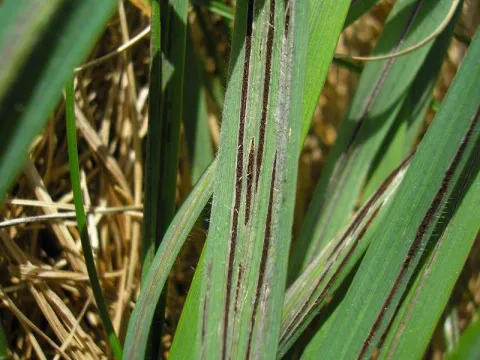
Initial symptoms are usually observed during the tillering and jointing stages. The disease manifests as elongated, gray-to-black stripes on the leaves, leaf sheaths, and sometimes the stems.
Initially, these lesions are covered by the host epidermis. As the pathogen matures, the epidermis ruptures, releasing a characteristic black, powdery mass of fungal teliospores.
Infected plants display a distinct stunted growth habit. The leaves may become twisted or curled, and the overall plant height is significantly lower compared to healthy, non-infected wheat plants.
The rupturing of the leaf tissue often occurs before the plants reach maturity. The presence of these black spores on the foliage and stems is the most reliable field diagnostic sign of flag smut.
Because the disease is systemic, the entire plant is usually affected. It is common to see individual plants in a field that appear entirely covered in these characteristic black, powdery stripes.
The most effective management strategy is the use of resistant wheat varieties. Breeding programs have successfully developed lines that significantly reduce the impact of the pathogen.
Seed treatment with systemic fungicides is a standard and essential practice. These fungicides help eliminate the inoculum present on the seed surface and provide initial protection for the developing seedling.
Cultural practices such as crop rotation are vital. Rotating away from wheat for several years allows the spore population in the soil to decline, reducing the overall risk of infection.
Proper soil management, including deep plowing, can help bury the spore balls, reducing the chances of early seedling contact. Early removal of infected plants can also prevent the buildup of soil inoculum.
- Use of certified, fungicide-treated seeds.
- Implementation of a 2-3 year crop rotation cycle.
- Management of grassy weeds that can host the pathogen.
- Monitoring of fields during early growth stages for timely detection.