
Flax rust
Melampsora lini
Flax rust is caused by the obligate parasite Melampsora lini, a fungal pathogen belonging to the Basidiomycota phylum. It is a highly specialized fungus that specifically targets species of the Linum genus.
What the section contains
Flax rust
The fungus has a complex life cycle involving different spore stages, all of which can occur on the flax plant. This macrocyclic nature allows the pathogen to be extremely efficient in colonizing host fields.
The primary inoculum often comes from teliospores that have overwintered on infected crop residues from the previous season. These spores germinate in spring to initiate the infection cycle.
Urediniospores are responsible for the secondary cycles of infection. During the growing season, these spores are wind-dispersed, allowing the disease to spread rapidly throughout the flax field.
Favorable conditions for the development of Melampsora lini include moderate temperatures and prolonged periods of leaf wetness, such as high humidity or frequent morning dews.
The fungus attacks all aerial parts of the flax plant, including leaves, stems, sepals, and capsules. By extracting nutrients, it deprives the plant of the resources needed for seed filling and fiber development.
In fiber flax, rust infection compromises fiber quality. The fibers become brittle and lack the required tensile strength, leading to a significant reduction in market value.
For linseed (oil flax), the damage manifests as shriveled seeds with low oil content. This results in reduced yields and poor quality of the harvested grain for industrial or food use.
Severe infections lead to premature defoliation and plant senescence. This shortens the vegetative period and significantly limits the overall biomass production of the crop.
Physical damage to the stem epidermis caused by spore pustules also makes the plant more susceptible to secondary pathogenic infections and environmental stress.
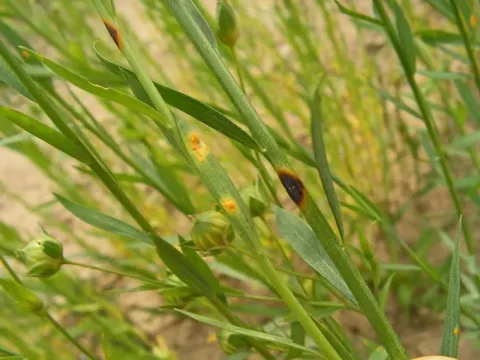
The first symptoms appear as small, bright orange pustules known as uredinia. These pustules typically develop on the undersides of leaves and on stems, releasing clouds of spores.
As the disease progresses, these orange pustules become more numerous and can cover large portions of the stems and foliage, disrupting the plant's photosynthetic capacity.
Toward the end of the season, the orange pustules are replaced by dark brown or black crusts, which are the telia. This is the stage where the fungus prepares to survive the winter.
Affected stems may appear chlorotic and distorted in areas of high pustule concentration. In extreme cases, the structural integrity of the stem is weakened, leading to lodging.
Visual identification in the field is relatively straightforward due to the distinct orange color of the uredinia, which contrasts sharply with the green tissues of the healthy flax plant.
The most effective strategy is the use of rust-resistant flax varieties. Breeding programs prioritize resistance genes to minimize the impact of Melampsora lini.
Crop rotation is essential for managing the pathogen. By not planting flax in the same field for at least 5 years, the inoculum potential of the soil is significantly reduced.
Sanitation practices, such as deep tillage to bury infected crop residues, are crucial to ensure that the fungus does not find a substrate to overwinter successfully.
Fungicide applications are recommended when the disease reaches the economic threshold. Timing is critical, and sprays should be applied at the early onset of symptoms.
- Use of certified, clean, and treated seeds.
- Elimination of volunteer flax plants that can serve as bridges for infection.
- Optimal field spacing to promote air circulation and reduce humidity.
- Balanced soil fertility to maintain plant vigor against pathogen attack.