
Flammulina velutipes
Flammulina velutipes
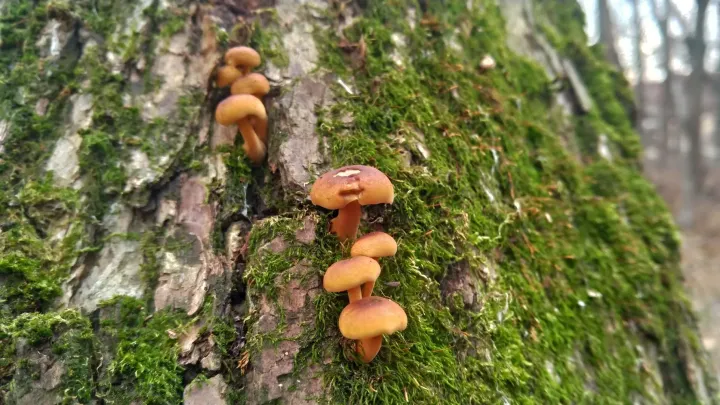
Description
How to identify
Flammulina velutipes is a species of gilled fungus within the Physalacriaceae family. While popular as an edible winter mushroom, it acts as a wood-decay pathogen in the field of phytopathology.
The fungus is identifiable by its golden-yellow to orange caps and dark, velvety stems. These physical characteristics are distinctive and often appear in clusters on living or dead deciduous wood.
It is classified as a facultative parasite, meaning it thrives on decaying timber but can actively invade the weakened heartwood or sapwood of living trees, leading to serious decay.
Systematically, it belongs to the order Agaricales. Its ability to decompose lignin and cellulose makes it a significant agent in the breakdown of tree structures, especially in orchard environments.
The mycelium of this fungus is aggressive, spreading through the vascular system of the host plant, which eventually leads to the formation of white rot inside the wood.
What it damages
Flammulina velutipes primarily affects fruit trees such as apple, pear, and cherry trees. It is also found on various hardwood species like willow, poplar, and birch found in or near garden areas.
Infection typically occurs through open wounds, such as pruning cuts, broken branches, frost cracks, or sunscald. The spores land on exposed wood and begin the colonization process.
Inside the tree, the mycelium breaks down the cell walls, resulting in a white, fibrous decay. This compromises the structural integrity of the main trunk and primary scaffold branches.
Severe infestations weaken the tree significantly, making it susceptible to windthrow or breakage during heavy storms or snowfalls. It can eventually lead to the total collapse of the host tree.
The decay disrupts the transport of water and nutrients, which often manifests as reduced vigor, yellowing leaves, and stunted annual growth in the infected plant.
When it appears
The fungus is well-known for its cold-weather activity. It thrives in temperatures ranging from just above freezing to approximately 10°C, making it a prominent pathogen during autumn and winter.
Fruiting bodies (mushrooms) are most visible during the cooler months, which is a key indicator for field diagnostics. The cycle of sporulation intensifies during wet, humid weather conditions.
During the warmer months, the fungus continues to grow vegetatively within the wood, although it is less visible. This hidden growth allows it to penetrate deeper into the core of the tree.
In temperate climates, the mycelium remains active throughout the year, provided there is sufficient moisture within the wood tissues to support its metabolism.
The survival strategy of the fungus involves the ability to endure freezing temperatures, which ensures it remains a persistent threat in established orchards.
Signs of infestation
The most common sign is the appearance of clusters of bright orange mushrooms emerging from the bark or near the base of the tree trunk.
Inside the wood, the presence of white, bleached areas with a stringy texture is a definitive sign of white rot caused by this specific fungus.
Bark peeling or cracks revealing a white, felt-like layer of mycelium beneath the surface indicate advanced colonization of the host's vascular tissues.
Trees may exhibit signs of decline, such as canopy thinning, premature leaf drop, or the presence of dead branches that show fungal growth at the base.
A hollow sound when tapping the trunk is a strong indicator of internal structural failure caused by prolonged decay activity.
Control measures
Management focuses on preventing fungal entry and maintaining tree health. Proper pruning practices are the first line of defense against colonization.
- Regular inspection for tree wounds and immediate treatment with fungicide sealants.
- Removing and destroying infected wood to prevent the spread of spores to healthy trees.
- Ensuring proper orchard sanitation by removing stumps and fallen debris where the fungus can persist.
- Applying white latex paint or lime-based washes to trunks to prevent sunscald and frost cracks.
Minimizing mechanical damage to the bark during routine maintenance helps protect the tree's natural barrier against fungal spores.
Promoting overall tree vigor through appropriate fertilization and adequate irrigation helps the tree's internal defense mechanisms isolate and compartmentalize the infection.
Causes diseases · 1
Discussion
No discussions yet — be the first.