
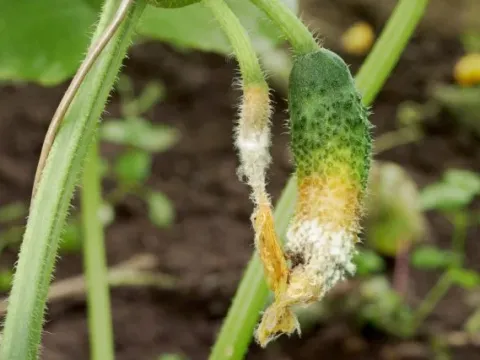
Sclerotinia
Sri
Sclerotinia is a genus of fungi within the order Helotiales, known as a devastating plant pathogen. The most significant species is Sclerotinia sclerotiorum, which causes a condition widely referred to as white mold or cottony rot.
What the section contains
Sclerotinia
The hallmark of this pathogen is the production of sclerotia—hard, dark-colored, fungal resting structures. These bodies are crucial for survival, allowing the fungus to persist in soil for many years despite harsh environmental conditions.
The life cycle involves both asexual (mycelium) and sexual stages. Under favorable conditions, sclerotia germinate to form apothecia—small, cup-shaped fruiting bodies that release millions of airborne ascospores.
The mycelium of Sclerotinia is characteristically white and cottony. It secretes potent enzymes that degrade plant tissues, leading to rapid softening and rotting of stems, leaves, and fruits.
Identification in the field often relies on observing the white mycelial mats accompanied by the development of black sclerotia, which can be found either inside hollow stems or on the plant surface.
Sclerotinia is a highly aggressive generalist pathogen, infecting over 400 plant species. Key agricultural crops susceptible to this disease include sunflowers, oilseed rape, soybeans, pulses, and numerous vegetable crops.
The fungus can invade all parts of a plant, including roots, stems, and reproductive organs. Root infections cause sudden wilting and death, as the vascular system is destroyed by the spreading mycelium.
Stem infections typically occur at the base or mid-section, leading to lesions that weaken the plant structure. This often results in lodging, where the crop collapses, significantly hindering harvesting efforts and reducing yields.
In crops like sunflowers, the fungus destroys the flower head, replacing healthy seeds with dark, sclerotial tissue. This renders the harvest useless and potentially toxic for livestock consumption.
Beyond field losses, Sclerotinia is a major issue in post-harvest storage. Infected plant debris or contaminated seeds can initiate rot in stored produce, spreading rapidly to healthy tissues in humid conditions.
Primary infection typically initiates in the spring or early summer when soil moisture is high and temperatures range between 15°C and 20°C, triggering the germination of soil-borne sclerotia.
The dispersal of ascospores via wind is the primary mechanism for infecting the aerial parts of plants. These spores often settle on flower petals, which provide the initial nutrient source for the germinating fungus.
Epidemics are favored by extended periods of cool, wet weather and high humidity. These conditions are optimal for the fungus to transition from the petal stage into the main stem of the crop.
While the pathogen prefers temperatures near 18–22°C, it is resilient and can survive dry spells as sclerotia. Once moisture returns, the fungus resumes its growth if a host is present.
At the end of the growing season, the fungus forms new sclerotia within the dying plant tissues. These sclerotia fall to the ground during harvest or crop processing, resetting the infection cycle for future seasons.
The initial symptom of infection is the development of water-soaked lesions that rapidly darken. These lesions are soon covered in a thick, white, fluffy mycelial growth, indicating active colonization.
As the disease progresses, the internal structure of the plant tissue collapses. This causes the stem to become hollowed out and fragile, often leading to the snapping of the stalk under minimal wind pressure.
- Sudden wilting or chlorosis of the foliage without early warning.
- Appearance of white, cotton-like fungal growth on stems or near leaf axils.
- Formation of dark, irregular, hard sclerotia inside or on the plant.
- Lesions encircling the stem, blocking water and nutrient transport.
- Premature death of entire plant modules such as seed pods or heads.
When roots are affected, the plant may show rapid wilting, and checking the root collar often reveals soft decay and white mycelial strands, confirming the presence of the pathogen.
Apothecia emerging from the soil surface are a critical diagnostic sign. Seeing these small, brown, trumpet-shaped structures confirms that the pathogen is active and releasing spores into the air.
Crop rotation is the primary defense strategy. Alternating host crops with non-host crops like cereals for several years helps deplete the population of sclerotia stored in the soil.
Deep tillage or inversion plowing can be effective in burying sclerotia to depths where they are unlikely to successfully form apothecia and release spores, though this must be balanced against soil health practices.
Using certified, clean seed is vital to prevent the introduction of the pathogen into new fields. Fungicide seed treatments can offer some protection against early-season damping-off caused by soil-borne inoculum.
Foliar fungicide applications during the bloom stage are the most common chemical control measure. These treatments are applied preventatively to protect the flower petals from becoming infected by airborne ascospores.
Effective weed management is essential, as many common weeds serve as alternative hosts for Sclerotinia, allowing the fungus to survive and multiply even when a main crop is not present.