
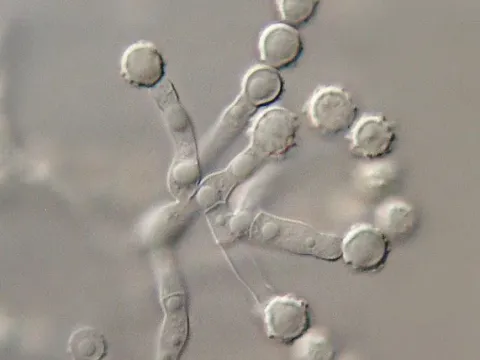
Scopulariopsis brevicaulis
Scopulariopsis brevicaulis
Scopulariopsis brevicaulis is a fungus belonging to the Ascomycota division, known for its versatile metabolic capabilities and its status as a common soil inhabitant.
What the section contains
Scopulariopsis brevicaulis
The fungus is characterized by septate hyphae and conidiophores that produce chains of conidia with a distinct truncated base, facilitating identification under laboratory conditions.
While often acting as a saprophyte, it can function as a secondary parasite, particularly in environments where plant defenses are compromised by abiotic stressors.
Its physiological range allows it to thrive in diverse ecological niches, utilizing available organic carbon and nitrogen sources for robust development.
Research confirms its ability to grow across a wide temperature spectrum, which contributes to its persistence in both field and greenhouse environments.
The pathogen is known to cause damage to a variety of vegetable crops, seeds, and root systems, primarily by decomposing plant organic matter.
It often acts as a seed-borne pathogen, reducing seed viability and causing pre-emergence damping-off in susceptible vegetable crops.
In stored produce, Scopulariopsis brevicaulis causes soft rot, leading to significant economic losses during the post-harvest shelf-life period.
Plants weakened by environmental conditions or physical damage are particularly vulnerable, as the fungus easily colonizes these impaired tissues.
The pathogen can also cause root necrosis in nursery settings, leading to stunted growth and reduced vigor in young transplants.
Infection is marked by the appearance of a powdery, white to cream-colored mycelial mat that may turn brown as the fungus matures and produces spores.
Affected tissues exhibit symptoms of tissue softening and discoloration, often accompanied by a musty, earthy odor indicative of rapid fungal degradation.
Root systems may appear darkened and brittle, indicating a loss of structural integrity and impaired water uptake capacity.
Seeds covered by the fungal colony typically fail to germinate, showing inhibited radicle emergence and surface discoloration.
In stored vegetables, lesions expand rapidly, turning into necrotic patches that eventually compromise the integrity of the entire fruit.
Crop rotation and soil management are essential to reduce the inoculum density of the fungus within the cultivated area.
Managing soil moisture levels is critical, as high humidity and waterlogging create ideal conditions for the rapid proliferation of the pathogen.
Chemical seed treatments utilizing systemic or contact fungicides provide protection during the critical stages of seed germination and seedling establishment.
The application of biological control agents, such as Trichoderma species, effectively suppresses fungal growth through niche competition and mycoparasitism.
Sanitation practices, including the removal and destruction of crop residues, play a vital role in eliminating sources of infection for subsequent seasons.