
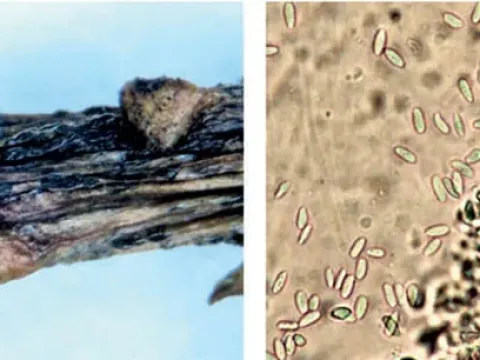
Sclerophoma semenospora
Sclerophoma semenospora
Sclerophoma semenospora is an ascomycete fungus categorized as a significant phytopathogen affecting various coniferous tree species worldwide.
What the section contains
Sclerophoma semenospora
The fungus is characterized by its asexual reproductive stage, where it develops dark, submerged pycnidia within the needles or bark of the host plant. These structures serve as the primary reservoir for spore dispersal.
Its life cycle is highly dependent on environmental conditions, with optimal development occurring during periods of mild temperature and high humidity, which facilitate spore germination.
Genetic studies and morphological observations confirm that the pathogen can exist as both a latent inhabitant and an active parasite, depending on the vigor of the host plant.
Identification of the species is generally performed through microscopic examination of conidia shapes and the specific arrangement of fungal tissue within the necrotic spots of the host.
The host range primarily includes species within the Pinaceae family. The pathogen is known for its impact on nurseries and young plantations where it causes significant needle drop.
Damage manifests as localized necrosis, which disrupts the photosynthetic ability of the plant and leads to overall physiological decline.
In cases of severe infection, Sclerophoma semenospora can induce the death of young shoots, leading to stunted growth and permanent deformation of the tree architecture.
The pathogen is particularly damaging to trees already stressed by drought, poor soil nutrients, or previous mechanical injury, which allows the fungus to spread more aggressively.
The economic impact is significant in commercial forestry, as it leads to reduced growth rates and, in extreme cases, the mortality of entire cohorts of seedlings.
Early symptoms include yellowing of the needles, which eventually transition into a dark brown or blackish color as the tissue dies off.
Small, black, dot-like pycnidia can be observed emerging through the epidermis of the needles, acting as a clear indicator of the fungal presence.
Infected needles tend to become brittle and eventually fall prematurely, leading to sparse foliage that becomes increasingly apparent from the bottom of the tree upwards.
Necrotic lesions on the shoots may show subtle discoloration patterns, and under high humidity, a slight fungal growth might be visible to the naked eye.
Affected trees often show signs of desiccation, which differentiates this condition from other environmental stress factors like water deficiency.
Sanitation is the most critical factor in managing the disease; this involves the removal and destruction of infected needles and pruning of symptomatic branches.
Improving air circulation within tree stands by thinning and controlling planting density helps to create an unfavorable environment for fungal proliferation.
Chemical control using fungicides, particularly those containing systemic agents, is recommended during the early growing season to protect healthy tissue from spore colonization.
Promoting overall plant vigor through balanced fertilization and proper irrigation helps the trees develop stronger defenses against potential pathogens.
Regular inspection and early detection protocols are essential to isolate infected areas before the disease spreads to adjacent healthy trees in the nursery environment.