
Sclerospora graminicola
Sclerospora graminicola
Sclerospora graminicola is a pathogen belonging to the kingdom Chromista, phylum Oomycota, and the family Sclerosporaceae. Despite being historically called a fungus, it is an oomycete.
What the section contains
Sclerospora graminicola
This pathogen is responsible for the disease known as downy mildew, or "green ear" disease, which significantly affects millet crops globally.
The pathogen exists primarily as an obligate parasite, living within the host plant tissues and spreading its mycelium through the intercellular spaces.
It reproduces through asexual zoosporangia, which facilitate rapid spread during the growing season, and sexual oospores, which allow it to survive winter.
The microscopic structure is characterized by branched sporangiophores emerging from the stomata, carrying numerous zoosporangia under humid conditions.
The primary host for Sclerospora graminicola is pearl millet (Pennisetum glaucum), although it can affect other graminaceous species.
The disease causes systemic infection, meaning the pathogen colonizes the plant's apical meristem, leading to internal physiological disruptions.
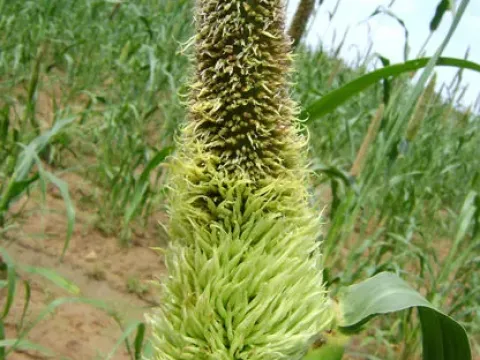
The damage is severe, often resulting in the transformation of floral parts into vegetative-like structures, effectively causing total loss of seed yield.
Infected plants are often stunted, show excessive tillering, and may die prematurely if environmental conditions favor the rapid progression of the disease.
High incidence of the disease in a field can lead to substantial economic losses, especially in regions with consistent high humidity and warm temperatures.
The infection starts when oospores, which have overwintered in the soil or on crop debris, germinate and infect millet seedlings in the spring.
Once the initial infection is established, the pathogen produces zoosporangia that are wind-dispersed, leading to secondary cycles of infection.
The disease reaches its peak during the mid-to-late growing season, particularly when high relative humidity and temperatures occur simultaneously.
The presence of free moisture on the leaf surface is a critical requirement for the germination of zoosporangia and subsequent penetration of the host.
Warm, wet weather acts as an ideal catalyst, significantly shortening the incubation period and facilitating the rapid development of the disease.
Initial symptoms include the development of chlorotic streaks or yellowing of the leaf blades, which may become necrotic over time.
A dense, white, fluffy growth appears on the lower surface of infected leaves; this consists of the sporangiophores and zoosporangia of the pathogen.
Plants affected systemically often exhibit a bushy appearance due to excessive tillering and a significant reduction in overall plant height.
The most distinctive symptom is the "green ear" transformation, where the inflorescence is replaced by leafy, green, vestigial structures instead of grain.
As the "green ear" dries out, it becomes a reservoir of hardened oospores, which eventually fall to the ground to initiate the next season's infection.
Crop rotation is the most fundamental management practice; rotating millet with non-host crops for several years helps reduce soil-borne inoculum.
The cultivation of genetically resistant or tolerant millet varieties is the primary strategy for managing the disease in endemic areas.
Seed treatments using systemic fungicides are essential to protect the seedlings from initial infection by soil-borne oospores during the germination phase.
Sanitation measures, including the destruction of infected plant debris and removal of volunteer plants, prevent the build-up of the pathogen in the field.
Proper field drainage and adjusted planting dates can help avoid the environmental conditions that are most favorable for the pathogen's development.