
Scolicotrichum graminis
Scolicotrichum graminis
Scolicotrichum graminis is a fungal pathogen classified within the group of hyphomycetes. It acts as an obligate parasite that specifically targets the vegetative parts of various grass species.
What the section contains
Scolicotrichum graminis
The fungus is characterized by the development of mycelium within the leaf tissues. It eventually breaches the epidermis or stomata to release its conidia for reproduction and further dissemination.
Taxonomically, it belongs to the Hyphomycetes order. The pathogen relies on wind-dispersed spores, which allow it to spread across fields during periods of high humidity and moderate temperatures.
Overwintering occurs primarily as mycelium in infected plant debris left in the field. This survival mechanism ensures that the pathogen persists from season to season.
Diagnostic identification typically requires microscopic examination to observe the dark, olive-brown conidiophores erupting from the infected leaf surface, which is a hallmark of this species.
The pathogen affects a wide range of forage and wild grasses. Species such as timothy, orchard grass, bluegrass, and fescue are particularly susceptible to infection.
The primary damage occurs on leaf blades, where the infection results in necrotic spots. These spots lead to premature senescence of the green foliage, directly reducing biomass.
Agricultural losses include a significant drop in the nutritional quality of hay and pasture. Infected plants also show decreased vigor and weakened root systems, impacting overall yield.
The reduction in photosynthetic leaf area stunts the plant's growth and diminishes its ability to recover after grazing or harvesting, leading to long-term stand degradation.
Under severe outbreak conditions, particularly in cool and wet weather, the disease can compromise up to half of the total foliage area, resulting in substantial economic impacts.
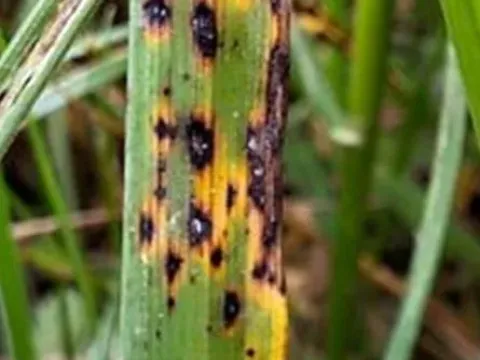
Early symptoms appear as small, pale-green or yellowish flecks that gradually expand into elongated brown or dark-colored spots running parallel to the leaf veins.
The surface of these necrotic spots eventually develops distinct olive-black tufts, which represent the conidiophores of the fungus produced during active sporulation.
As the infection progresses, individual spots merge to cover large areas of the leaf, causing the tissue to brown, curl, and eventually die off completely.
The disease typically starts on the lower leaves of the grass canopy, where the microclimate is cooler and more humid, providing an ideal environment for fungal development.
Infected leaves become brittle and lose their flexibility, which lowers their palatability for livestock and reduces the efficiency of mechanical forage harvesting.
Effective management begins with robust agronomic practices, including crop rotation, which helps disrupt the lifecycle of the pathogen by removing susceptible hosts from the field.
Prompt harvesting of the grass stand is a crucial control measure, as it removes the infected foliage before the fungus has a chance to produce and disperse large volumes of spores.
The use of disease-resistant grass cultivars is recommended as the primary long-term strategy for minimizing damage caused by Scolicotrichum graminis.
While fungicide application is possible in high-value seed production fields, it should only be used when monitoring indicates that the disease threshold is exceeded.
- Maintain proper field sanitation to reduce inoculum levels.
- Avoid excessive nitrogen fertilization that promotes lush, succulent growth.
- Ensure adequate soil drainage to reduce humidity levels within the canopy.