
Sowbane mosaic
Sowbane mosaic
Sowbane mosaic, caused by the Sowbane mosaic virus (SoMV), is an isometric plant virus classified within the genus Nepovirus. It is a well-studied pathogen known for its stability and broad host range among dicotyledonous plants.
What the section contains
Sowbane mosaic
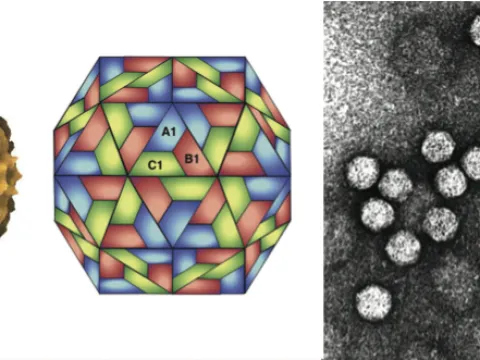
The virus particles are spherical, measuring approximately 26–30 nm in diameter. Its structural stability allows it to persist in the environment, particularly within contaminated plant sap or dried plant debris.
Systemically, the virus is highly infectious and is readily transmitted mechanically during cultural practices such as weeding, pruning, or handling of plants, as well as via seeds.
The biological life cycle of the pathogen is closely linked to common weeds, especially Chenopodium album (lamb's quarters), which acts as the primary overwintering host and reservoir.
Many host plants carry the virus in a latent state, meaning they can harbor and transmit the infection without showing any obvious clinical symptoms, making early detection a challenge.
The primary hosts of the virus are plants in the Chenopodiaceae family. Significant economic impact is observed in sugar beet and garden beet crops, where infection leads to reduced yields.
Spinach crops are also highly susceptible, with infections causing mosaic symptoms that reduce the commercial marketability of the leafy greens.
Other crops, including grapes and tomatoes, can be infected. While the symptoms may be mild in these species, the virus still contributes to the weakening of overall plant health and resilience.
The damage manifests primarily as a reduction in plant vigor, slower growth rates, and diminished weight of harvestable parts, such as roots or foliage.
Seed-borne transmission is the most critical factor for the agricultural industry, as infected seeds effectively distribute the virus over long distances, complicating global phytosanitary efforts.
Symptoms often include a characteristic mosaic pattern on leaves, consisting of irregular light green or yellow patches interspersed with normal dark green tissue.
Leaf deformation, including crinkling, puckering, or narrowing, is frequently reported in severely infected specimens, affecting the overall plant architecture.
Stunted growth, shortened internodes, and a general reduction in the size of the plant compared to healthy controls are hallmark signs of persistent systemic infection.
In some crops, chlorotic spots or ring-like patterns may appear on leaves during periods of active growth, particularly under stress conditions.
- Distinctive leaf mosaic and mottling
- Leaf crinkling and distortion
- Overall plant stunting and dwarfism
- Yield reduction in root and leaf crops
Effective management begins with aggressive weed control, focusing on the eradication of Chenopodium species that harbor the virus throughout the growing season.
Using certified, virus-free seed is the most important measure to prevent the introduction of the pathogen into new areas or clean fields.
Rigorous sanitation protocols for farm equipment and tools are essential to minimize mechanical transmission of the virus, especially between different field sections.
Crop rotation practices should avoid sequential planting of highly susceptible Chenopodiaceae crops in areas with known historical instances of the disease.
Early identification and culling of infected plants within a field can slow the rate of secondary spread, provided that these actions are integrated into a wider pest management strategy.