
Southern Blight
Sclerotium rolfsii
Sclerotium rolfsii is a dangerous soil-borne basidiomycete fungus. It is primarily identified in the field by the presence of dense, white, thread-like mycelium that spreads across the soil surface and the base of the host plant.
What the section contains
Southern Blight
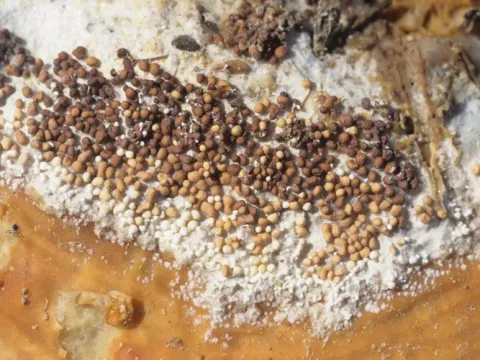
A key diagnostic feature is the production of sclerotia, which are compact masses of hardened fungal mycelium. They are roughly 0.5–2 mm in diameter, resembling mustard seeds, initially white and turning tan or dark brown as they mature.
This pathogen has an exceptionally wide host range, infecting over 500 plant species. Major economic crops such as tomatoes, peppers, peanuts, beans, and potatoes are highly susceptible to the disease caused by this fungus.
The fungus attacks the crown and stem tissues of the plant at or near the soil line. It causes rapid tissue decay and wilting, often leading to the complete death of the plant within a very short period of time.
The disease thrives in warm, moist conditions, with temperatures ranging between 25°C and 35°C (77°F–95°F). It typically becomes a major concern during the peak of the growing season when temperatures are consistently high.
Sclerotia are highly resilient and can persist in the soil for several years. They are spread through irrigation water, contaminated soil movement, infected farm equipment, and the movement of infected plant debris.
The first external symptom is often sudden wilting of the leaves, even if the plant appears adequately watered. Close inspection of the stem base reveals a white, fan-like fungal growth covering the lower stem.
The tissues beneath the white mycelium become necrotic, mushy, and discolored. As the disease progresses, the characteristic tan-to-brown sclerotia appear on the surface of the infected stems and the surrounding soil.
Managing this pathogen requires an integrated approach. Deep plowing is effective as it buries sclerotia deep enough to reduce their viability and ability to reach the surface, helping to break the disease cycle.
Crop rotation with non-host species, such as grasses or cereals, is essential to starve the pathogen of available hosts. In high-value greenhouse crops, soil solarization and the application of specific fungicides like azoxystrobin are common control measures.