
Southern rice black-streaked dwarf virus
Southern rice
Southern rice black-streaked dwarf virus (SRBSDV) is a serious phytopathogen belonging to the genus Fijivirus within the Reoviridae family. It primarily affects rice crops, causing significant yield losses in Asia.
What the section contains
Southern rice black-streaked dwarf virus
The virus possesses a segmented double-stranded RNA genome. It is not transmitted through seeds or soil, and mechanical transmission through plant sap is negligible in field conditions.
The primary vector for SRBSDV is the white-backed planthopper, Sogatella furcifera. The virus is transmitted in a persistent, circulative, and propagative manner, meaning it multiplies within the insect vector.
Transovarial transmission, where the virus is passed from adult insects to their offspring, is a critical factor in the virus's survival during winter and its rapid spread in the spring.
Molecular diagnosis using RT-PCR is the standard method for identifying the virus, as clinical symptoms in the field can sometimes be confused with other nutritional or viral disorders.
Rice (Oryza sativa) is the most economically important host for SRBSDV. The virus also infects maize, wheat, and various wild grass species, which serve as alternative hosts for both the virus and the vector.
The damage caused by the virus is severe, particularly when infection occurs at the seedling stage, leading to drastic growth retardation and loss of yield potential.
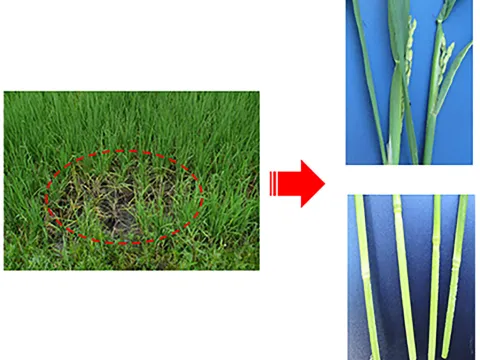
Infected fields show patches of stunted plants, leading to irregular growth patterns. Yield losses can be total if the infestation occurs early in the cropping season.
Besides rice, the virus causes significant problems in maize production, resulting in deformed ears and stunted stalks, impacting both grain quality and total biomass.
The economic impact of the virus is magnified by the increase in planthopper populations in regions with intensified irrigation and consecutive rice cropping cycles.
Stunting is the most characteristic sign of SRBSDV infection. Plants appear much shorter than healthy neighbors and exhibit poor overall development.
The presence of galls, which are white or dark-colored tumor-like swellings, on the stems and leaf sheaths is a definitive symptom of the disease.
Infected leaves often become dark green and may show signs of twisting or curling. The plants produce excessive tillers, but these tillers are usually stunted and fail to produce grain.
The root system of infected plants is poorly developed, which prevents proper uptake of water and nutrients, further weakening the plant against environmental stressors.
Panicles in late-infected plants are often small, partially trapped within the leaf sheath, and filled with empty or shriveled grains.
Control of SRBSDV focuses on managing the population of the white-backed planthopper (Sogatella furcifera) and preventing its migration to healthy rice fields.
Seed treatment with systemic insecticides is crucial for protecting plants during the vulnerable seedling stage, effectively reducing early viral transmission.
Cultural practices, such as synchronizing planting times across large areas and destroying wild grasses around rice paddies, help reduce the reservoir of the virus and the vector.
The use of resistant or tolerant rice varieties is considered the most sustainable and efficient strategy for mitigating the damage caused by the virus.
- Monitoring vector populations using light traps.
- Avoiding excessive use of nitrogen fertilizers that favor planthopper colonization.
- Removing and destroying symptomatic plants early in the season.
- Implementing integrated pest management (IPM) to maintain natural predators of planthoppers.