
Rosellinia subiculata
Rosellinia subiculata
Rosellinia subiculata is an ascomycete fungus belonging to the family Xylariaceae. It is primarily known as a saprotrophic species that occasionally exhibits opportunistic pathogenic behavior on decaying wood.
What the section contains
Rosellinia subiculata
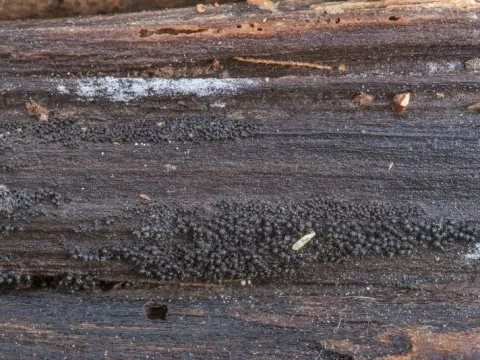
The fungus is identifiable by its distinctive fruit bodies, known as perithecia, which aggregate in dense clusters. These structures are black and finely bumpy, resting on a conspicuous bright yellow to ochre-colored subiculum (mycelial mat).
Microscopically, it produces ellipsoidal dark brown spores. The bright color of the subiculum is a key taxonomic feature that differentiates it from other darker or black-matted species in the genus.
This fungus is widely distributed in forest ecosystems, where it plays an essential role in the decomposition of organic matter, specifically lignocellulosic debris.
Field identification is usually based on the unique combination of the yellow subiculum and the presence of clustered black perithecia on decaying hardwood substrates.
The primary hosts for Rosellinia subiculata are various hardwood species, including oak, beech, and maple. It thrives on logs, stumps, and fallen branches in high-humidity forest environments.
In nursery settings, it may colonize stressed or weakened seedlings if the soil or surrounding environment is contaminated with large amounts of decaying woody debris.
Damage involves the degradation of wood tissues, leading to soft rot and a reduction in the structural integrity of the woody material.
While not a major threat to broad-acre agricultural crops, it can affect the health of ornamental woody plants or forest saplings when conditions are favorable for fungal growth.
The pathogen essentially accelerates the mineralisation of dead wood, which can impact the regeneration of sensitive tree species in heavily infested areas.
The earliest sign of infestation is the appearance of a vibrant yellow or ochre-colored mycelial mat (subiculum) covering the surface of the bark or exposed wood.
As the fungus matures, dense clusters of tiny, globose, black perithecia develop within or upon this mat, providing a stark color contrast.
Infected wood becomes soft, discolored, and often emits a faint fungal odor, particularly when the moisture content of the substrate is high.
Unlike other Rosellinia species, the yellow subiculum is the definitive visual indicator during the active growth phase of the fungus.
Massive sporulation events typically coincide with periods of high rainfall and moderate temperatures, making the fungus more visible on damp, rotting logs.
The primary management strategy is the rigorous removal of dead woody debris, stumps, and rotting branches from forest nursery sites to reduce the inoculum potential.
Effective water management and soil drainage are crucial to prevent the localized humidity levels that favor the growth and reproduction of this wood-decaying organism.
If young trees are found to be infested, they should be removed and destroyed immediately to prevent the fungus from spreading to healthy surrounding plants.
Chemical control with fungicides is generally not advised for this species, as the focus should remain on cultural practices and maintaining tree vigor.
Routine scouting of forest stands allows for the early detection of the pathogen, enabling timely sanitary measures that prevent widespread colonization of woody materials.