
Rose rust
Phragmidium mucronatum
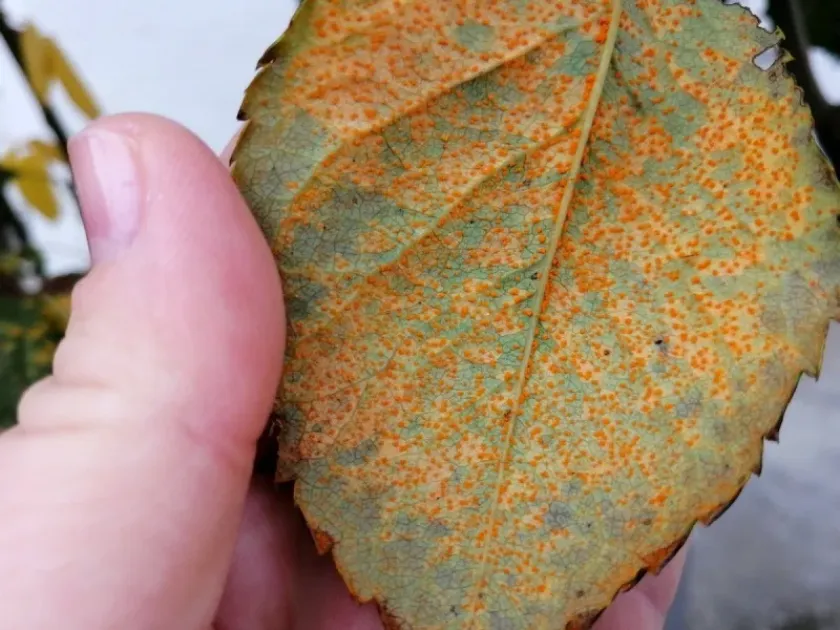
Description
How to identify
Rose rust is a fungal disease caused by the pathogen Phragmidium mucronatum, belonging to the order Pucciniales. It is an obligate parasite, meaning it requires living host tissues of the genus Rosa to complete its complex biological life cycle.
The fungus is highly specialized, with its mycelium developing primarily within the intercellular spaces of the plant's leaves and stems. By absorbing nutrients directly from the host's cells, it severely compromises the plant's vigor and decorative value.
The life cycle of this pathogen is remarkably complex, involving up to five distinct spore stages. This allows the fungus to survive various environmental conditions and spread rapidly across rose gardens via wind and moisture.
The pathogen overwinters as teliospores on fallen, infected leaves or as mycelium within the stems of infected roses. When temperatures rise in early spring, the fungus reactivates, leading to primary infections of emerging shoots.
Classified under the phylum Basidiomycota, this rust fungus is known for its high reproductive rate. A single infected plant can produce millions of urediniospores, which can initiate secondary infections throughout the growing season.
What it damages
The primary hosts are roses, including modern hybrid teas, floribundas, and climbing varieties. Wild roses and rose hips often act as reservoirs for the infection, allowing the fungus to persist in the landscape.
The pathogen attacks all aerial parts of the plant, including young shoots, leaf petioles, and buds. Most damage occurs on rapidly growing tissues, where the fungus finds the necessary sugar reserves to sustain its development.
Severe infestations lead to premature leaf drop, which drastically weakens the plant before the winter dormancy period. Defoliated plants often fail to harden off correctly, making them highly susceptible to frost damage.
In addition to leaf damage, the fungus causes distortion, cracking, and wounding of stems. These physical injuries create entry points for secondary pathogens, which can eventually lead to the decline of the entire rose bush.
The overall impact on plant health is significant, characterized by reduced photosynthetic capacity. Infected roses produce fewer and smaller blooms, and their root systems become starved of essential carbohydrates.
When it appears
Symptoms typically appear in late spring or early summer when weather conditions favor fungal development. Water on leaf surfaces is critical for spore germination, making wet springs particularly dangerous for roses.
Optimal temperatures for the development of rust are between 18°C and 22°C, combined with high humidity. In these conditions, the fungus can complete a full generation of urediniospores in less than two weeks.
Spore dissemination occurs primarily via wind currents and splashing water from rain or overhead irrigation. Once spores land on a healthy leaf, they require only a few hours of moisture to germinate and penetrate the host tissue.
A second surge of disease often occurs in late summer and early autumn. Cooling nights and heavy morning dews trigger the formation of teliospores, which are the resting stages designed to survive the harsh winter months.
Poor garden sanitation and dense plantings that restrict airflow create a perfect microclimate for the disease. Once established in a crowded garden, the rust can spread throughout the entire collection in a matter of weeks.
Signs of infestation
Initial symptoms include small, bright yellow pustules on the underside of leaves, known as aecia. On the upper leaf surface, these correspond to small, pale chlorotic spots that eventually turn necrotic.
As the infection progresses, rusty-orange spore masses called uredinia appear on the underside of leaves. These spores are easily dislodged, leaving a distinctive orange dust on clothing or tools that touch the plant.
Towards the end of the season, black pustules, known as telia, form on the stems and undersides of the leaves. This indicates that the fungus is transitioning into its winter state and preparing to drop onto the ground.
Severe cases show distorted stems with deep cracks and lesions. These areas are often encrusted with bright orange sporulation, which contrasts sharply with the green tissues of the healthy parts of the rose plant.
- Yellow chlorotic spots on the upper side of the leaves.
- Bright orange powdery pustules on the undersides of leaves.
- Rusty residue left on fingers when touching infected parts.
- Dark black dots or cushions appearing on stems in autumn.
- Premature defoliation and general stunting of the bush.
Control measures
The most crucial cultural practice is meticulous sanitation. All fallen leaves must be gathered and destroyed (burned or bagged) every autumn to remove the overwintering source of the fungus from the garden soil.
Maintain good horticultural practices by ensuring adequate spacing between plants to improve airflow. Always water at the base of the plant to keep the foliage dry, as moisture on leaves significantly increases the risk of infection.
For chemical control, use systemic fungicides, particularly those containing triazoles or strobilurins. Preventive spraying should start early in the season and be repeated every 10–14 days during periods of high humidity.
Resistance management is key; always alternate between fungicides with different modes of action to prevent the fungus from developing tolerance. Ensure thorough coverage, particularly on the underside of the leaves.
Promote plant health through balanced nutrition. Avoid excessive nitrogen, which promotes soft, succulent growth that is highly attractive to the pathogen, and ensure sufficient potassium levels to strengthen cell walls.
Causes diseases · 1
Discussion
No discussions yet — be the first.