
Rotylenchus
Rotylenchus
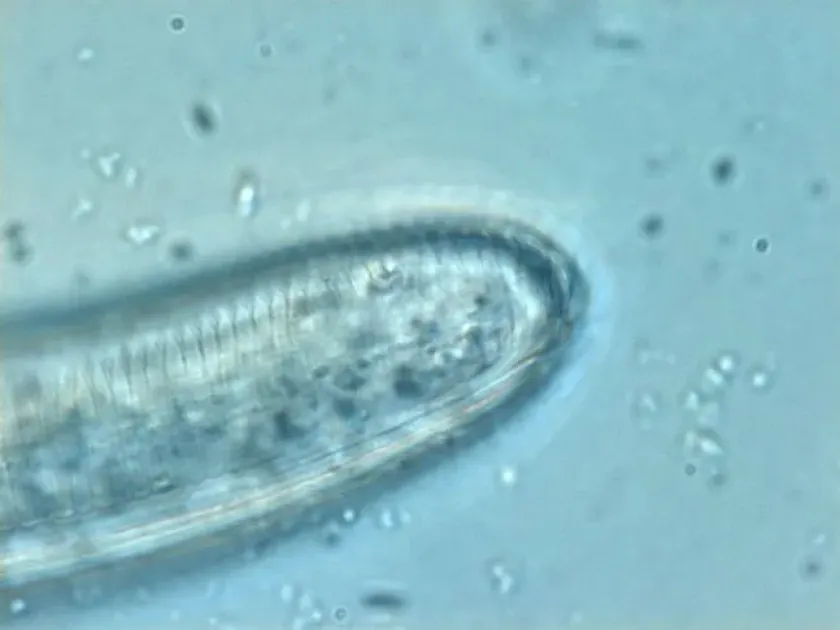
Description
How to identify
Rotylenchus is a genus of plant-parasitic nematodes belonging to the family Hoplolaimidae. These microscopic organisms are widespread in agricultural soils across the globe.
The organism is characterized by a robust stylet used for piercing plant cell walls. As ectoparasites, they feed on the root epidermis without necessarily entering the inner root tissues.
Their life cycle typically consists of four larval stages separated by molts. Reproduction is primarily amphimictic, though some species may exhibit parthenogenesis under specific environmental conditions.
They are obligate parasites, meaning they depend entirely on living plant tissues to survive and complete their life cycles, making them significant threats to agriculture.
Identification at the species level usually requires specialized microscopic analysis and molecular techniques, as different species within the genus have subtle morphological differences.
What it damages
Rotylenchus nematodes cause significant damage to a wide range of hosts, including cereals, legumes, various vegetables, and fruit-bearing trees like vines and citrus.
By feeding on roots, they create wounds that disrupt nutrient and water uptake, leading to stunted growth, wilting, and overall reduction in crop yield and quality.
The feeding process also leaves the roots highly susceptible to secondary infections from soil-borne fungi and bacteria, often exacerbating root decay and necrosis.
Root systems attacked by Rotylenchus often appear bushy, necrotic, or stunted, with significantly reduced mass compared to healthy plants in non-infested soil.
In high-density populations, these nematodes can cause significant economic loss, especially in perennial crops where the damage accumulates over several growing seasons.
When it appears
The activity and population dynamics of Rotylenchus are highly dependent on soil temperature and moisture levels, with peak activity in temperate climates occurring during the warmer spring and summer months.
These nematodes are capable of overwintering as eggs or motile stages within the soil, showing remarkable resilience to temperature fluctuations and dry periods.
As soil temperatures rise above 15°C, the nematodes begin to migrate toward the roots of susceptible seedlings, establishing new infection sites quickly.
Multiple generations can occur within a single growing season if the host crop is present and environmental conditions remain favorable, leading to rapid population buildup.
Dispersal is primarily passive, occurring through the movement of infested soil by farm machinery, runoff water, or the transport of infected planting material.
Signs of infestation
Visible symptoms on crops often mimic nutrient deficiency, including yellowing leaves (chlorosis), stunted growth, and a general lack of vigor in the field.
When examined in the field, infected crops often display patchy growth, where specific areas show significant weakness or failure to thrive compared to surrounding plants.
Underground symptoms include the presence of discolored or necrotic lesions on the roots, which may eventually lead to root pruning or complete root system deterioration.
- Yellowing and chlorosis of foliage.
- Reduced root volume and mass.
- Wilting during hot, dry periods.
- Delayed flowering and fruit development.
The presence of Rotylenchus is confirmed through soil and root sampling, followed by professional extraction and counting to determine the infestation density.
Control measures
Crop rotation remains the most effective long-term management strategy, involving the use of non-host plants to starve the nematode population over time.
Sanitation practices, such as cleaning farm equipment before moving from infested to clean fields, are essential to prevent the spread of these soil-borne pests.
Chemical control options include the use of nematicides, though these are typically reserved for high-value crops due to cost and environmental considerations.
Biological control agents, such as specific soil fungi or bacteria that parasitize nematode eggs, are gaining interest as sustainable alternatives to synthetic chemicals.
Maintaining high soil fertility and balanced irrigation helps improve the plant's natural tolerance, allowing it to better withstand the negative impacts of nematode feeding.
Causes diseases · 3
Discussion
No discussions yet — be the first.