
Rosellinia necatrix
Rosellina necatrix
Rosellinia necatrix is an ascomycete fungus and a severe soil-borne pathogen. It is widely recognized as the primary agent responsible for the devastating white root rot disease affecting various perennial and annual crops globally.
What the section contains
Rosellinia necatrix
The pathogen persists in the soil primarily as mycelium within infected roots or decaying organic matter. It can survive for extended periods in the absence of a host, making it a persistent threat in agricultural lands.
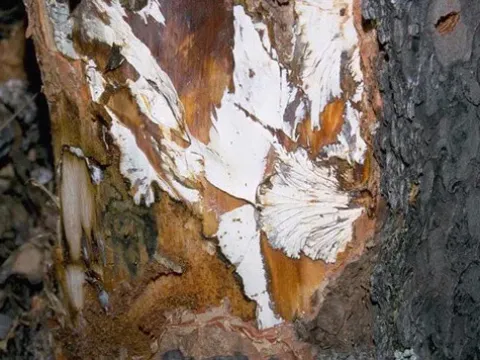
The fungus is characterized by the production of white, fan-shaped mycelial mats beneath the bark of infected roots. These mats serve as the primary diagnostic feature used by agronomists to identify the infection in the field.
Development is heavily favored by environmental factors such as high soil moisture and poor drainage. The pathogen thrives in temperate and subtropical climates where soil temperatures range between 20 °C and 25 °C.
The fungus spreads locally through root-to-root contact or via the movement of infested soil during tillage and cultivation activities. Long-distance dispersal can occur through the transport of infected plant material or nursery stock.
The economic impact of Rosellinia necatrix is significant due to its ability to kill high-value crops including apple, pear, grape, peach, and various berry species. The disease often results in the total loss of individual plants.
The fungus invades the root system, causing the disintegration of the bark and cambium. By disrupting the vascular tissues, the pathogen prevents the uptake of water and nutrients, leading to a sudden decline and eventual death of the plant.
Infected orchards often show circular patterns of disease, where the pathogen spreads from an initial focus to adjacent trees. Once a tree is severely infected, there is no effective cure, and it must be removed to prevent further spread.
Agricultural productivity is hampered because affected soils remain contaminated for many years. This forces growers to either switch to non-host crops or invest in intensive soil sterilization practices.
The susceptibility of a wide range of fruit crops makes Rosellinia necatrix a limiting factor in the sustainable production of fruit in high-moisture orchard environments.
Early symptoms are often subtle and manifest as poor growth, chlorosis, and reduced leaf size. As the root system deteriorates, trees exhibit progressive wilting, particularly during periods of high transpiration stress.
A definitive sign is the presence of white, star-like mycelial strands radiating over the surface of the root system. As the disease advances, these strands may become darker, transitioning to a greyish-brown color.
The bark of the root collar becomes loose and easily separable from the wood. The affected tissues often emit a distinct, musty fungal odor due to the decay caused by the pathogen's enzymatic activity.
In mature trees, the symptoms may be localized to one side of the canopy initially, reflecting the uneven distribution of root infection. Eventually, the entire plant canopy turns brown and withers completely.
Under favorable moisture conditions, the fungus may produce small, dark, flask-shaped perithecia on the surface of the dying wood, though this is less commonly observed than the vegetative mycelial stage.
Controlling Rosellinia necatrix is challenging due to its survival as a persistent soil-borne pathogen. An integrated management strategy is essential to minimize the risk of infection in agricultural systems.
- Strict nursery hygiene to ensure that only pathogen-free planting material is introduced to the orchard.
- Improvement of soil aeration and drainage to reduce conditions conducive to fungal development.
- Implementation of biological control using antagonistic fungi like Trichoderma harzianum to suppress the growth of the pathogen in the soil.
- Prompt eradication of infected trees, including the removal of as much of the root system as possible to eliminate the primary inoculum source.
- Solarization or chemical fumigation of infested soil patches before replanting to reduce the pathogen population levels.