
Rosellinia necatrix
Rosellinia necatrix
Rosellinia necatrix is an ascomycete fungus within the Xylariaceae family, widely recognized as the primary pathogen of white root rot. It is a soil-borne necrotroph known for its destructive impact on a vast range of woody and herbaceous plants.
What the section contains
Rosellinia necatrix
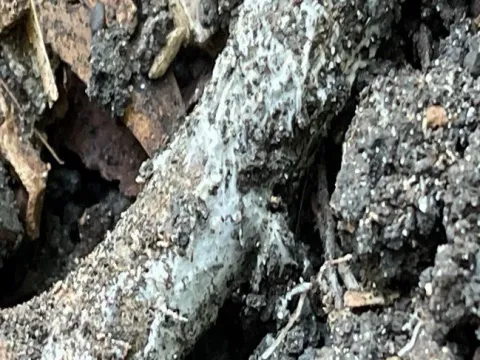
The fungus is characterized by its white, fan-like mycelial mats that develop on the surface of infected roots. As the infection progresses, these mats can turn dark brown or black, forming rhizomorph-like structures that help the fungus spread through the soil.
It thrives in moist, temperate soils with optimal temperatures ranging from 15°C to 25°C. The pathogen can survive in soil for several years by utilizing organic debris and sclerotia, making it a persistent threat in established orchards and vineyards.
Transmission primarily occurs through direct root contact between healthy and infected plants, contaminated nursery stock, or the movement of infested soil via machinery and irrigation water. The fungus lacks airborne spores that would cause rapid long-distance spread.
Identification often requires careful excavation of the root crown. A distinct mushroom-like or earthy odor from the roots, accompanied by the presence of white fungal threads under the bark, is a strong indicator of the pathogen’s presence.
Rosellinia necatrix has one of the broadest host ranges among soil-borne pathogens. It severely affects pome fruits (apples, pears), stone fruits (peaches, cherries), citrus trees, grapes, and various ornamental species.
The pathogen disrupts the plant's vascular system by rotting the root cortex and cambium. This prevents the upward translocation of water and essential nutrients, leading to rapid foliage decline, wilting, and eventual death of the entire plant.
Economic damage is substantial, particularly in high-density orchards where the fungus can move rapidly between trees. Once a tree is symptomatic, it is usually beyond recovery, necessitating total removal and quarantine of the site.
In vineyards, this fungus can cause total crop failure. Its ability to persist in the soil for years prevents the replanting of susceptible crops, causing significant long-term financial losses to growers and nursery operations.
In infested areas, the pathogen can kill young saplings within a single growing season. For older trees, the decline may take several years, during which time the tree exhibits reduced growth and poor fruit quality.
The most common above-ground symptom is a slow, progressive decline in tree vigor. Affected trees often show sparse, chlorotic leaves that drop prematurely, and the branches may become brittle and dry out.
The root system shows extensive necrotic patches. The bark of the roots peels away easily, exposing the white, mycelial growth of the fungus. In advanced stages, the roots appear frayed and lose all structural integrity.
A tell-tale sign during the late stages of infection is the lack of anchorage; trees can be pushed over easily during storms because the root system is no longer capable of supporting the canopy.
Fruit set is often significantly reduced, or the fruit may fail to develop to full size. In some cases, the tree may suddenly wilt during a period of heat stress, as the compromised root system cannot keep up with the transpiration demand.
Though less common, tiny black fruiting bodies (perithecia) may appear on the soil surface or dead bark near the base of the trunk during humid conditions, signaling the presence of the pathogen.
Management must focus on prevention, as curative treatments for established infections are rarely successful. Always source certified pathogen-free nursery stock and inspect root systems before planting.
Site selection and preparation are crucial. Avoid planting in heavy, poorly drained soils where water stagnation favors fungal growth. Improving soil aeration through proper drainage is a critical cultural control measure.
When an infected tree is discovered, it must be removed promptly, including as much of the root system as possible. The surrounding soil should be treated with appropriate soil fumigants or left fallow for several years.
Biological control using beneficial soil fungi, such as Trichoderma species, has shown potential in suppressing Rosellinia necatrix by competing for space and nutrients in the soil rhizosphere.
- Regular sanitization of pruning tools and equipment between sites.
- Avoid over-irrigation to maintain drier root-zone conditions.
- Use of resistant rootstocks where available to mitigate potential infection risks.