
Rose rust
Phragmidium rosae-pimpinellifoliae
Description
How to identify
The causative agent of the disease is a microscopic fungus known as Phragmidium rosae-pimpinellifoliae. It belongs to the kingdom Fungi, phylum Basidiomycota, and is a specialized rust fungus that specifically targets species of the Rosa genus, particularly the Rosa pimpinellifolia group.
This pathogen is an obligate parasite, meaning it can only survive and propagate by extracting nutrients from the living tissues of its host plant. It completes a complex life cycle that includes multiple spore stages throughout the growing season.
The fungus develops its mycelium within the intercellular spaces of the host plant tissues. As the infection progresses, it generates specialized reproductive structures that emerge through the plant epidermis.
Spores of this fungus are highly adapted for airborne dispersal, allowing the disease to spread rapidly across garden beds or nurseries during favorable weather conditions.
Scientific identification is based on the morphology of the spores and the characteristic host-pathogen specificity. It is categorized as a destructive agent within the order Pucciniales (Rust fungi).
What it damages
The pathogen causes significant damage to both wild and cultivated roses. It primarily infects the leaves and young green stems, hindering the plant's overall metabolic processes and structural integrity.
Widespread infection on the foliage leads to photosynthesis inhibition, causing premature leaf yellowing and shedding. This weakens the plant's physiological condition significantly.
Infection on young stems manifests as swelling and cracking of the bark, which can lead to the deformation or necrosis of the affected branches. Severe cases may result in the death of entire twigs.
In commercial nurseries, rose rust compromises the aesthetic appeal and overall health of the seedlings, often leading to reduced market value or complete disposal of infected inventory.
The reduced vigor of infected plants makes them more susceptible to subsequent environmental stressors, such as drought, frost, or secondary attacks by other pathogens and pests.
When it appears
The disease cycle typically begins in the spring when overwintering spores on fallen leaves or dormant stems become active under moist conditions.
The period of peak infection often occurs during early to mid-summer. Mild temperatures coupled with high humidity or frequent rainfall create optimal conditions for the germination and spread of urediniospores.
As the season progresses toward autumn, the fungus shifts its reproductive strategy to produce teliospores. These spores are dark in color and are designed to survive the harsh winter conditions.
Weather patterns with extended rainy periods are critical in the development of the rust epidemic. Moisture on the leaf surface is a prerequisite for spore germination and infection.
A warm and wet autumn can prolong the disease cycle, leading to a higher accumulation of fungal inoculum in the soil and on woody parts of the plant, setting the stage for next year.
Signs of infestation
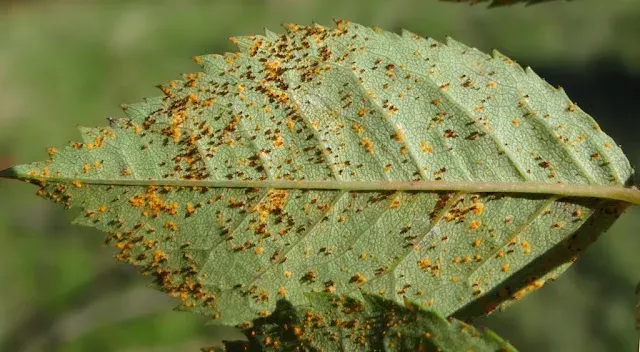
The earliest visible indicators are small, yellow-colored spots appearing on the upper surface of the leaves, which gradually darken as the fungus matures.
On the undersides of the leaves, bright orange or rust-colored pustules develop, representing the primary sites of fungal spore production.
- Premature yellowing and leaf drop.
- Deformation of succulent stems and shoots.
- Visible orange powdery mass on infected plant parts.
- Dark brown or black necrotic lesions on older stems.
Stem infections may cause gall-like outgrowths, which weaken the structural strength of the branch, causing it to break easily under wind pressure or the weight of its own growth.
The overall appearance of an infected rose bush is one of distress, characterized by a loss of leaf luster, stunted shoot development, and a generally sickly, thin canopy.
Control measures
The fundamental control strategy involves strict sanitation. All infected plant debris, especially fallen leaves in the autumn, must be carefully collected and destroyed to remove the infection source.
Preventative fungicide applications are necessary in areas with high disease pressure. Copper-based sprays or systemic fungicides, particularly triazoles, are highly effective when applied timely.
Good agricultural practices are essential; keeping planting densities low ensures proper airflow, which helps keep foliage dry and creates an unfavorable environment for fungal infection.
Avoid overhead irrigation whenever possible, as wetting the foliage encourages spore germination. Instead, use drip irrigation to deliver water directly to the root zone.
Regular fertilization with balanced phosphorus and potassium nutrients helps strengthen the plant's natural defense mechanisms, making it more resistant to the invasion of fungal hyphae.
Causes diseases · 1
Discussion
No discussions yet — be the first.