
Rhizorhapis suberifaciens
Rhizorhapis suberifaciens
Description
How to identify
Rhizorhapis suberifaciens is a gram-negative, soil-borne bacterium and the primary causal agent of corky root rot in lettuce (Lactuca sativa). It was previously classified as Rhizomonas suberifaciens before genetic reclassification.
This pathogen belongs to the bacteria kingdom and is specialized in colonizing the roots of plants within the Asteraceae family. It survives in the soil and on crop debris, making it a persistent threat to lettuce production.
The bacterium infects the roots, leading to physiological changes that cause the characteristic corking of root tissues. Its identification typically requires laboratory molecular testing like PCR, as it grows slowly on standard culture media.
It remains a significant challenge in modern agriculture, particularly in intensive cultivation systems where monoculture practices provide a continuous host supply for the pathogen.
Research continues into the specific mechanisms of host colonization, helping agronomists better understand how this bacterium evades plant immunity and establishes itself in the soil microbiome.
What it damages
The primary host is lettuce, which exhibits severe root damage when infected. The pathogen destroys the root system, inhibiting the uptake of water and essential nutrients required for plant development.
Besides lettuce, some other Asteraceae species can harbor the bacteria, serving as alternative hosts that maintain the inoculum level in the soil even when lettuce is not being grown.
Damaged plants exhibit stunted growth and loss of marketability. In severe cases, the entire root system may become necrotic and brittle, leading to the collapse and death of the plant during the maturation phase.
Economic impact is significant due to the loss of crop uniformity and reduced head size, which renders the produce unsuitable for high-quality retail markets.
Yield losses can be catastrophic in highly infested fields, often leading to the complete abandonment of the site for lettuce production until the soil can be effectively remediated.
When it appears
Development of the pathogen is favored by moderate soil temperatures, typically ranging from 15°C to 25°C. These conditions often coincide with peak lettuce growth phases.
Infections can occur throughout the growing season, but the most severe symptoms usually become visible as the plant begins head formation. High soil moisture acts as a facilitator for bacterial movement.
In greenhouse settings, the pathogen can persist and infect successive crops year-round if proper sanitation protocols are not rigorously enforced.
The pathogen thrives in cool, moist soil conditions, which are often encountered during early spring or autumn plantings of lettuce in various agricultural regions.
Survival mechanisms include the ability to persist on root fragments in the soil long after the crop has been harvested, awaiting the next available host to initiate new cycles of infection.
Signs of infestation
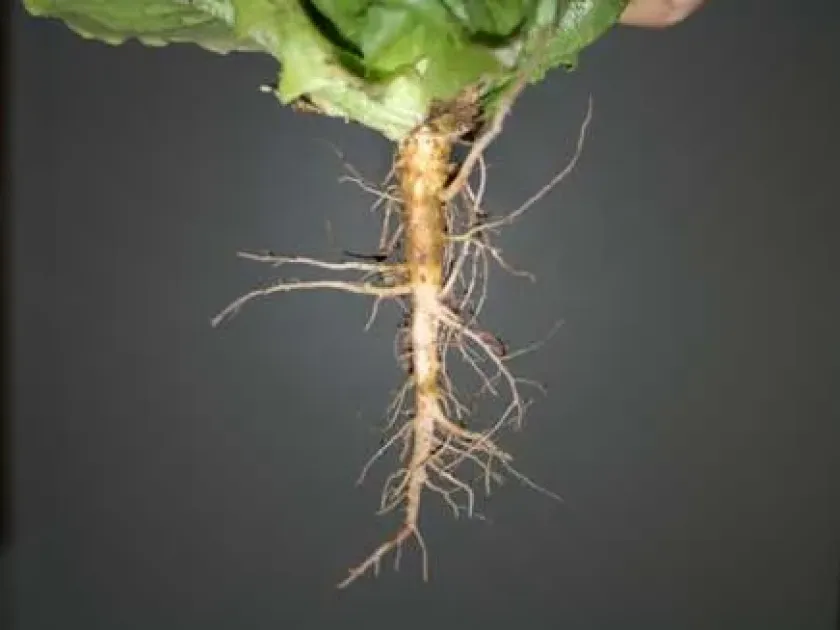
Initial symptoms include the yellowing of roots, which eventually turns into dark brown lesions. As the disease progresses, the roots develop a distinct corky, cracked appearance.
The structural integrity of the root is compromised, and the root tips often die back. This physical damage prevents the plant from absorbing adequate moisture during warm daylight hours.
- Stunted plant growth and reduced head weight.
- Wilting of leaves during peak solar radiation periods.
- Brown, corky lesions covering the primary and lateral roots.
- Death of secondary and tertiary root structures.
Plants often exhibit general yellowing of the lower leaves, signaling a nutrient uptake deficiency caused by the widespread destruction of the root system.
Control measures
Crop rotation is the most critical management strategy. A 3-to-5-year break from lettuce on infested fields is highly recommended to naturally reduce the population of the pathogen.
Planting resistant lettuce cultivars is the most effective approach for growers in areas where the pathogen is endemic. Genetic resistance has become the cornerstone of modern disease management.
Strict sanitation protocols must be followed to avoid moving infested soil via equipment and machinery. Thorough cleaning of all tools is essential to prevent site-to-site spread.
Improved drainage and irrigation management help mitigate the moisture conditions that the bacteria require for proliferation. Avoiding excessive nitrogen levels can also prevent overly lush growth that may be more susceptible.
In greenhouse production, soil steaming or moving to hydroponic systems using inert, pathogen-free substrates are effective alternatives for avoiding the presence of Rhizorhapis suberifaciens.
Causes diseases · 1
Discussion
No discussions yet — be the first.