
Gnomonia leaf blotch
Gnomonia comari
Description
How to identify
Gnomonia leaf blotch is caused by the fungus Gnomonia comari, an ascomycete pathogen that primarily affects strawberries (Fragaria species). This fungus is known for its specialized survival mechanisms on host plant tissue.
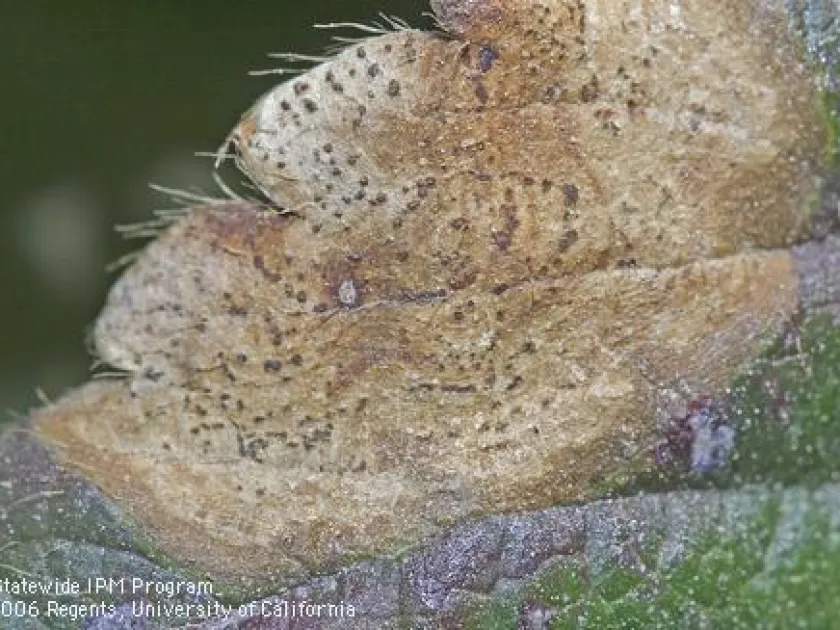
The life cycle of the pathogen involves the production of perithecia on dead or dying leaves, petioles, and stolons. These structures serve as overwintering sites, allowing the fungus to persist in fields from one season to the next.
In spring, ascospores are released from perithecia during wet weather and are dispersed by rain splash to healthy strawberry foliage. This initiates the primary infection cycle of the season.
Following initial infection, the pathogen produces conidia, which facilitate secondary infection cycles throughout the growing period, provided environmental conditions remain humid and temperate.
The fungus thrives in cool, wet environments where leaf moisture persists for extended periods, allowing the mycelium to colonize host tissue effectively.
What it damages
The primary damage caused by Gnomonia comari involves the necrosis of leaf tissues. This leads to reduced photosynthetic capacity, which directly translates to stunted plant growth and lower yields.
When petioles are heavily infected, they may collapse, leading to premature leaf drop. This reduces the plant's ability to store carbohydrate reserves for the winter, impacting overall survival.
Flower stalks can also be affected, which may lead to blossom blight or poor berry development if the infection occurs early in the reproductive stage.
In commercial strawberry production, the aesthetic value and health of the mother plants are compromised, making them less suitable for propagating runners for new plantations.
Chronic infestation weakens the entire strawberry bed, making it more susceptible to secondary infections and environmental stresses, such as winter frost.
Signs of infestation
Symptoms appear as small, circular, reddish-brown spots on the upper leaf surface. These spots enlarge and may turn gray or brown with darker margins as they age.
Elongated lesions develop on petioles and stolons, often resulting in distinct dark brown zones that can cause the stem to become brittle and break under weight.
Small, black, pimple-like structures, which are the fruiting bodies (pycnidia/perithecia) of the fungus, can be seen within the necrotic spots upon close inspection with a hand lens.
In severe cases, large areas of the leaf blade become necrotic, causing leaves to curl, wither, and eventually die prematurely, giving the plant a scorched appearance.
The presence of gray-white fungal sporulation may occur under the leaf surface during periods of high humidity, marking the active reproductive phase of the disease.
Control measures
The primary control strategy is strict sanitation. All dead leaves and debris should be removed and destroyed or buried deeply after the harvest to eliminate the main source of inoculum.
Adequate plant spacing and proper weed management are essential to improve air circulation, which helps keep the foliage dry and prevents the build-up of humidity near the ground.
Chemical control involving fungicides, such as copper-based products or systemic triazoles, should be applied preventively during the spring and after harvest to suppress the pathogen.
Irrigation management is crucial; drip irrigation is highly recommended to avoid wetting the leaves and reducing the splash dispersal of spores.
- Utilize resistant strawberry cultivars whenever available.
- Establish new beds with clean, certified nursery stock to prevent introducing the pathogen.
- Ensure balanced fertilization to avoid soft, succulent tissue growth that is highly vulnerable to infection.
Causes diseases · 2
Discussion
No discussions yet — be the first.