
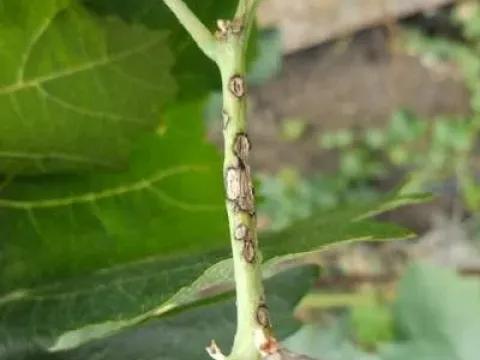
Grape anthracnose
Sphaceloma necator
Grape anthracnose, also known as bird's-eye rot, is caused by the fungus Elsinoe ampelina (anamorph Sphaceloma ampelinum). This pathogen affects all green parts of the vine, including leaves, shoots, flowers, and berries, posing a major threat to viticulture.
What the section contains
Grape anthracnose
The fungus overwinters as mycelium and sclerotia within the infected bark of canes and old lesions. When spring temperatures rise and moisture is present, conidia are produced and spread via rain splashes and wind, initiating primary infections.
Warm and humid conditions, particularly temperatures between 20°C and 30°C coupled with frequent rainfall or heavy dew, are ideal for the rapid proliferation of the disease. High humidity levels are critical for the germination of spores on young tissues.
Taxonomically, the fungus belongs to the Dothideomycetes class. It invades plant tissues, causing localized cell death, which manifests as sunken lesions. The pathogen is highly persistent and can remain viable in the soil or woody debris for several years.
Anthracnose can quickly become an epidemic in vineyards if weather conditions favor the pathogen. Proper identification of the symptoms is the first step in implementing a successful management plan to save the crop.
The most severe damage occurs on young shoots, where lesions can become deep ulcers, leading to shoot breakage and restricted growth. This weakened structure often causes permanent damage to the vine's architecture.
Leaf infection appears as small, circular, dark-bordered spots. As the infection progresses, the center of these spots may necrotize and fall out, causing "shot-hole" symptoms and leading to premature defoliation, which hampers photosynthetic capacity.
Inflorescences and developing clusters are highly susceptible. Infected flowers dry up and drop off, leading to significant yield loss. If the disease infects the rachis, the entire cluster may wither and fail to develop properly.
On berries, the fungus causes sunken, circular spots with a light center and dark, often purplish or reddish margin. These cracks often reach the seeds, rendering the fruit unfit for consumption or winemaking due to secondary decay.
Chronic infestation of perennial wood leads to general vine decline. The infected areas lose their vitality, causing the vine to be less resilient to winter frost and resulting in the eventual death of affected cordons or entire plants.
The primary symptom is the appearance of small, dark brown spots on young green tissue. These spots quickly expand and become sunken, creating a characteristic "bird's-eye" appearance with a light grey center and a dark, elevated margin.
Shoots affected by the pathogen show longitudinal, deep necrotic ulcers. These lesions can girdle the shoot, causing the distal parts to wilt and die. In active states, these lesions often bear a fuzzy, light-colored layer of fungal spores.
Leaves display distorted shapes and necrotic lesions with distinct halos. The tissue around these spots often turns yellow (chlorotic) before dying, giving the foliage a patchy and unhealthy appearance across the vineyard canopy.
- Sunken, circular lesions on berries with dark borders.
- Deep, cracked ulcers on young shoots causing brittleness.
- Necrotic spotting on leaves with associated chlorosis.
- Withered and desiccated inflorescences during the early growth phase.
- Pinkish, spore-bearing masses visible on lesions during damp weather.
During prolonged rainy spells, the fungal fruiting bodies produce masses of spores that give the lesions a slightly powdery or glistening look, which acts as the main inoculum for secondary spread throughout the growing season.
Dormant season management is the cornerstone of control. Applying copper-based fungicides to the dormant vines helps reduce the inoculum overwintering in the bark and ensures a cleaner start to the growing season.
Sanitation is equally vital. Growers should prune out and remove all infected wood, as the fungus persists in these tissues for years. All prunings should be burned or buried far from the vineyard to prevent re-infection.
Cultural practices that improve airflow, such as appropriate canopy management, leaf pulling, and shoot positioning, help reduce leaf wetness and humidity, making the environment less favorable for fungal germination.
During the vegetative phase, protective and systemic fungicides are necessary. Compounds like strobilurins and triazoles are effective when applied preventively, particularly before predicted rain events that could trigger spore dispersal.
Choosing grape varieties with natural resistance or tolerance is a long-term strategy. While few varieties are completely immune, selecting cultivars suited to the specific climate helps minimize the reliance on chemical control methods.