
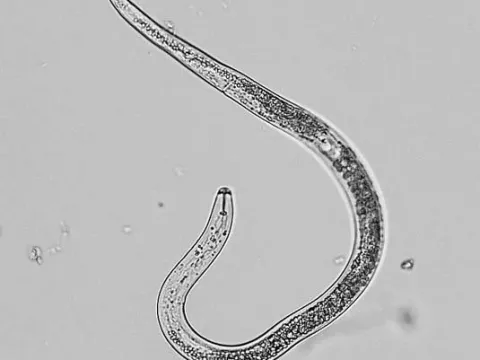
Goosegrass cyst nematode
Goosegrass cyst
The goosegrass cyst nematode (Heterodera mani) is a plant-parasitic nematode belonging to the family Heteroderidae. It is a specialized pest that targets the roots of various grass species, completing its life cycle within the host tissues.
What the section contains
Goosegrass cyst nematode
The nematode develops through several stages: egg, four larval stages, and the adult stage. The second-stage juvenile is the infective form that migrates through the soil to locate and invade the roots of host plants.
Upon settling in the root, the female nematode begins to feed and swells, eventually breaking through the root surface. After mating, the female body hardens and darkens, becoming a protective cyst containing a large number of eggs.
Cysts are highly resilient structures that can remain viable in the soil for several years, resisting extreme moisture conditions and cold, which makes this pathogen difficult to eliminate completely.
Diagnostic identification requires specialized laboratory techniques, including the extraction of soil samples and microscopic examination to count and identify the presence of cysts within the rhizospheric zone.
The nematode parasitizes a range of cereal crops and pasture grasses, causing severe stress to the root systems. By extracting nutrients from the roots, it compromises the plant's ability to maintain healthy growth.
Damage is typically characterized by stunted plants, weak tiller development, and a general yellowing of foliage. In severe cases, the infected patches fail to produce viable grain, leading to significant yield losses.
The root system of infected plants often displays an abnormal appearance, characterized by reduced root hairs and sometimes necrotized tissues, which limits the plant's uptake of water and essential minerals.
The presence of nematodes also facilitates the entry of other soil-borne pathogens, leading to complex diseases that weaken the plant's vitality and accelerate wilting during dry seasons.
Economic impact is significant due to the reduction in grain weight and straw quality. Large-scale infestations can render entire fields unproductive, requiring years of intensive management to reduce nematode levels.
Field signs of infestation often appear as irregular, patchy areas where crop development is noticeably slower compared to the healthy surrounding plants.
During the growing season, visual inspection of the root zone might reveal tiny, lemon-shaped white or brownish cysts clinging to the roots, which can be observed using a hand lens.
Foliar symptoms include premature yellowing (chlorosis) or reddening of leaves, often mistaken for nutrient deficiencies or water stress, making early detection a common challenge for farmers.
Stunted seedling emergence is another sign, particularly in heavily infested soil where juvenile nematodes have damaged the delicate roots of the emerging crop.
The root systems of affected plants are often poorly anchored in the soil and can be easily pulled out, showing a lack of vigorous lateral root growth compared to healthy specimens.
Crop rotation is the most effective management strategy, utilizing non-host crops such as legumes or cruciferous vegetables to break the nematode's reproduction cycle over several years.
Stringent weed management is essential, as many common grass weeds serve as alternative hosts, allowing the nematode population to persist even when cereal crops are not planted.
The deployment of resistant cultivars is a primary defense method, as these plants possess genetic mechanisms that prevent the nematode from successfully developing into reproductive adults.
Improving soil health through the addition of organic matter can enhance the natural suppressive capacity of the soil, encouraging beneficial microbes that attack nematode eggs.
In cases of extreme infestation, soil solarization or specialized fumigation techniques may be considered, though these are typically reserved for high-value seed production areas due to costs.