
Godronia cassandrae
Godronia cassandrae
Description
How to identify
Godronia cassandrae is an ascomycete fungus that acts as the primary pathogen causing stem canker (also known as Godronia canker) in blueberries. Its asexual stage is recognized as Fusicoccum putrefaciens.
The fungus produces apothecia, which are small cup-shaped fruiting bodies that emerge from the bark of infected stems. These structures release ascospores that initiate the infection cycle during the growing season.
The pathogen primarily colonizes the bark and cambium layers of the plant. It is highly persistent, capable of surviving for long periods in infected plant debris, which creates a significant challenge for complete eradication from a cultivation site.
This fungus is a specialist parasite targeting members of the Ericaceae family. Its biological cycle is closely tied to the host's dormancy and growth phases, making the management of plant stress an essential component of disease prevention.
Laboratory identification involves microscopic examination of the fungal structures from the necrotic tissue. The presence of specific pycnidia containing conidia serves as a definitive diagnostic marker for the species.
What it damages
The highbush blueberry (Vaccinium corymbosum) is the most economically significant host affected by Godronia cassandrae. The disease significantly reduces fruit quality and yields, often leading to the total decline of infested shrubs.
Infection occurs primarily through wounds, such as frost cracks, pruning cuts, or insect damage. Once the pathogen enters the vascular tissues, it begins to disrupt the movement of water and nutrients, leading to systematic weakness of the plant.
Damage typically manifests as cankers on the stems, which expand and girdle the branch. If a canker reaches the crown, the entire shrub may die, causing substantial losses in both commercial and domestic production.
Beyond physical damage, the fungus compromises the fruit set. Infected bushes produce smaller, less attractive berries, which negatively impacts the marketability of the harvest and forces farmers to implement strict culling procedures.
The economic burden of the disease is increased by the necessity for recurring fungicide applications, manual removal of infected branches, and the potential need for total plantation renovation if the infection becomes systemic.
When it appears
The primary infection period begins in early spring, when warming temperatures and precipitation stimulate the release of spores from the fungal fruiting bodies present on overwintered stems.
Secondary infections occur throughout the growing season, particularly during prolonged periods of high humidity and rainfall. The fungus thrives when temperatures remain in the range of 15°C to 25°C, which is ideal for mycelial growth and infection.
Autumn is another critical period for the pathogen. As the plants enter senescence, the fungus colonizes the wood tissues to survive the winter. The pathogen is extremely cold-tolerant and remains viable within the stems throughout the dormant season.
Micro-climates within dense, poorly ventilated canopy structures allow the disease to progress even during drier summer months, as trapped moisture maintains the humidity required for spore germination.
Management strategies must account for the year-round persistence of the fungus, focusing on the removal of primary inoculum sources before the spring growth flush begins.
Signs of infestation
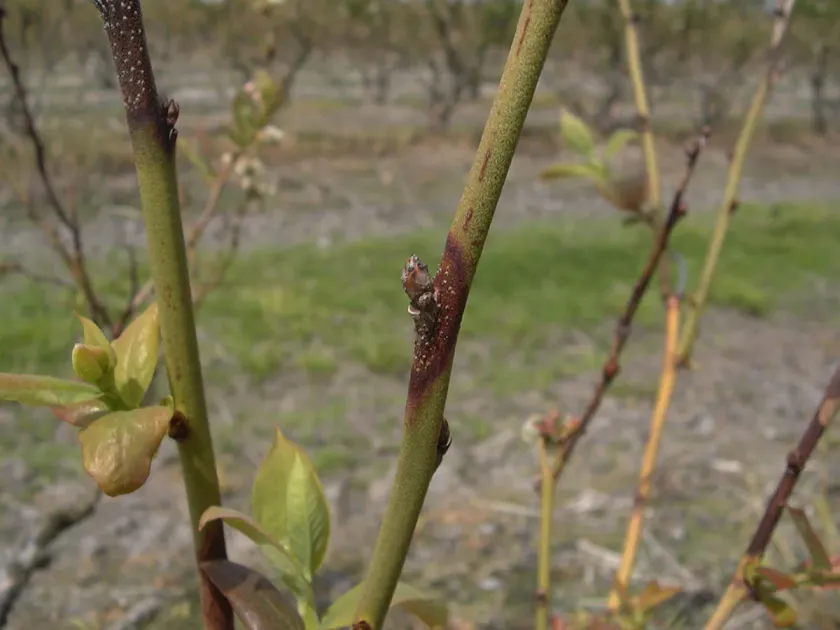
Initial symptoms are characterized by small, reddish-brown spots on young stems. As the infection progresses, these spots develop into elliptical, sunken cankers with dark brown or reddish borders.
A hallmark symptom is the dieback of branch tips, often referred to as "shepherd's crook." However, unlike frost damage, the bark in affected areas will eventually split, and the wood beneath the bark will exhibit brown staining.
- Sunken necrotic lesions on stems.
- Splitting and peeling of the bark.
- Presence of tiny black pycnidia on dead tissue.
- Premature yellowing and leaf drop.
- Wilting of specific branches while the rest of the plant appears healthy.
During humid conditions, the pycnidia release spores, often visible as glistening masses. Over time, these cankers can girdle the stem, leading to sudden wilting and death of the branches above the point of infection.
As the disease advances, the structural integrity of the cane is compromised, making the stems brittle and prone to breakage under the weight of the fruit or during wind events.
Control measures
The most critical control measure is rigorous sanitary pruning. All infected branches must be removed, cutting well into the healthy tissue, and promptly destroyed by burning or disposal far from the field to prevent re-infection.
Fungicide programs are essential for managing the disease. Preventive applications using copper-based products before bud break, followed by systemic fungicides during the active growth phase, are standard practices in commercial farming.
Good cultural practices, such as maintaining adequate spacing between plants, ensure better airflow and lower humidity, which inhibits fungal spread. Pruning should be performed during dry weather to minimize the risk of infection through fresh cuts.
Balanced nutrition is crucial. Excessive nitrogen fertilizers stimulate succulent, late-season growth that is highly susceptible to frost cracks and subsequent fungal entry; therefore, maintaining optimal nutrient levels is advised.
Monitoring for insect pests that cause bark wounds is necessary. Controlling these vectors reduces the entry points for the pathogen, ensuring that the plant’s natural defenses remain intact.
Causes diseases · 1
Discussion
No discussions yet — be the first.