
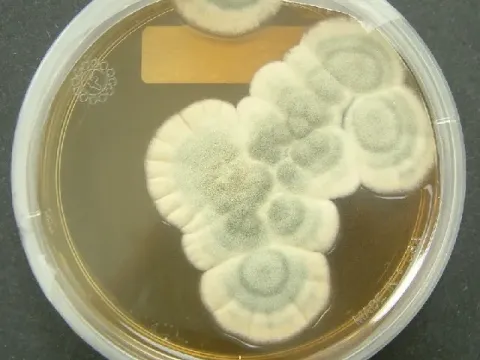
Penicillium chrysogenum
Penicillium chrysogenum
Penicillium chrysogenum is a fungus belonging to the kingdom Fungi and the genus Penicillium. While famous for its role in antibiotic production, in agriculture, it acts as a significant saprophytic and opportunistic pathogen.
What the section contains
Penicillium chrysogenum
The fungus forms colonies that are typically blue-green or grey-green in color, often with a white, growing edge. The mycelium is dense and spreads rapidly across the surface of the infected substrate.
Under a microscope, the species is identified by its branched conidiophores arranged in a brush-like structure, known as a penicillus. This morphological trait is characteristic of the genus.
Conidia (spores) are elliptical and smooth-walled, allowing for easy dispersal through air currents, water splashes, or contaminated handling equipment in storage facilities.
In laboratory analysis, the fungus is grown on specific media, such as Czapek-Dox agar, where it produces distinct pigments and exhibits a rapid growth rate under standardized conditions.
Penicillium chrysogenum is primarily responsible for post-harvest decay in various agricultural products, including fruits, vegetables, and cereal grains. It is a major economic threat to storage infrastructure.
Infected produce experiences soft rot, where the internal tissues break down into a watery or mushy mass. This process destroys the quality and market value of fresh produce like apples, citrus, and potatoes.
When attacking stored grains, the fungus infects the germ portion, leading to decreased germination rates, loss of dry matter, and the production of toxic metabolites known as mycotoxins.
The presence of mycotoxins renders the contaminated produce unsafe for both human and animal consumption, leading to severe economic losses for growers and processors.
The fungus often facilitates secondary infections by other phytopathogenic microorganisms, rapidly turning healthy produce into a source of inoculum that can infect entire warehouse stocks.
The pathogen is most active during the storage period, which generally occurs in the autumn and winter months after harvest. It can persist in warehouses as dormant spores for extended periods.
Contamination usually begins during harvest or transport, when spores present in the field or soil enter the product through wounds, bruises, or cracks on the surface of the fruit.
Ideal conditions for fungal development include moderate temperatures (ranging from 4°C to 25°C) and high relative humidity levels, which stimulate spore germination and mycelial expansion.
Even in cold storage, the fungus remains a threat as it possesses the ability to grow at lower temperatures compared to many other common mold species, making it persistent in refrigerated units.
Increased humidity and poor airflow within the warehouse create a microclimate conducive to rapid fungal colonization, often leading to mass spoilage within a few weeks of improper storage.
The first clinical sign of infection is the emergence of small, white fungal patches on the surface of the produce, which soon transition into a dusty, blue-green sporulating layer.
Infected tissues lose their structural integrity, become soft to the touch, and often exhibit a distinct, unpleasant moldy odor. The decay spreads rapidly from the initial point of infection.
In cereals, visual signs include the appearance of green sporulation on the grain kernel and discoloration of the embryo, often accompanied by a decrease in overall seed quality.
With citrus or pome fruits, a sunken lesion usually develops around the infection site, which expands until the entire fruit is enveloped in the characteristic green fungal mold.
Upon physical disturbance of the affected produce, large clouds of spores are released into the air, indicating that the fungus has reached full reproductive maturity and is ready to spread further.
The primary control strategy is the maintenance of proper storage conditions, specifically ensuring low humidity (below 70-80%) and strictly controlled temperatures to suppress fungal growth.
Sanitation is critical; cleaning and disinfecting warehouse surfaces, storage crates, and transport machinery before the season begins is essential to minimize the initial inoculum load.
Careful handling during the harvest process is necessary to minimize mechanical injuries, as healthy skin acts as a natural barrier against fungal entry.
Implementing effective ventilation systems within storage facilities helps remove excess moisture, preventing the condensation that provides the water necessary for Penicillium germination.
In authorized cases, the use of post-harvest fungicides or biological control agents can provide a layer of protection, preventing the establishment of the fungus on the surface of stored goods.