
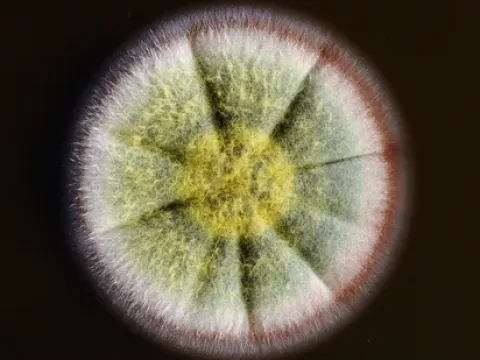
Penicillium purpurogenum
Penicillium purpurogenum
Penicillium purpurogenum is a filamentous fungus belonging to the Kingdom Fungi, Phylum Ascomycota, and the genus Penicillium. It is a common microscopic mold fungus that resides in soil and on organic debris, acting as an opportunistic pathogen when environmental conditions become suitable for colonization.
What the section contains
Penicillium purpurogenum
Morphologically, the colonies exhibit rapid growth with a velvety or floccose texture. A hallmark identification feature of this species is its ability to produce a characteristic purple-red pigment that diffuses into the substrate or the infected plant tissues.
The biology of P. purpurogenum is primarily saprotrophic, but it transitions to a facultative parasite when it encounters compromised plant tissues. Reproduction occurs asexually through conidia, which are disseminated via air currents, water splashes, or insect vectors.
Laboratory identification relies on culturing the fungus on standard media, such as Czapek-Dox agar, where it displays specific colony colors and characteristic branched conidiophores (penicilli). Microscopic examination of these structures is essential for species-level confirmation.
The development of this pathogen requires moderate temperatures and high relative humidity. In storage or greenhouse environments, it can thrive across a broad thermal range, making it a persistent threat for post-harvest decay.
This fungus affects a diverse array of agricultural crops, including vegetables, fruits, and stored grains. Significant losses occur during the post-harvest period, as the pathogen enters through microscopic injuries, bruises, or contact with contaminated surfaces.
Citrus fruits, apples, pears, tomatoes, and stone fruits are highly susceptible to infection. Under high-humidity conditions, the fungus can infect cereal seeds, leading to a reduction in germination rates and the dangerous accumulation of mycotoxins within the grain mass.
Beyond the mechanical destruction of tissues, P. purpurogenum is known for synthesizing various secondary metabolites. Some of these compounds are toxic, severely compromising the quality of the product and rendering it unsuitable for market or consumption.
In field environments, the pathogen can attack root crops like carrots and potatoes, especially if improper storage conditions lead to surface moisture accumulation. Affected areas soften, become watery, and are quickly overgrown with sporulating mold.
Economic damage is substantial, stemming from direct losses of stored inventory, increased labor costs for re-sorting goods, and reduced market value due to aesthetic damage and the potential risk of mycotoxin contamination.
The initial sign of infection is the emergence of soft, water-soaked spots on the surface of fruits or seeds. These spots expand rapidly, eventually forming a fluffy mold layer that transitions in color from white to bluish-green.
A specific indicator of P. purpurogenum is the intense color change in the plant tissue at the site of infection. Beneath the mold colony, one often observes a distinct red or purple discoloration caused by the diffusion of the fungus-produced pigment.
Under the influence of fungal enzymes, the fruit tissue becomes mushy and watery. A characteristic musty or "moldy" odor often accompanies the rapid decomposition of the affected substrate.
For seeds or grain, "dusting" is visible when handling the bulk mass. Dissecting affected grains often reveals mycelial mats inside, confirming deep infection of the embryo and endosperm.
Accelerated rotting occurs as temperatures rise, activating the fungal colonies. Without intervention, an initial infection can rapidly spread throughout the entire storage bin or container.
The foundation of management lies in strict sanitation practices during crop storage. Maintaining optimal temperature and humidity is critical to prevent surface condensation, which is a major trigger for spore germination and colonization.
Disinfection of storage facilities, refrigerated units, and transport containers is a mandatory step before loading the harvest. Fumigation or authorized antiseptic treatments are used to eliminate spores residing in gaps and on surfaces.
It is essential to minimize mechanical damage during harvesting, grading, and transportation. Intact skin provides a robust physical barrier that prevents fungal entry into internal tissues.
To protect seeds, fungicide seed treatments are applied prior to sowing. This prevents seedling blight caused by soil-borne fungal inoculum that may be present in the rhizosphere.
- Ensure adequate ventilation in all storage rooms.
- Prompt removal and disposal of infected or bruised produce.
- Routine monitoring of crop health during the storage period.
- Selection of cultivars resistant to mechanical bruising and decay.