
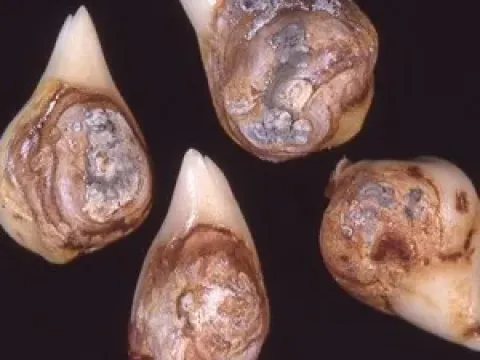
Penicillium glaucum
Penicillium glaucum
Penicillium glaucum is a fungus belonging to the Kingdom Fungi and the genus Penicillium. It is a widespread opportunistic pathogen that primarily thrives on organic matter and weakened plant tissues.
What the section contains
Penicillium glaucum
The fungus is characterized by the production of a blue-green or glaucous-colored powdery mold consisting of abundant conidia. The mycelium forms a dense network that penetrates deep into the affected substrate or tissue.
Dissemination occurs via airborne conidia, which are produced in massive quantities. These spores are highly resilient and can remain viable for long periods, waiting for suitable environmental conditions to germinate.
The fungus is a major cause of seed decay and spoilage in stored grains, legumes, and oilseeds. By invading the embryo and endosperm, it drastically reduces seed germination rates and seedling vigor.
It also causes significant post-harvest rot in fruits and vegetables, such as apples, tomatoes, and potatoes. This damage renders produce unsaleable and can rapidly spread throughout a storage facility if left unchecked.
In the field, it can act as a secondary invader, colonizing plants that have already been damaged by frost, pests, or mechanical injury. Under prolonged wet conditions, it can lead to root and crown rots, significantly thinning crop stands.
The fungus is highly active in conditions with relative humidity exceeding 70-75% and moderate temperatures. The storage period is the most critical season, as poorly ventilated storage areas often provide perfect conditions for mold development.
During the growing season, wet and humid periods favor its proliferation, especially if harvest is delayed. High moisture levels at the soil level during the final maturation stages also promote the presence of Penicillium spores on plant parts.
The primary symptom is the appearance of a blue-green, dusty mold on the surface of seeds or fruit skins. As the infection progresses, the colonized tissue undergoes soft decay, turning mushy and emitting a characteristic musty odor.
In seeds, failure to germinate or the presence of visible green fuzz on the seed coat are telltale signs. When planting infected seeds, typical symptoms include the rotting of the seed before emergence and the death of young sprouts.
Effective management begins with maintaining low moisture levels in storage facilities. Proper drying of grain and ensuring adequate airflow are essential to inhibit fungal colonization.
Seed treatment with systemic and contact fungicides is a standard agricultural practice to protect seeds during germination and seedling establishment. This creates a protective barrier against soil-borne pathogens.
Sanitation of storage facilities, regular cleaning of crates, and immediate removal of any rotted fruits are critical for preventing large-scale outbreaks. Proper crop management to prevent mechanical damage also reduces the entry points for the pathogen.