
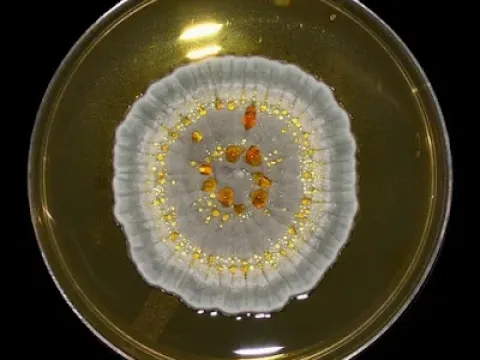
Penicillium citrinum
Penicillium citrinum
Penicillium citrinum belongs to the kingdom Fungi, genus Penicillium. It is an anamorphic fungus that reproduces asexually through conidia.
What the section contains
Penicillium citrinum
Morphologically, colonies are characterized by a distinct bluish-green or gray-green color, often with a yellowish exudate produced during active growth.
Microscopically, the fungus is identified by its characteristic brush-like structures, known as penicilli, which bear chains of unicellular conidia.
The fungus acts primarily as a saprotroph, but under specific conditions, it exhibits parasitic properties, affecting seeds and plant tissues.
This species is widely recognized for its ability to produce the mycotoxin citrinin, which poses a serious health risk when contaminated products are consumed.
The primary targets of infection are cereal crops such as wheat, rice, and corn, as well as legumes and oilseeds stored under improper conditions.
The fungus attacks seeds during post-harvest processing and also affects damaged fruits and vegetables during transit and storage.
Infection often initiates at sites of mechanical damage on the seed coat, allowing spores to penetrate deep into the internal tissues.
In the field, the fungus can develop on weakened plants, feeding on decaying plant matter or pest-related exudates.
In storage facilities, Penicillium citrinum causes molding, seed discoloration, reduced germination rates, and severe spoilage of agricultural produce.
The peak activity of the pathogen occurs during the harvest period and subsequent storage if temperature and humidity levels are not properly managed.
High substrate moisture (above 16–18%) and relative humidity levels exceeding 70% are essential for conidia germination and mycelial growth.
The fungus successfully develops within a wide temperature range, including low temperatures, allowing it to persist in cool storage environments.
The infection cycle involves continuous conidia production, which are dispersed by air currents, water, and insects, rapidly contaminating healthy grain stocks.
Spread is most intense in poorly ventilated areas and in self-heating grain piles, which create localized pockets of high humidity and heat.
The primary symptom is the appearance of a loose, powdery, greenish-colored bloom on the surface of seeds, fruits, or roots.
As the colony develops, droplets of clear or yellowish liquid may appear around the growth, reflecting the fungus's active metabolism.
As the infection progresses, affected areas soften, develop a characteristic musty odor, and the seeds lose their natural luster.
Deep infection often results in the death of the seed embryo, leading to a complete loss of viability and germination potential.
In warehouses, signs of infestation also include grain caking and a shift in grain color to a duller or darker shade.
The primary control measure is strict regulation of grain moisture content during storage, which must be kept below critical levels (usually under 14%).
Effective ventilation and continuous monitoring of storage temperatures are crucial to prevent moisture condensation and hot spots.
Thorough cleaning of grain to remove impurities and damaged kernels is essential, as these serve as the primary substrate for mold proliferation.
The application of fungicidal seed treatments before planting helps protect young seedlings from soil-borne infections.
To prevent mycotoxin accumulation, regular disinfection of storage facilities, packaging, and handling equipment using fumigants is highly recommended.