
Penicillium hirsutum
Penicillium hirsutum
Description
How to identify
Penicillium hirsutum is a fungal species within the genus Penicillium, known for its significant role as a post-harvest pathogen. It thrives as a mold that affects various bulbous crops and root vegetables during storage.
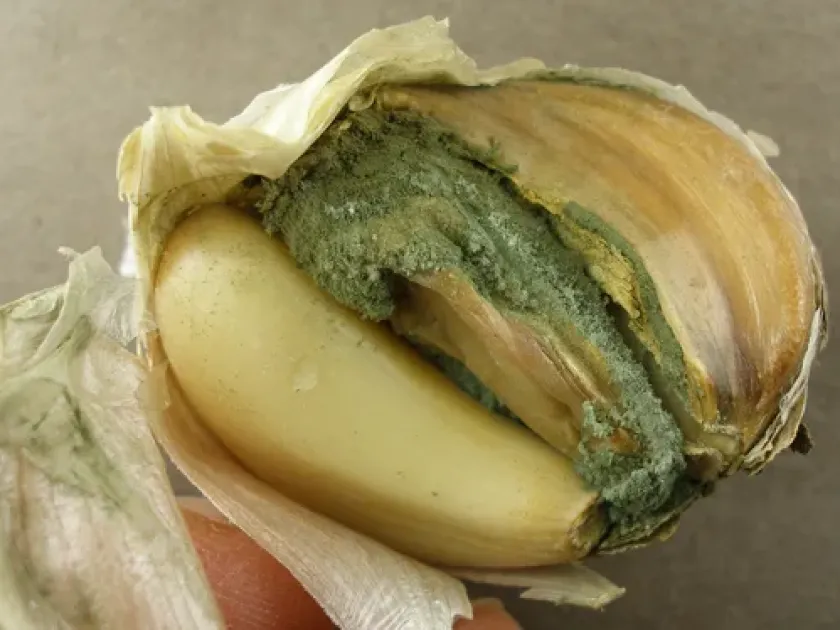
The fungus is characterized by its velvety, blue-green to gray-green conidial sporulation. Colonies grow rapidly and produce extensive mycelium that can cover the surface of the infected plant material within days.
Biologically, it is a facultative parasite that exploits wounds and weak points in plant tissues. It reproduces through millions of airborne conidia, allowing it to spread quickly within confined spaces like storage warehouses.
The pathogen secretes pectinolytic and cellulolytic enzymes, which degrade plant cell walls, leading to the rapid softening and decomposition of tissues. This process is the primary cause of its high virulence.
It remains viable in soil as mycelium or spores, surviving between crop cycles until it finds a suitable host. Its ability to tolerate low temperatures makes it particularly dangerous for long-term cold storage.
What it damages
Penicillium hirsutum primarily infects bulbous plants including onions, garlic, tulips, daffodils, and lilies. It causes substantial economic losses in both the agricultural and ornamental horticulture sectors.
The infection usually begins at the site of harvest-related injuries, such as cuts, bruises, or broken skin on the bulbs. Once established, the fungus spreads to adjacent healthy bulbs, creating clusters of decayed material.
In addition to bulbs, it can affect tubers and other vegetable crops if storage conditions are suboptimal. It reduces the marketability and shelf life of the harvested produce significantly.
In nursery production, the fungus causes basal rot, which inhibits root development and often leads to the death of the plant. This makes it a major concern for growers of high-value flower bulbs.
The impact is exacerbated when high humidity and poor ventilation exist, as these conditions are ideal for the rapid growth and sporulation of the fungus.
Signs of infestation
The most distinctive sign is the development of a bluish-green powdery mold on the surface of the bulbs. Affected tissues lose their firmness and become soft and watery.
Internal rotting is common, where the infected bulb tissue turns brown or grayish. In advanced stages, the fungus consumes the interior, leaving the bulb dry and mummified.
In garlic, the rot often starts at the basal plate, causing the cloves to detach and decay. A musty, unpleasant odor is frequently associated with the infection.
During the early phases, symptoms might be subtle, appearing as slightly discolored spots under the outer skin, which then rapidly burst out with mycelial growth.
- Greenish-gray mold on the bulb surface.
- Soft, watery texture of infected tissues.
- Basal plate rotting and detachment of cloves.
- Musty, unpleasant smell.
- Mummification and internal tissue collapse.
Control measures
Effective management begins with careful handling during and after harvest to minimize skin injuries. Any damaged or bruised bulbs should be discarded immediately to prevent the spread of infection.
Strict environmental control in storage facilities is paramount. Maintaining temperatures near 0°C to 2°C and relative humidity below 70% inhibits fungal sporulation and growth.
Seed treatment using systemic fungicides prior to planting is a standard practice to protect bulbs from soil-borne inoculum. This serves as a primary defense against early infection.
Crop rotation is an essential agronomic practice to reduce the levels of inoculum in the field. Avoiding the planting of susceptible crops in infested soil for several years is highly recommended.
Sanitation of storage areas, shipping containers, and tools using appropriate disinfectants helps to break the disease cycle and ensure the longevity of the harvested stock.
Causes diseases · 1
Discussion
No discussions yet — be the first.