
Penicillium brevicompactum
Penicillium brevicompactum
Description
How to identify
Penicillium brevicompactum is a ubiquitous fungal species belonging to the genus Penicillium and the family Trichocomaceae. It is a filamentous fungus often found in soil, decomposing organic matter, and various agricultural environments.
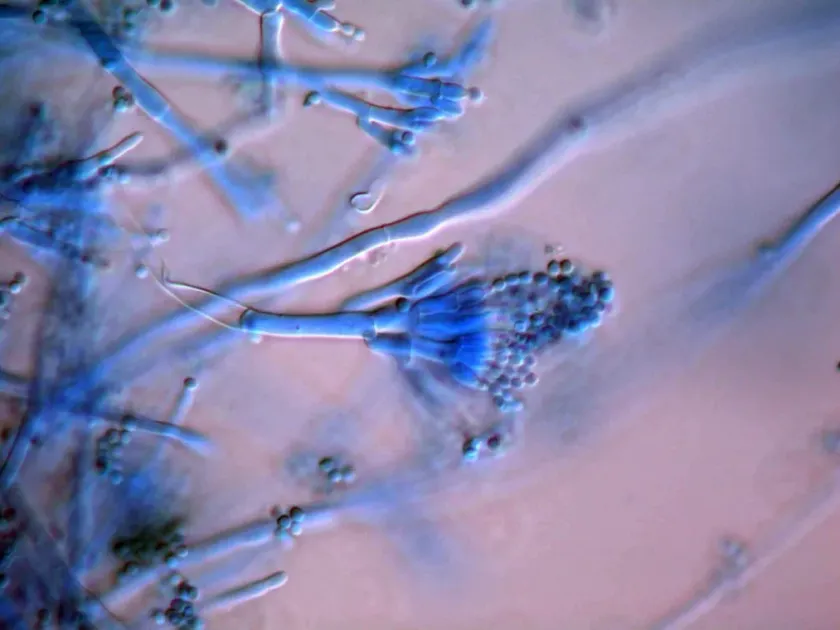
Morphologically, the species is identified by its compact penicilli, featuring short, branching structures. The colonies typically present a blue-green to grayish-green appearance, which is a classic diagnostic feature for this group of fungi.
The fungus is well-known for its ability to produce various secondary metabolites, including mycotoxins like mycophenolic acid. These bioactive compounds allow the fungus to compete effectively against other microorganisms in its environment.
It reproduces primarily through asexual conidia, which are produced in massive quantities. These spores are highly resistant to environmental stress and can be easily disseminated by wind, water splashes, and agricultural machinery.
While often classified as a saprotroph, Penicillium brevicompactum possesses the enzymatic machinery required to degrade plant tissues, enabling it to act as an opportunistic pathogen when host conditions are favorable.
What it damages
The primary damage caused by Penicillium brevicompactum involves the decay of seeds and grains. It infects embryos and endosperm, significantly reducing seed viability and germination rates in various crops, including cereals and legumes.
In post-harvest environments, this pathogen is responsible for various types of fruit and vegetable rot. It invades storage organs, causing tissue softening, discoloration, and a significant loss in marketability and nutritional quality.
The presence of this fungus is particularly dangerous due to its potential to contaminate grain supplies with mycotoxins. These toxic substances can adversely affect livestock health if consumed in contaminated feed, leading to chronic illness.
Seedlings infected by the fungus often fail to emerge or show stunted, chlorotic growth shortly after germination. This leads to poor crop establishment and necessitates field replanting in severe cases of infestation.
Economic losses associated with this pathogen are cumulative, stemming from lower crop yields in the field and significant wastage during prolonged storage due to improper management practices.
When it appears
The development of Penicillium brevicompactum is heavily dependent on moisture levels. It thrives in high-humidity environments (above 80% relative humidity) and temperatures ranging from 20°C to 25°C, though it is highly adaptable.
In field conditions, the risk of infection peaks during wet harvesting seasons. Excessive rainfall before or during the harvest allows the fungus to colonize the moist surfaces of ripening grain, initiating the infection cycle.
Storage conditions dictate the seasonal activity of this pathogen. In poorly ventilated warehouses, localized increases in moisture, known as "hot spots," provide the perfect conditions for the fungus to multiply rapidly.
The lifecycle consists of conidial germination, colonization of the substrate through hyphal growth, and subsequent sporulation. These stages can occur rapidly, allowing the fungus to exploit short windows of favorable climate.
As a soil-borne fungus, it survives adverse seasons in the form of dormant spores or mycelium buried in crop residue, ready to initiate a new infection cycle as soon as moisture and substrate become available.
Signs of infestation
The most visible sign of infection is the development of a powdery, blue-green mold layer on the affected plant surface. This mass of spores is easily dislodged and becomes airborne, facilitating further spread.
Seeds infected by Penicillium brevicompactum lose their luster and often emit a characteristic "musty" or "moldy" odor. When inspected under magnification, the seeds appear coated in dense, branching fungal structures.
In fruits and vegetables, infection manifests as localized patches of soft, watery rot. These patches expand rapidly under warm conditions, often showing the blue-green sporulation in the center of the decaying area.
Seedlings suffering from this pathogen show necrotic lesions on the roots or mesocotyl. The affected tissue turns brown or black, and in moist conditions, a faint moldy growth may be visible on the surface of the plant tissue.
Microscopic examination of the conidiophores and the specific branching patterns of the penicilli is the gold standard for distinguishing Penicillium brevicompactum from other common storage molds.
Control measures
Effective management relies on maintaining strict moisture control in post-harvest products. Drying grains to below 14% moisture content is the most reliable way to inhibit fungal metabolism and growth.
Chemical control involving systemic and contact fungicides is essential for seed treatment. Treating seeds before planting protects them from soil-borne Penicillium species during the critical germination phase.
Good agricultural practices include harvesting during dry weather and ensuring that seeds are free from physical damage, which serves as an entry point for fungal colonization.
- Regular ventilation of stored grain to prevent moisture buildup.
- Thorough sanitation of storage facilities and equipment before harvest.
- Use of resistant varieties if available and appropriate for the region.
- Crop rotation to reduce the build-up of fungal inoculum in the soil.
If contamination is detected, affected batches should be immediately segregated and re-processed or disposed of to prevent the spread of spores to healthy stockpiles, thereby protecting the overall quality of the stored produce.
Causes diseases · 1
Discussion
No discussions yet — be the first.