
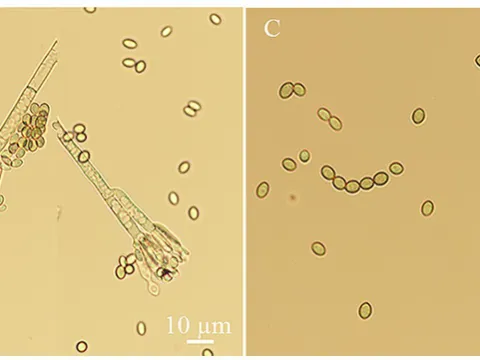
Penicillium oxalicum
Penicillium oxalicum
Penicillium oxalicum is a fungal species belonging to the kingdom Fungi and the genus Penicillium. It is widely recognized as a soil-borne fungus that acts both as a saprotroph and an opportunistic plant pathogen.
What the section contains
Penicillium oxalicum
The fungus is identified by its characteristic green to grey-green colonies. Under microscopic examination, it displays the typical brush-like (penicillus) conidiophores common to the genus.
This species is highly resilient and versatile, capable of thriving across various pH levels and temperatures. Its adaptability makes it a persistent challenge in both agricultural fields and storage facilities.
The mycelium grows rapidly on various substrates, producing vast amounts of conidia that serve as the primary means of dispersal through wind, water splash, and insect vectors.
Compared to other common molds, P. oxalicum is particularly aggressive in competing for resources in the rhizosphere, often targeting the embryo or endosperm of germinating seeds.
Penicillium oxalicum primarily affects grain and legume crops, including maize, wheat, soybeans, and dry beans. It is a major cause of seed decay and seedling blight.
In maize, the fungus is responsible for ear rot, which results in significant weight loss of the grains and reduced nutritional quality, rendering the harvest commercially unviable.
It also causes significant post-harvest rot in various horticultural crops, where the fungus infects produce through bruises or skin abrasions, leading to rapid tissue degradation.
Field damage often results in poor stand establishment, as the fungus attacks seeds before they emerge or causes "damping-off" in young, vulnerable seedlings.
Furthermore, the pathogen is known for its ability to produce mycotoxins, which pose risks to human and animal health when contaminated grain enters the food or feed chain.
The pathogen is most active during periods of high humidity and suboptimal temperature control in storage, particularly when seed moisture content exceeds 14–15%.
In the field, the infection is most common during the early stages of crop development, especially if the soil is cold and waterlogged, which delays seed germination and seedling vigor.
A secondary peak of infection occurs during the crop maturation phase, especially during prolonged rainy periods that expose harvested parts to high moisture and fungal spores.
The fungus survives in the soil and on crop debris as dormant spores or mycelium, waiting for favorable conditions to begin new cycles of infection in the following seasons.
Any disruption to the seed coat, whether by mechanical harvesting or pest damage, serves as a trigger for the fungus to initiate rapid growth and colonization.
The most recognizable sign of infection is a powdery, olive-green fungal growth on the surface of seeds or grain, often accompanied by a distinct, musty, or moldy odor.
In affected maize ears, visible mycelial growth can be observed between the rows of kernels, frequently causing discoloration and a softening of the grain tissues.
Seedlings infected with P. oxalicum often exhibit reduced growth, chlorosis, and dark, necrotic lesions on the hypocotyl, eventually leading to collapse and plant death.
When infecting fruit, the signs start as water-soaked lesions that enlarge rapidly, eventually becoming covered in a thick, velvety layer of sporulating fungal mass.
- Powdery olive-green sporulation.
- Musty, unpleasant odor in grain batches.
- Decreased germination rates and seed vigor.
- Stem rot and blackening at the base of the plant.
- Rapid softening and tissue collapse in produce.
Effective control begins with proper post-harvest management, specifically ensuring that grain is dried to safe moisture levels before storage to prevent mold proliferation.
Seed treatments using systemic fungicides are essential in preventing seedling blight, as they provide a protective chemical shield against soil-borne inoculum.
Minimizing mechanical damage during harvest is critical, as injuries to the seed coat provide easy entry points for the pathogen to establish an infection.
Sanitation in storage facilities, including regular cleaning and disinfection, is necessary to reduce the spore load and prevent cross-contamination between different batches.
Implementing a robust crop rotation strategy helps manage soil-borne pathogen populations, ensuring that the host crop does not remain in the same soil for extended consecutive periods.