
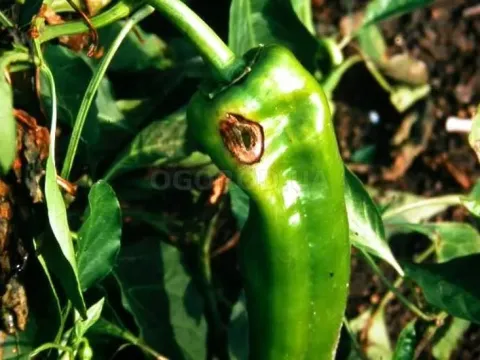
Passalora leaf spot of pepper
Passalora capsicicola
The causal agent of this disease is the fungus Passalora capsicicola (synonym Cercospora capsici), an anamorphic fungus belonging to the Ascomycota division. It is a specialized pathogen that primarily targets species of the Solanaceae family.
What the section contains
Passalora leaf spot of pepper
The fungus survives between seasons in infested plant debris left in the soil. It can also be transmitted via contaminated seeds, which makes the initial selection of high-quality, disease-free planting material a critical step in prevention.
The life cycle of the pathogen is driven by environmental conditions. During favorable periods, it produces conidia that are disseminated by wind, rain splashes, or irrigation water, leading to rapid secondary infection cycles.
Optimal conditions for fungal development include temperatures ranging from +20°C to +28°C and high humidity. The presence of free water on leaf surfaces is essential for spore germination and infection.
Poor agricultural practices, such as excessive plant density and lack of ventilation in greenhouses, create a microclimate that strongly favors the proliferation of this fungus, often resulting in widespread outbreaks.
Pepper plants are the primary host, with both sweet and hot varieties susceptible to the disease. While the foliage is most affected, the pathogen can also infect stems and, under severe conditions, the fruits.
Infection leads to premature leaf senescence and defoliation. This reduction in the photosynthetic surface area directly impairs the plant's ability to produce energy, limiting overall growth and fruit development.
Infected fruits may develop spots, which reduces their commercial value and quality. Significant yield losses occur when the disease reaches epidemic proportions, potentially resulting in economic damage to growers.
Weakened plants are often more susceptible to other biotic stresses, including opportunistic pests and bacterial rot, further complicating the management of the crop.
The disease can reduce yields by 30% to 50% in untreated crops, particularly in warm and humid environments where the pathogen can cycle rapidly throughout the growing season.
Initial symptoms consist of small, circular, light-brown spots appearing on the leaves. These spots gradually enlarge and develop a distinct dark brown border.
As the infection matures, the center of the spots often turns grey or whitish. Under conditions of high humidity, an olive-grey, velvety mold—representing the fungal conidiophores—appears on the underside of the leaves within the spot areas.
When multiple spots merge, the entire leaf blade may die and fall prematurely. This leads to severe chlorosis and leaf drop, typically starting from the bottom of the plant and working upwards.
On stems, the symptoms manifest as elongated brown lesions, which can weaken the structural integrity of the plant and disrupt the transport of water and nutrients.
- Circular spots with dark borders on foliage.
- Velvety grey mold on the underside of leaves.
- Premature yellowing and leaf abscission.
- Development of lesions on stems.
The primary control strategy involves strict crop rotation. Avoiding Solanaceous crops in the same area for at least 3–4 years helps reduce the soil-borne inoculum level significantly.
Sanitation is paramount. Removing and destroying all infected plant debris after harvest prevents the pathogen from surviving in the soil, thereby breaking the cycle for the next season.
Environmental management in protected cultivation is essential. Maintaining lower relative humidity through adequate ventilation and proper irrigation management inhibits the fungus's ability to germinate.
Chemical control with authorized fungicides is recommended when conditions are favorable for disease development or when symptoms are first spotted. Rotation of different chemical modes of action is advised to prevent resistance.
Regular scouting and early detection of infected plants are vital. Removing symptomatic plants immediately can help contain the spread of spores, preventing the disease from becoming a major issue in the crop.