
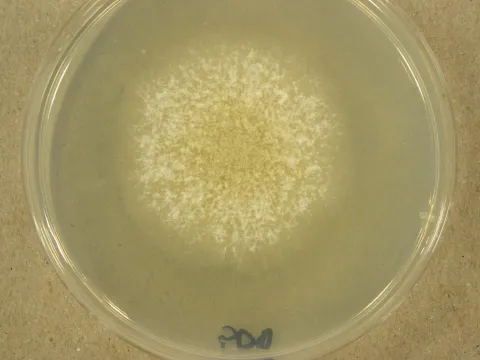
Paecilomyces fulvus
Paecilomyces fulvus
Paecilomyces fulvus belongs to the Kingdom Fungi, Phylum Ascomycota, and the genus Paecilomyces. It represents the anamorph (asexual) stage of certain ascomycete fungi characterized by specific conidial structures.
What the section contains
Paecilomyces fulvus
The fungus produces septate mycelium and verticillately branched conidiophores. Conidia (spores) are typically oval or fusiform, which are key diagnostic features observed during microscopic examination.
Unlike related entomopathogenic species, P. fulvus is frequently identified in association with weakened plant tissues. Its taxonomic position remains a subject of ongoing molecular studies, as the genus Paecilomyces is frequently subject to systematic revision.
A crucial identifying characteristic is the color of the colonies on growth media, which ranges from yellowish to ochre-brown, reflected in the specific epithet fulvus (tawny/brown).
Laboratory diagnosis relies on plating tissues from the infected plant onto potato-dextrose agar, followed by a detailed examination of the conidial apparatus structure under high magnification (400x or higher).
This fungus acts as a facultative parasite affecting a wide range of agricultural and ornamental crops. It is most aggressive when plants are weakened by environmental stress factors.
Primary hosts include vegetable crops in protected cultivation, cereals under high moisture conditions, and certain species of woody shrubs and trees.
The fungus is capable of infecting the root system, the crown, and the lower leaves, causing necrotic lesions and overall suppression of plant growth.
In cereal crops, P. fulvus can be found as a component of the root rot pathogen complex, worsening disease outcomes and significantly reducing yield potential.
Serious economic losses occur in greenhouses, where high air humidity creates ideal conditions for spore dispersal and rapid colonization of plant tissues.
Active development of the pathogen is associated with periods of high relative humidity (above 80%) and moderate temperatures ranging from 18°C to 25°C.
In greenhouse conditions, the fungus can persist year-round, using plant debris as a reservoir for infection between growing cycles.
In open fields, mass dispersal of spores occurs during prolonged rainy periods accompanied by warmth, which facilitates rapid conidial germination.
The fungus's life cycle includes a saprotrophic phase on organic matter and a parasitic phase, triggered when suitable susceptible host tissue is available.
Infection is spread by air currents (anemochory), water droplets during irrigation or rainfall, and through contaminated substrates or soil particles.
Visual symptoms manifest as local yellowish or brownish spots, which eventually become covered with a characteristic fungal bloom or mycelial mat.
When stems or roots are infected, tissues become soft, necrotic, and dark brown, eventually leading to the wilting of the aerial parts of the plant.
- Appearance of necrotic zones with brownish margins.
- Formation of a tawny, powdery layer on infected organs.
- Premature yellowing and leaf abscission.
- Destruction of root tissue leading to lodging.
In severe cases, the fungus completely covers the tissues, causing decay and death of the entire plant, particularly at the early seedling stage.
The appearance of the fungal growth may vary based on light and moisture levels, but it is typically accompanied by a distinct musty odor when colony density is high.
Control of P. fulvus requires an integrated approach combining agrotechnical, biological, and chemical methods to protect crops from fungal pathogens.
The primary agrotechnical measure includes strict crop rotation and thorough disinfection of soil substrates in greenhouses after each production cycle.
It is essential to maintain an optimal humidity regime, avoiding stagnant water and ensuring proper ventilation to prevent epiphytotic outbreaks of the fungus.
The use of systemic chemical fungicides is effective during the early stages of infection; however, product selection must comply with current regulations for the specific crop.
Biological control agents, such as products based on Trichoderma species, demonstrate positive results in suppressing the pathogen through substrate competition and direct mycoparasitism.