
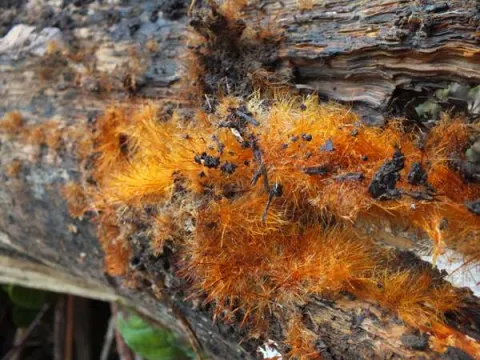
Ozonium texanum
Ozonium texanum
Ozonium texanum is a pathogenic fungus known primarily as the causative agent of severe root rot in numerous plant species. It is a soil-borne organism characterized by the formation of persistent mycelial mats and sclerotia in the soil environment.
What the section contains
Ozonium texanum
The pathogen thrives in warm, alkaline, and well-aerated soils. It colonizes the root systems of susceptible hosts, rapidly spreading through the soil medium via extensive hyphal networks that effectively bridge gaps between plant roots.
Systematically, the fungus is associated with specific vegetative stages of root-infecting pathogens. Its survival strategy involves remaining dormant in the soil for several years, making it a persistent threat to agricultural production in susceptible regions.
The fungus is highly resilient and can withstand diverse soil conditions, allowing it to maintain its population density even in the absence of primary host crops. Its dispersal is largely facilitated by contaminated irrigation water, machinery, and soil movement.
Identifying this pathogen often involves analyzing soil samples for specific mycelial characteristics or observing the typical root decay patterns in field environments where high temperatures and drought stress occur.
The pathogen causes significant damage by infecting the roots of a wide variety of dicotyledonous plants, including cotton, alfalfa, and various fruit trees. It destroys the vascular tissues, preventing the uptake of water and nutrients.
In cotton production, this pathogen is particularly devastating, often leading to rapid and mass mortality of plants within a field. Affected fields frequently show characteristic circular patches of wilting and dying vegetation.
The damage caused by Ozonium texanum is permanent and irreversible for individual plants. Once the root system is colonized and the conducting tissues are destroyed, the plant loses its ability to survive, leading to rapid collapse.
In orchards, the damage can manifest as declining tree health, reduced fruit quality, and premature fruit drop. Over time, the cumulative impact of the disease renders the land unsuitable for susceptible species.
Economic losses are compounded by the difficulty of eradicating the pathogen from the soil. The persistence of its survival structures means that once a field is infested, the disease risk remains high for subsequent planting seasons.
The first sign of infection is sudden and irreversible wilting of the plant leaves, often becoming visible during the hottest parts of the day. Despite hydration efforts, the plant fails to recover.
Upon closer inspection of the roots, one can observe yellowish or tan mycelial strands clinging to the root bark. The infected root tissues appear darkened, soft, and necrotic as the fungus degrades the structural components.
The inner wood of the root (the xylem) often shows visible signs of decay, appearing discolored and brittle. This degradation effectively severs the plant's connection to the water supply, resulting in rapid above-ground death.
The field distribution of the disease is a major diagnostic sign, as it usually occurs in patches or distinct areas of the field. These patches tend to expand outwards as the pathogen moves through the soil.
- Sudden wilting without prior signs of leaf chlorosis.
- Root tissues easily peel away from the woody core.
- Inhibited growth and development of the entire plant prior to sudden death.
Effective control requires a multi-faceted approach, starting with long-term crop rotation using resistant or non-host species, such as monocots or grasses, to deplete the fungal inoculum in the soil.
Deep cultivation and soil aeration practices are recommended to disrupt the mycelial growth of the pathogen. Maintaining healthy soil structure and preventing excessive moisture buildup can also aid in reducing disease pressure.
Sanitation is critical; cleaning all machinery and equipment before moving from infested fields to clean areas prevents the spread of soil particles containing sclerotia.
Biological control agents, particularly those using beneficial fungi like Trichoderma species, have shown promise in reducing the viability and growth of Ozonium texanum in the soil profile.
In high-value agricultural settings, soil fumigation or the application of specialized fungicides might be considered, though these methods are often challenging due to the deep-seated nature of the infection in the soil matrix.