
Paecilomyces variotii
Paecilomyces variotii
Description
How to identify
Paecilomyces variotii belongs to the kingdom Fungi and the genus Paecilomyces. It is a thermotolerant ascomycete fungus capable of thriving in diverse environments.
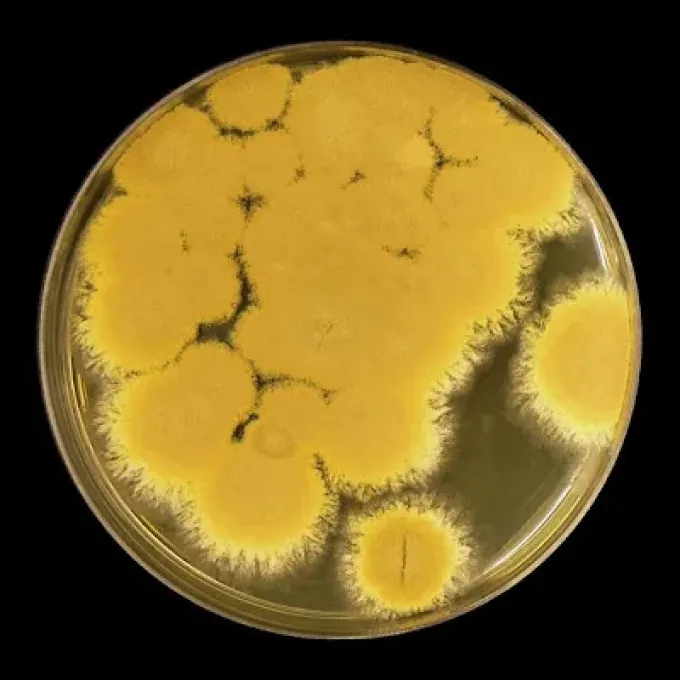
The fungus typically forms loose, powdery colonies that transition in color from pale yellow to olive-brown. It is characterized by extensively branched conidiophores.
It acts as a facultative parasite, which means it can survive as a saprophyte on organic matter while also possessing the ability to infect weakened plant tissues.
Systematically, this fungus is widely recognized as a soil inhabitant and a common contaminant of industrial agricultural materials and poorly stored seeds.
Identification is primarily achieved through microscopic observation of its distinct conidia and cultural analysis on standardized fungal media.
What it damages
The pathogen causes significant damage to various agricultural crops, particularly affecting seeds and storage organs during post-harvest handling.
It is a frequent cause of storage rot, impacting fruits, vegetables, and grain commodities when moisture levels exceed critical thresholds during storage.
In the field, it can infect seedlings and young plants, causing them to wilt and fail to establish, which leads to thinning of crop stands.
Beyond physical damage, the fungus is known to produce mycotoxins that can compromise the safety of both animal feed and human food supplies.
Economic losses are compounded by the rapid spread of the fungus in storage environments, where one infected batch can contaminate an entire facility.
When it appears
While the fungus is highly adaptable, it shows optimal growth performance at temperatures ranging between 25°C and 40°C.
The highest risk of infestation occurs post-harvest, especially in environments with poor ventilation and high humidity, which favor sporulation.
In field conditions, the fungus remains active during the warmer months, exploiting decomposing plant residues as a substrate for its life cycle.
The life cycle is characterized by a high rate of conidial production, allowing the pathogen to propagate efficiently via air currents in storage areas.
The fungus overwinters effectively as spores or mycelial mats in the soil, ensuring its presence for subsequent growing seasons.
Signs of infestation
The primary symptom is the development of an olive-brown or yellowish dusty coating on seeds, fruit surfaces, or stems of host plants.
Infected tissues often exhibit softening, discoloration, and a characteristic musty or moldy odor, which are indicators of advanced fungal colonization.
Seeds affected by P. variotii show reduced germination vigor, and emerging seedlings may develop necrotic lesions near the crown area.
In storage units, the spread of the fungus is often marked by visible patches of mycelial growth that release clouds of spores upon physical contact.
- Olive-colored dusty mycelium.
- Softening and decay of plant tissues.
- Poor seed germination.
- Musty odor from contaminated products.
- Necrotic lesions on seedling stems.
Control measures
Strict moisture management during harvest and storage is the primary control measure, keeping grain and produce moisture below thresholds for mold growth.
Applying systemic fungicides during seed treatment is essential for preventing early-season infections and protecting the developing root system.
Sanitation practices in storage facilities, including regular cleaning and disinfection, help minimize the fungal inoculum in the working environment.
Implementing crop rotation and proper soil management to accelerate the decomposition of residues helps reduce the pathogen load in the field.
Monitoring stored stocks with regular aeration and inspection allows for early detection of hotspots, enabling immediate intervention to prevent widespread damage.
Causes diseases · 1
Discussion
No discussions yet — be the first.