
Grapevine yellows
Grapevine yellow
Grapevine yellows is a collective term for diseases caused by various phytoplasmas, with Candidatus Phytoplasma vitis (the agent of Flavescence dorée) being the most destructive.
What the section contains
Grapevine yellows
These pathogens are obligate parasites that colonize the phloem tissues of the host plant. They lack a cell wall and cannot survive for long periods outside the host or the insect vector.
The primary vector for the most severe forms of grapevine yellows is the leafhopper Scaphoideus titanus, which acquires the pathogen while feeding on infected vines.
Detection is complex due to the systemic nature of the disease and the fact that phytoplasmas are not easily cultured in laboratories. Molecular techniques like PCR are essential for confirmation.
Transmission occurs primarily through the distribution of infected nursery stock, which often shows no visible symptoms at the time of purchase or planting.
The disease exclusively affects the grapevine Vitis vinifera, causing severe systemic physiological disruption that eventually leads to the death of the vine.
The infection blocks the movement of photosynthates in the phloem, which causes leaves to yellow, shoots to fail to ripen, and fruits to shrivel or drop prematurely.
Yield losses are significant, often reaching 100% in heavily infected blocks. The fruit produced is of poor quality, lacking sugar and having an undesirable acidic taste.
The overall lifespan of a vineyard is drastically reduced by grapevine yellows. Infected vines often exhibit a decline in vigor and structural integrity over several years.
Economic damage includes the cost of vineyard removal, the necessity of replanting, and the ongoing expense of aggressive chemical programs to suppress insect populations.
Symptoms become visible during the active growing season, typically from late spring through the summer months as the vine canopy reaches its full development.
The life cycle of the leafhopper vector is synchronized with the grapevine's development. Vector activity peaks during the warmer months, accelerating the spread of the pathogen.
There is a latency period between the initial inoculation by the vector and the development of visible symptoms. This period can range from a few months to over a year.
As autumn approaches, symptoms become more pronounced: leaves show distinct color changes, and the wood fails to undergo proper lignification, increasing winter mortality.
Environmental conditions, particularly warm, dry summers, provide ideal conditions for the multiplication of the leafhopper, leading to increased disease incidence in affected areas.
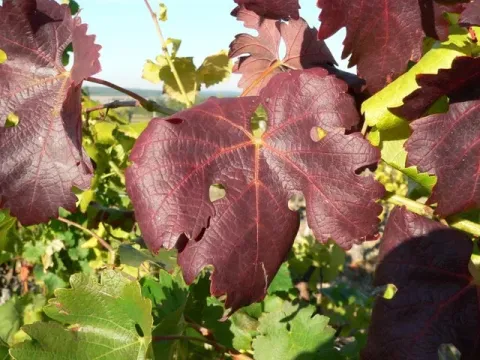
The leaves of infected vines curl downward and become brittle. In white varieties, they turn yellow, while in red varieties, they exhibit a characteristic reddish or purple tint.
Internodes are often shortened, and shoots may appear stunted or show incomplete lignification. Necrosis at the leaf attachment points is a frequent observation.
Inflorescences frequently wither and fail to develop into mature bunches. Any berries that do form are undersized, shriveled, and drop easily from the rachis.
- Downward curling and yellowing or reddening of leaves.
- Stunted shoot growth with short internodes.
- Premature fruit drop and bunch necrosis.
- Failure of wood to harden before the onset of winter.
Internal examination of the vascular tissues may reveal phloem necrosis, which is a symptom of the severe physiological stress caused by the phytoplasma.
Strict use of certified, disease-free nursery material is the foundation of management, as grapevine yellows is difficult to eradicate once established in a vineyard.
Integrated Pest Management (IPM) focusing on the control of Scaphoideus titanus is critical, involving targeted insecticide applications during the larval stages.
Regular scouting and monitoring for symptomatic vines are necessary. Once identified, infected plants should be removed immediately to eliminate the source of the pathogen.
Management of the vineyard perimeter, including the removal of abandoned or wild grapevines, is vital to prevent the colonization and spread of the vector population.
Strict phytosanitary regulations and quarantine measures are enforced to restrict the movement of materials from regions where the pathogen is known to be endemic.