
Gray leaf spot of corn
Cercospora zeae-maydis
Gray leaf spot is caused by the fungal pathogen Cercospora zeae-maydis, which is classified within the kingdom Fungi and is a specialized parasite of maize crops.
What the section contains
Gray leaf spot of corn
The pathogen completes its life cycle by forming mycelium within leaf tissue, later producing conidiophores and conidia that emerge through the stomata, appearing as gray-black spots.
The fungus overwinters primarily as mycelium and stromata in infected corn debris left on the soil surface, acting as the main source of primary inoculum in the spring.
Conidia are dispersed by wind and rain splashes, allowing the disease to spread rapidly through the canopy during favorable environmental conditions.
The pathogen can survive in crop residues for up to two years, making no-till farming systems particularly susceptible to high levels of disease pressure.
The disease primarily damages leaves, reducing the effective photosynthetic surface area and significantly impacting the plant's ability to fill grain kernels.
Severe infestations lead to premature leaf death, causing significant yield losses, which can range from 30% to 50% in highly susceptible hybrid varieties.
The loss of leaf tissue forces the plant to remobilize nutrients from the stalk to the ear, which increases the risk of stalk lodging and rot.
Quality of the grain is often reduced due to poor kernel development, leading to lower test weights and potential profit loss for the farmer.
Under heavy infection pressure, the fungus can also colonize the husk, although the primary economic damage remains the destruction of the leaf tissue.
Disease symptoms usually start to appear in mid-summer, typically after the tasseling stage when environmental conditions support fungal development.
Extended periods of high humidity, frequent rainfall, and warm temperatures between 25°C and 30°C are ideal for the rapid development of the pathogen.
Dew and fog provide the necessary moisture for the germination of conidia, facilitating repeated cycles of infection throughout the growing season.
Late-season outbreaks can cause rapid canopy blighting, especially if the weather remains warm and wet through the grain-filling stages.
As temperatures drop in autumn, the fungus ceases spore production and begins to overwinter in the senescing leaf tissues on the ground.
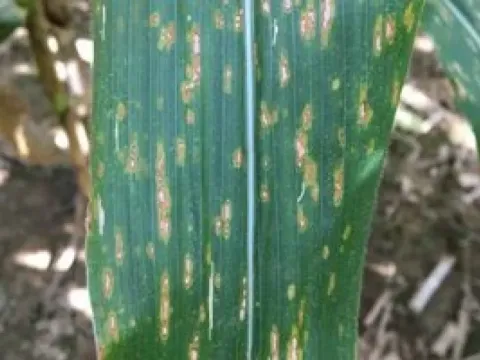
Infection begins as small, chlorotic, oval-shaped spots that gradually expand into distinctive, rectangular lesions parallel to the leaf veins.
The rectangular shape of the lesions is a diagnostic characteristic of gray leaf spot, helping to differentiate it from other common fungal blights.
The lesions transition from light tan to gray or brown as the tissue dies, and under high humidity, a gray-olive fungal fuzz appears on the undersides.
As the disease progresses, individual lesions merge, covering larger sections of the leaf and causing the entire leaf tissue to blight and wither.
The disease usually moves from the lower leaves to the upper canopy, which is the most critical area for maintaining the health of the plant during grain fill.
Integrated management includes cultural practices aimed at reducing the inoculum load, such as crop rotation and the destruction of corn residue.
Tillage practices that incorporate crop debris into the soil help accelerate the decomposition of infected material, effectively lowering the initial spore count.
Selecting and planting resistant or tolerant corn hybrids is the most sustainable and efficient strategy for managing gray leaf spot in intensive corn production.
Fungicide applications, particularly using strobilurins and triazoles, are effective when applied at the appropriate time based on regular field scouting.
- Implement a multi-year crop rotation.
- Manage crop residue through tillage.
- Select resistant corn hybrids.
- Scout fields for early infection signs.
- Apply fungicides if threshold levels are met.