
Graphiola leaf spot
Graphiola phoenicis
Description
How to identify
Graphiola leaf spot is caused by the fungus Graphiola phoenicis, a specialized pathogen belonging to the class Exobasidiomycetes within the phylum Basidiomycota.
This fungus is an obligate parasite that exclusively infects the leaves of various palm species, leading to the formation of unique, wart-like fruiting bodies known as pustules.
The mycelium penetrates the leaf epidermis and grows intercellularly, eventually erupting through the surface to release spores, completing the infection cycle.
Unlike many other leaf spot diseases, this pathogen creates distinct, dark-colored raised structures that are visible to the naked eye on both leaf surfaces.
Understanding its systematic biology is crucial, as its specialized reproductive cycle makes it highly adapted to surviving and spreading specifically on host palm foliage.
What it damages
The disease primarily affects the date palm (Phoenix dactylifera) and other members of the Phoenix genus, causing significant aesthetic and physical degradation.
Heavy infections result in the premature death of fronds, which significantly reduces the photosynthetic capacity and overall vigor of the palm tree.
The cosmetic damage caused by the numerous dark pustules makes ornamental palms less valuable in landscaping and nursery production settings.
Continued stress from the infection leaves the host plant more susceptible to other opportunistic pathogens and environmental stressors, potentially shortening its lifespan.
In high-density plantations, the reduction in leaf area directly impacts the growth rate and, in fruit-bearing varieties, can negatively affect yield quality.
When it appears
The disease thrives in environments with high humidity and moderate temperatures, which are essential for the germination of the fungus's basidiospores.
Periods of frequent rainfall or heavy dew provide the surface moisture required for the spores to land and penetrate the healthy leaf tissue effectively.
Spore dissemination is highly active during warm, humid spring and summer months when wind and splashing water facilitate the spread of the pathogen.
Greenhouse environments are particularly prone to outbreaks if air circulation is poor and humidity levels are consistently maintained above the critical threshold.
While the disease cycle may slow during cooler or drier seasons, the pathogen persists as mycelium within the leaf tissues, ready to resume activity once conditions improve.
Signs of infestation
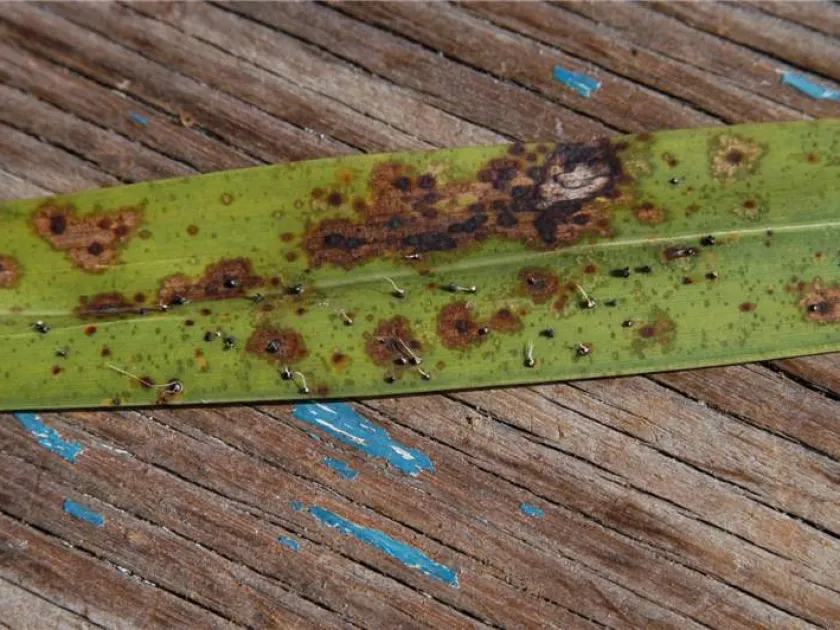
Symptoms begin as small, discolored yellow to light brown spots scattered across the leaf surface, which gradually darken as the fungal pustules develop.
A mature lesion appears as a small, black, cup-shaped fruiting body with a raised center, often surrounded by a light-colored or chlorotic halo.
Upon closer inspection, particularly in humid conditions, white, thread-like filaments of spores may be seen emerging from the center of the dark pustule.
As the infection progresses, leaves may become covered in these spots, leading to widespread yellowing, necrotic blotching, and eventual tissue death.
Affected fronds typically exhibit a speckled appearance, and in severe cases, the infected leaflets may dry out and fall off prematurely.
Control measures
Sanitation is the primary line of defense; removing and destroying heavily infected leaves prevents the buildup of fungal spores in the canopy.
Improving air circulation around the plants and ensuring proper spacing in nurseries helps keep the foliage dry, discouraging fungal infection.
Avoid overhead irrigation; instead, use drip or soil-level watering to keep the leaves dry, which significantly inhibits the germination of new spores.
Preventive fungicide sprays, particularly those containing copper-based compounds, are effective when applied systematically during favorable disease conditions.
Regular monitoring of young and susceptible plants allows for early detection and targeted chemical control, which is far more effective than trying to manage an advanced infestation.
Causes diseases · 1
Discussion
No discussions yet — be the first.