
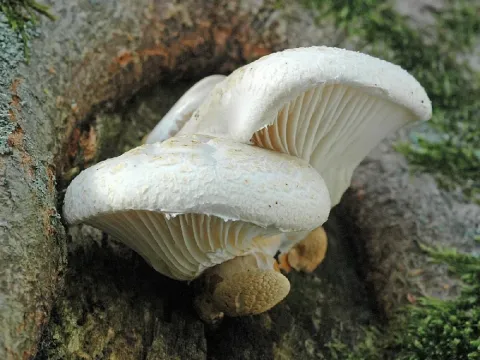
Oyster mushroom
Pleurotus
The oyster mushroom (Pleurotus ostreatus) is a basidiomycete fungus that, while widely cultivated for food, acts as a facultative parasite or saprotroph in nature.
What the section contains
Oyster mushroom
It colonizes the wood of trees, where its mycelium spreads extensively, breaking down structural components such as lignin and cellulose.
The fruiting bodies are typically shelf-like, fan-shaped, or oyster-shaped, and appear in clusters on the stems and branches of infected hosts.
Belonging to the family Pleurotaceae, this fungus is known for its aggressive wood-decay capabilities, which categorize it as a significant plant pathogen in forestry.
The fungus propagates through spores that are dispersed by wind, allowing it to colonize new hosts through bark wounds or pruning cuts.
Oyster mushrooms primarily target deciduous trees, including fruit species like apple and pear, as well as various forest trees like poplar and willow.
The main form of damage is white rot, which degrades the internal structure of the wood, rendering it brittle and structurally unsound.
Infected trees often face a high risk of mechanical failure, such as branches breaking under wind load or total stem collapse, due to internal decay.
The physiological stress caused by the infection leads to reduced vigor, impaired nutrient conduction, and potential tree decline or death.
This pathogen causes economic damage by shortening the lifespan of orchard trees and reducing the commercial value of forest timber.
The mycelium develops within the wood throughout the growing season, provided there is sufficient moisture and appropriate temperatures.
Spore production and fruiting body development typically peak in autumn, but can occur at any time under favorable climatic conditions.
The infection cycle begins when airborne spores land on wounds or exposed woody tissue, followed by colonization and eventual fruiting.
High humidity levels and moderate temperatures significantly enhance the spread and rate of infection within a tree population.
During the winter months, the fungus often remains in a dormant state within the wood, ready to resume active decay as soon as spring temperatures return.
The appearance of clusters of oyster-shaped fruiting bodies on the trunk or main branches is the most definitive sign of infection.
The internal wood tissue becomes soft, bleached, and stringy, often accompanied by a distinct, pleasant mushroom-like odor during decay.
External signs include localized bark discoloration, weeping wounds, or visible cavities where the fungus has emerged through the bark surface.
Leaves on the affected branches or the tree as a whole may show symptoms of chlorosis or premature senescence due to vascular disruption.
A hollow sound when tapping the trunk or branches suggests significant internal degradation by the fungal mycelium.
Preventative care is essential: protecting bark from mechanical damage and promptly treating pruning wounds with protective sealants is critical.
Sanitation practices involve removing and destroying any dead or decaying wood where the fungus may be thriving, to reduce spore pressure.
If a tree is severely infected, total removal including the stump is recommended to eliminate the reservoir of the pathogen.
All gardening tools used for pruning should be sanitized with alcohol or bleach solutions to prevent cross-contamination between trees.
- Regular monitoring for fruiting bodies on tree trunks.
- Pruning of infected branches with clean, disinfected tools.
- Maintenance of tree vigor through proper watering and fertilization.