
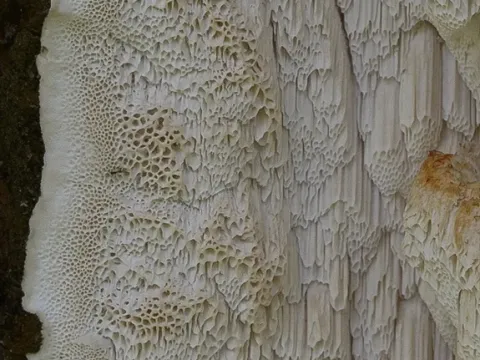
Oxyporus latemarginatus
Oxyporus latemarginatus
Oxyporus latemarginatus is a basidiomycetous fungus belonging to the family Schizoporaceae. It acts as a significant wood-decay pathogen, primarily degrading lignin and cellulose in various tree species.
What the section contains
Oxyporus latemarginatus
The fruit bodies of this fungus are typically annual, resupinate, and thin, often appearing as white or cream-colored patches on the bark or wood surface. A key diagnostic feature is the wide, sterile margin surrounding the pores.
Taxonomically, it belongs to the kingdom Fungi, phylum Basidiomycota, class Agaricomycetes, and order Hymenochaetales. Its microscopic structure includes specific cystidia, which aid in accurate identification.
The pathogen reproduces by releasing basidiospores that travel through the air and land on wounded surfaces of trees, such as pruning cuts, frost cracks, or mechanical damage caused by tools.
It is widespread in temperate climates and thrives in damp environments, often colonizing both living trees and dead wood, effectively acting as both a parasite and a saprotroph.
This fungus targets a wide range of deciduous trees, including commercially important fruit species such as apples, pears, and plums. It causes a progressive white rot that severely compromises the structural integrity of the wood.
As the mycelium colonizes the wood, it secretes enzymes that break down the lignin structure, turning the affected area into a soft, fibrous mass that lacks mechanical strength.
In orchards, the damage often remains hidden inside the trunk until the fungus has already caused significant decay. This can lead to the sudden breakage of limbs or the collapse of the tree under heavy fruit loads.
The fungus disrupts the tree's vascular system, impeding the movement of water and nutrients. This results in the general decline of the tree, manifesting in reduced yield and poor foliage quality.
Once a tree is deeply colonized, it becomes an ongoing source of infection for surrounding trees, as it continues to produce spores throughout the active growing season.
The active development of Oxyporus latemarginatus typically occurs from late spring through autumn, whenever temperatures are mild and moisture levels are high enough to support fungal growth.
Spore dispersal is highly dependent on environmental humidity, with rain events often triggering the release of spores from the fruit bodies. Dry conditions may slow down external growth but do not kill the internal mycelium.
The fungus overwinters as mycelium within the infected woody tissues. It is highly resilient to temperature fluctuations and remains viable within the host tree for many years.
Pruning periods, particularly in the spring or autumn, are critical times for new infections if proper protective measures are not followed after the cuts are made.
Fruiting bodies are most noticeable after periods of sustained wet weather, which is the best time for managers to inspect their orchards for signs of fungal activity.
The primary visual sign is the emergence of flat, whitish or yellowish fungal crusts on the bark. These patches may be smooth at first but eventually develop small pores.
Infected wood often shows distinct signs of white rot: it becomes bleached, brittle, and tends to peel or shred easily when poked or cut. Dark lines of demarcation may also appear within the wood.
Crown symptoms are also common, including chlorosis (yellowing of leaves), stunted growth, and the gradual dieback of individual branches that have been compromised by the fungal infection.
The appearance of sap or gumming on the bark near the infection point can sometimes be observed as the tree attempts to create a defensive barrier against the invading mycelium.
In advanced stages, the tree may exhibit structural instability, such as deep vertical cracks in the trunk or significant breakage of limbs at the point of attachment.
The most effective management strategy is prevention. Ensuring trees are healthy and minimizing physical damage to the bark are essential first steps in orchard maintenance.
All pruning cuts, especially those over 2-3 cm in diameter, should be sealed with horticultural wound paint or antifungal treatments to prevent spores from entering the wood.
Sanitation is crucial; infected branches must be removed and destroyed far from the orchard. If a trunk is severely infected, the entire tree should be removed, including the stump, to eliminate the reservoir of spores.
Tools used for pruning must be disinfected after every single tree to prevent the mechanical transmission of the fungus via contaminated shears or saws.
Maintaining optimal orchard hygiene and strengthening tree immunity through proper fertilization and watering can significantly reduce the risk of successful colonization by this pathogen.