
Oxyporus latemarginatus
Oxyporus latemarginatus
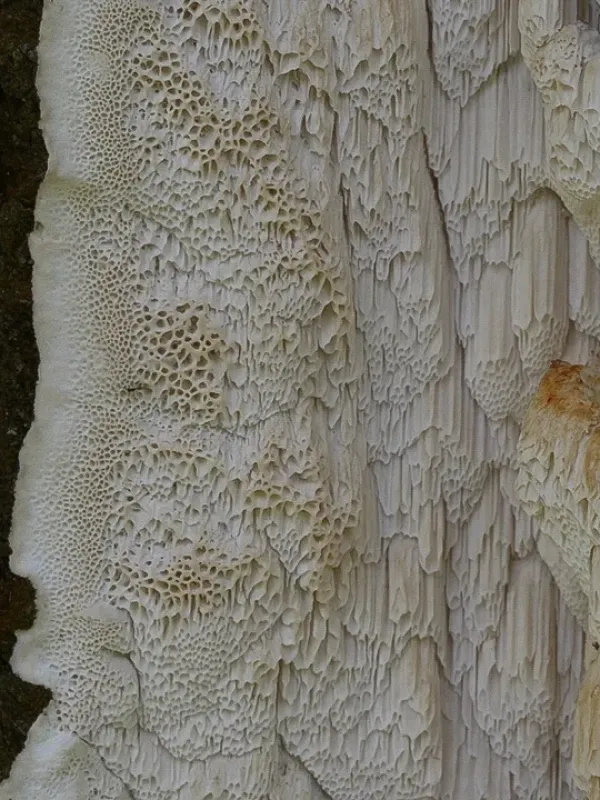
Description
How to identify
Oxyporus latemarginatus is a species of basidiomycete fungus within the family Schizoporaceae. It acts as a primary wood-decay pathogen, specializing in breaking down both lignin and cellulose in hardwood species.
The fungus produces annual, resupinate (crust-like) fruiting bodies that often coalesce into large, flattened patches on the bark of host trees. These structures are typically white to yellowish with a distinct, sometimes slightly broader, margin.
Microscopically, the fungus produces a dense network of hyphae that colonize the xylem and phloem, leading to structural deterioration of the tree's vascular system over time.
Unlike many other shelf fungi, this species often thrives in moist environments, frequently colonizing the lower sections of trunks or areas affected by water retention.
The taxonomic classification places it within the order Polyporales, and it is widely recognized by mycologists and arborists for its role in wood degradation in forest and garden ecosystems.
What it damages
This pathogen targets a wide variety of deciduous trees, including fruit species like apple and pear, as well as common forest trees such as poplar, willow, and oak. It prefers hosts that are already stressed by mechanical injury or environmental conditions.
The fungus causes a severe white rot, rendering the wood soft, fibrous, and brittle. This significantly reduces the structural integrity of the trunk, often resulting in windthrow or branch breakage.
In orchards, infection leads to reduced nutrient transport, which results in chlorosis, reduced fruit yield, and eventual tree death if the trunk becomes fully compromised.
Economically, the presence of Oxyporus latemarginatus necessitates costly orchard renovation, as heavily infected trees are often beyond saving and must be removed to prevent further spread.
The destruction of wood by this fungus creates hollows and cavities, which may then serve as entry points for secondary pathogens and wood-boring insects, further accelerating tree decline.
When it appears
The active vegetative growth of the fungus occurs throughout the growing season, typically when temperatures are between 15°C and 25°C and moisture levels are high.
The production of fruiting bodies and spore dispersal is most intense during late summer and autumn, particularly following periods of sustained precipitation.
During the dormant winter season, the fungus remains alive within the heartwood, protected by the internal environment of the host tree, and is capable of surviving freezing temperatures.
The colonization of new tissues by mycelial threads is facilitated by spring warming, which stimulates physiological activity after the winter break.
The rate of disease development is highly sensitive to the host's moisture content; high humidity on the bark surface directly increases the success rate of spore germination and initial infection.
Signs of infestation
The most visible sign of infection is the development of white to cream-colored crust-like fungal mats on the bark, which may produce a characteristic earthy smell.
When the bark is removed from an infected area, the underlying wood appears pale and brittle, often displaying distinct black zoning lines where different mycelial colonies have interacted.
Host trees frequently show signs of crown thinning, premature leaf yellowing, and general lack of vigor, which are indicators that the fungal rot is interfering with water and mineral uptake.
As the infection progresses, physical damage to the trunk becomes evident, including cracking, bark lifting, and the formation of cavities that indicate advanced wood decay.
- white, crusty fruiting bodies on the trunk;
- soft, fibrous, and discolored wood;
- premature canopy decline and chlorosis;
- vertical cracks in the bark surface;
- visible mycelial colonization beneath the bark.
Control measures
Sanitation is the most critical control measure. Infected trees or severely damaged branches should be removed promptly, and the wood should be disposed of away from the orchard.
Pruning wounds must be properly treated with protective fungicides or pruning sealants to prevent the airborne spores from entering through fresh tissue.
Maintaining tree health through proper fertilization and irrigation reduces host susceptibility, as stressed trees are much more likely to be colonized by Oxyporus.
Monitoring and controlling bark-boring insects is essential, as these pests often introduce fungal spores deep into the woody tissue while feeding or laying eggs.
Regular inspections, especially after storms or heavy winds, help identify early stage infections, allowing for localized excision of diseased tissue before the entire trunk is affected.
Discussion
No discussions yet — be the first.