
Mycosphaerella confusa
Mycosphaerella confusa
Mycosphaerella confusa is an ascomycete fungus that acts as a significant pathogen for plants in the genus Rubus, particularly blackberries. It is taxonomically classified within the Mycosphaerellaceae family.
What the section contains
Mycosphaerella confusa
This fungus is widely recognized for its asexual stage, known scientifically as Cercoseptoria rubi. The life cycle involves both sexual and asexual spore production, which allows the pathogen to persist and spread efficiently in berry fields.
The fungus overwinters in plant debris, such as fallen leaves and infected canes, where it survives as mycelium or as mature fruiting bodies (perithecia) until environmental conditions improve in the spring.
Spread primarily occurs through the dispersal of conidia by rain splashes and wind currents. The pathogen is highly dependent on periods of leaf wetness and moderate temperatures to germinate and penetrate the host tissue.
As a specialized parasite, it has evolved to thrive in the microclimate created by dense blackberry canopies, making it a persistent challenge for commercial berry production and home gardeners alike.
The primary damage caused by Mycosphaerella confusa is the development of leaf spot disease. This condition directly impacts the photosynthetic capacity of the blackberry plant, leading to stunted growth.
Severe infections result in premature leaf drop, often starting in mid-summer. The loss of foliage reduces the plant's ability to accumulate carbohydrates, which are critical for fruit development and winter hardiness.
In addition to leaf damage, the pathogen can occasionally affect petioles and young canes. Though leaf infection is the most prevalent, severe outbreaks can weaken the overall vigor of the blackberry plant.
Economic losses are linked to decreased berry size and quality, as well as reduced yields. Weakened plants often experience higher mortality rates during harsh winters because they lack the energy reserves to survive freezing temperatures.
The cumulative effect of annual infections can degrade a plantation over time, necessitating costly interventions and potentially leading to the premature removal of infected rows.
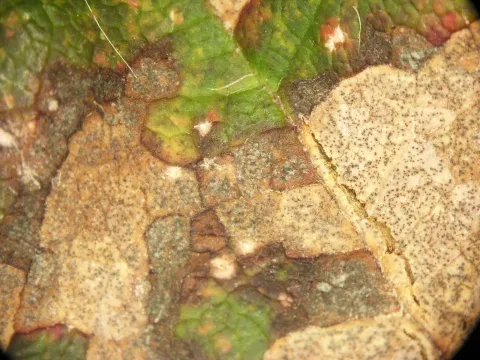
Early symptoms appear as small, circular, reddish-brown to purple spots on the leaves. As the pathogen matures, these spots expand in size and become more clearly defined on the leaf blade.
The center of the necrotic spots eventually turns gray or white, while the distinct dark purple or reddish border remains, providing a classic "target" appearance that is symptomatic of this specific fungal infection.
Under humid conditions, small gray or olivaceous tufts of conidia develop in the centers of the spots on the underside of the leaves. This sporulation is a key diagnostic feature for field identification.
When environmental conditions favor the fungus, numerous spots may coalesce, covering large portions of the leaf tissue. This leads to the yellowing, necrosis, and subsequent curling of the leaves.
While the signs are most visible on foliage, monitoring the base of the stems is also recommended to check for minor lesions that might indicate a severe infestation level across the planting area.
The first line of defense is rigorous sanitation. Removing and destroying fallen leaves and diseased canes during the dormant season is essential, as these materials harbor the primary source of the inoculum.
Cultural management focuses on improving air circulation and reducing canopy density through proper pruning and training techniques. This helps the foliage dry faster after rain, limiting the time available for spore germination.
Chemical control strategies often utilize copper-based fungicides applied during the early season to suppress initial spore germination and protect emerging growth from infection.
Systemic fungicides, particularly those containing triazoles or strobilurins, can be effective if applied as soon as the first symptoms are observed, though careful rotation is necessary to prevent fungicide resistance.
- Maintain balanced soil fertility to strengthen plant immunity.
- Select resistant blackberry cultivars where available.
- Use drip irrigation to prevent overhead wetting of the leaves.