
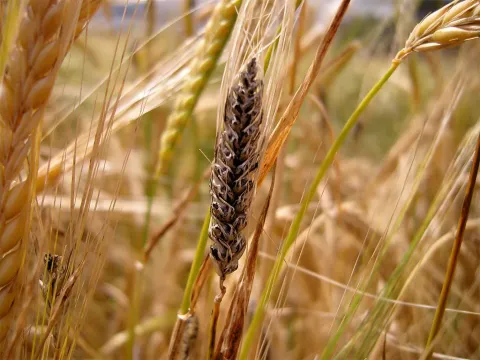
Mycosphaerella tassiana
Mycosphaerella tassiana
Mycosphaerella tassiana is a member of the kingdom Fungi and the class Ascomycetes. It functions as a ubiquitous plant pathogen, often found as a necrotrophic parasite on a vast range of monocotyledonous and dicotyledonous plants.
What the section contains
Mycosphaerella tassiana
The fungus is characterized by the production of pseudothecia, which are typically immersed within the host plant's epidermis. These fruiting bodies contain asci with septate ascospores.
The taxonomic complexity of this species is heightened by its association with the anamorph Cladosporium herbarum. This dual-stage lifecycle enables the pathogen to survive in diverse environmental conditions.
Under a microscope, the fungal structures appear as dark, spherical or pyriform bodies. Precise identification often requires observation of the ascospore germination patterns and conidial morphology.
Because it is widespread and morphologically plastic, it is often considered a secondary invader, though it can cause primary damage under favorable environmental stresses.
Mycosphaerella tassiana causes significant leaf spot diseases across a broad spectrum of crops, including cereals, legumes, and various ornamental plants.
In cereal crops like wheat and barley, the pathogen contributes to the complex of leaf blotch diseases, which reduce the total leaf area available for photosynthesis.
The fungus thrives on necrotic tissues, facilitating the decay of leaf blades, which may result in premature defoliation and a reduction in total plant biomass.
When the pathogen infects the reproductive parts of the plant, it can lead to reduced seed quality and lower overall yields, impacting the commercial viability of the harvest.
Damage is often more severe in crops subjected to nutritional imbalances, water stress, or other pre-existing infections that weaken the plant's natural defenses.
The development of the pathogen is highly dependent on humidity and temperature. It is most active during cool, wet periods that occur throughout the growing season.
Ascospores are typically released during rainfall and dispersed by wind, landing on susceptible tissues. They germinate rapidly when surface moisture is available.
The fungus overwinters as mycelium or pseudothecia in decaying organic matter, such as stubble and fallen leaves, which serve as the primary inoculum source for the following season.
Secondary infection cycles occur throughout the growing season, driven by the production of conidia that are easily spread by air currents and splashing water.
While the pathogen remains dormant during periods of extreme drought or heat, it can quickly resume its activity as soon as favorable conditions return to the field.
Symptoms initially appear as small chlorotic spots on leaves, which gradually darken to become brown or greyish-brown lesions with distinct margins.
Within these lesions, one can often observe tiny, black fruiting bodies (pseudothecia). These are characteristic signs of fungal establishment in the plant tissue.
In high-humidity conditions, a dark, olive-green to black moldy layer may develop on the surface of the lesions, indicating mass conidial production by the pathogen.
As the infection progresses, the spots may coalesce, leading to large necrotic areas that eventually cause the entire leaf to wither, curl, and die prematurely.
In cases of severe stem infection, the stalks may show discoloration and tissue weakening, which can ultimately lead to lodging in cereal crops.
Management of Mycosphaerella tassiana is focused on cultural practices that minimize the survival and spread of fungal spores within the field environment.
Deep plowing of crop residues is an essential practice, as it buries the infected plant debris and prevents the maturation and discharge of ascospores.
Implementing strict crop rotation schedules helps to break the infection cycle, particularly in fields where susceptible cereal crops have been grown consecutively.
- Application of systemic fungicides, such as triazoles, to suppress active infections during the growing season.
- Seed treatment with appropriate fungicides to protect germinating seedlings from early-stage colonization.
- Rigorous weed control to eliminate alternative hosts that may harbor the fungus.
Maintaining balanced soil fertility and avoiding excessive nitrogen applications can improve plant vigor and mitigate the risks posed by this opportunistic pathogen.