
Mungbean yellow mosaic virus
Mungbean yellow
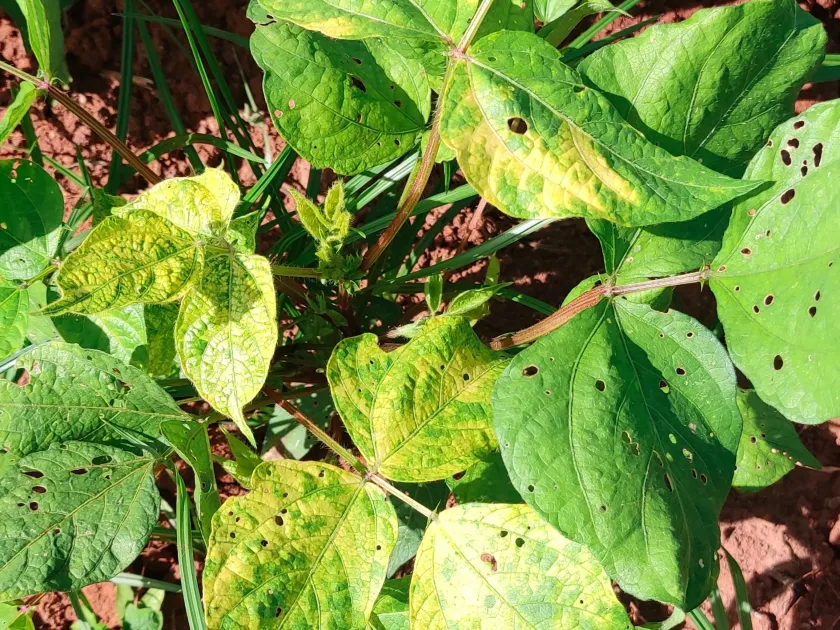
Description
How to identify
Mungbean yellow mosaic virus (MYMV) is a serious plant pathogen belonging to the Geminiviridae family and the Begomovirus genus. This virus contains a single-stranded DNA genome and is known for its high virulence in various tropical and subtropical crops.
The virus relies exclusively on the whitefly Bemisia tabaci for transmission. It operates through a persistent circulative mode, meaning the vector remains capable of transmitting the virus for an extended period after feeding on an infected plant.
What it damages
MYMV primarily attacks mung beans, but its host range includes a variety of economically important legumes such as soybeans, common beans, cowpeas, and black gram. The virus causes systemic infection, leading to stunted growth and severe yield losses.
Economic damage manifests as a significant reduction in grain quality and quantity. In severe cases, particularly if infection occurs at the seedling stage, the crop may fail to produce any viable pods, leading to total economic failure of the planted area.
When it appears
The incidence of the disease is strictly linked to the population dynamics of Bemisia tabaci. The virus spreads most rapidly during periods of high temperature and low humidity, which are ideal conditions for whitefly multiplication and migration.
The disease often appears in patches within a field and spreads as the insect vector moves from host to host. Early planting is sometimes recommended to allow the crop to reach a stage of maturity where it is less susceptible to severe viral impact before the peak of the insect season.
Signs of infestation
Symptoms initially appear as scattered yellow spots on leaves, which gradually develop into a severe mosaic pattern. As the disease progresses, leaves may become entirely yellow, crinkled, and reduced in size, significantly hindering the plant's ability to perform photosynthesis.
Plants affected by MYMV show stunted internodes, resulting in a bushy, dwarf appearance. Flowering is often reduced, and any pods that do develop are usually smaller, discolored, and contain shriveled, low-quality seeds, significantly reducing the commercial value of the yield.
Control measures
Management of the disease is challenging because once a plant is infected, it cannot be cured. Therefore, the primary focus is on preventing infection by controlling the whitefly population and selecting resistant plant varieties.
- Selection and planting of MYMV-resistant or tolerant cultivars.
- Rigorous weed control to eliminate reservoir hosts of the virus.
- Use of yellow sticky traps to monitor and reduce whitefly density.
- Implementation of field sanitation and proper crop rotation practices.
- Timely application of systemic insecticides to manage vector populations.
Causes diseases · 1
Discussion
No discussions yet — be the first.